Languages
Sunday, August 16, 2026



News and Views from the Global South
Eye on the IFIs
DEVELOPMENT: New Action Programme, and New Name for the Poorest
A new 10-year blueprint for assisting the poorest countries on the planet to join the league of the more fortunate ones was approved Friday at the closing of the Fourth U.N. Conference on the Least Developed Countries (LDC-IV) held May 9- 13 here.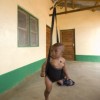
DEVELOPMENT: Programme of Action Adopted for World’s Poorest Nations
"The future for least developed countries lies in trade, productive capacity and governance more than in aid," said Cheick Sidi Diarra, United Nations High representative for the Least Developed Countries, responding to criticism of the plan of action put forward as the U.N. conference on the world's poorest nations drew to a close in Istanbul.
DEVELOPMENT: South-South Axis Strengthens
The glass isn’t exactly half-full, but it certainly is not entirely empty either. Within the broad failure of the weeklong Fourth U.N. Conference on the Least Developed Countries (LDC-IV) in Istanbul that concluded Friday, many delegates are taking heart in a strengthening South-South front that has emerged.
DEVELOPMENT: Market Forces Rise Above Declarations
Upstairs in halls where the conference of the Least Developed Countries (LDCs) is being held, all the right things were being said about the misery of poverty and the virtue of opportunity and development. Several floors below, what are called ‘market forces’ were at work.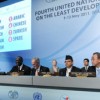
DEVELOPMENT: Civil Society Rejects ‘Toothless’ Istanbul Plan of Action
Civil society groups have vowed to mobilise citizens of the world’s poorest nations to take to the streets, rejecting the Istanbul Programme of Action agreed today by the Fourth U.N. Conference on the Least Developed Countries.
LDCs Seek Mini Trade Deal
Leaders from the Least Developed Countries are making a strong push in Istanbul for a mini trade deal for their 48 impoverished nations - ahead of any worldwide agreement under the Doha Round.ECONOMY: Looking for Development Leverage
Given a few incentives, private companies can be attracted to invest in poor countries that before were not on their radar. Donor countries are betting on this new avenue of public-private-partnerships (PPPs) to channel funds, technology and business knowledge to the 48 Least Developed Countries (LDCs) - the impact can be huge, but many challenges remain.
DEVELOPMENT: Time For New Approaches says Civil Society
The dominant approaches to development have failed the world’s poorest citizens and now the paradigm must change. This is the strong message coming from over 2,000 non-governmental organisations gathered at the civil society forum for the Fourth U.N. Conference on the Least Developed Countries (LDC-IV) in Istanbul, Turkey.
Mexico’s Use of “Green” Financing Questioned
While Mexico played host to a meeting for the creation of a Green Climate Fund, doubts have been raised over whether the millions of dollars in financing the country has already received in recent years have been effectively implemented to combat global warming and its consequences.BAHRAIN: McCarthyism in Manama?
As the savage crackdown on the majority Shiite opposition movement drags on in Bahrain, King Hamad bin Issa Al Khalifa's military regime – backed by the hefty armed forces of Sunni- dominated Saudi Arabia – has moved from launching outright assaults on peaceful protestors on the streets of Manama in broad daylight into the murky waters of what experts are calling state terror, featuring all the old tactics of petrifying a population into submission.
PORTUGAL: Commemoration of Revolution Turns into Protest Against IMF
The traditional celebration of the anniversary of the 1974 Carnation Revolution in the Portuguese capital turned into a massive protest against the extreme austerity measures imposed by the European Union and the International Monetary Fund (IMF) as a condition for the imminent financial bailout.RUSSIA: Eighteen Years of WTO Negotiations Continue
After almost 18 years of unsuccessful but persistent struggle to join the World Trade Organisation (WTO), experts say that efforts by Russian authorities have not been enough and have often lacked political will.ECONOMY: Portugal Negotiates Draconian Bailout Plan
The strangling of the Portuguese economy by the international capital markets has led to what was expected: a bailout with tough conditions that will bring the country to its knees.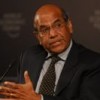
Q&A: ‘Common Concern, Not Common Action’
The summit of the BRICS (Brazil, Russia, India, China and South Africa) countries showed up both the strengths and the limitations of the caucus of emerging economies, says former Indian foreign secretary Shyam Saran in an interview to IPS.Colonial-Style Land Grabbing Back on the Table
The highly-contested Principles on Responsible Agricultural Investment (RAI), a set of priorities that peasants’ collectives and food rights groups have been battling for years, are back on the table this week, as the annual Conference on Land and Poverty opened at World Bank headquarters here Monday.Financiers Lock Horns over Macro Policies While Millions Go Hungry
As weeks of what the International Monetary Fund's managing director Dominique Strauss-Kahn called "painful" negotiations over a host of macroeconomic policies drew to a close here Saturday, confusion over coherent strategies for sustainable economic recovery hangs thick in the air.BRICS to Show Its Weight at WTO
Despite political differences among member countries, BRICS has set its sights on global trade talks to assert its weight. Its declared aim: to secure economic benefits for developing nations.Emerging Markets Clash with Anachronistic Institutions
The first weeks of April have witnessed a maelstrom of multilateralism – from the chambers of the annual Spring Meetings of the World Bank and the International Monetary Fund (IMF) here to the round tables of the BRICS summit in the resort island of the Hainan province in China – leaving in its wake a tome of unanswered questions regarding the contours and configurations of the new world order.G24 Says Rich Nations’ Policies Hurting Developing World
Finance ministers of the G24 group of developing and emerging countries met on the sidelines the World Bank and International Monetary Fund spring meetings here on Thursday, warning against continued risks to their economies, despite largely "strong" growth as the world climbs out of the global financial crisis.
A Table for Nine Billion
As the World Bank and International Monetary Fund convene for their annual Spring Meetings here, soaring food prices are high on the agenda, prompting some analysts to fast-forward to 2050 and the question of how to nourish the mid-century's estimated world population of 8.9 billion people – the majority of whom will live in developing countries.New World Development Report Repackages Old Ideas
With over 1.5 billion people living in countries blighted by incessant or recurring violence, the World Bank's annual World Development Report (WDR), with this year's focus on how conflict derails development, was anxiously received Monday by scores of development agencies, governments and NGOs all over the world.« Previous Page — Next Page »


They underpin the world's financial architecture, with the power to revamp whole economies and channel billions of development dollars each year. But the so-called International Financial Institutions -- the World Bank Group, International Monetary Fund and regional investment banks -- face a new era of public scrutiny and challenges to their relevancy. How are the IFIs responding to growing demands from the South and civil society groups for greater democracy and accountability? And are they living up to their stated mission of promoting economic prosperity for all? IPS reports.

The Week with IPS

NEXT STOP - SDGs
Tracking global progress towards a sustainable world
Tracking global progress towards a sustainable world
