Languages
Sunday, August 16, 2026



News and Views from the Global South
Eye on the IFIs
World Bank Chief Calls for Economic Reforms in Mideast
World Bank President Robert Zoellick on Wednesday pressed a Middle East and North Africa in the midst of the "Arab Spring" to promote vibrant civil societies and urged international financial and development institutions to hold its client governments in the region more accountable, if sustainable growth rates and more integrated economies are to take hold.NGOs Call for IMF Gold Profits to Cancel Debts of Poorest Countries
Nearly 60 international civil society organisations urged the executive board of the International Monetary Fund (IMF) Monday to earmark some 2.8 billion dollars in profits from the agency's gold sales for cancelling the debts of the world's poorest nations.
Swaziland’s Middle-Income Status Reflects Only King’s Lifestyle
While Swaziland struggles to alleviate its fiscal crisis with foreign aid because of its World Bank classification as a lower middle-income country, the government has increased the budget for King Mswati III, Africa’s last remaining absolute monarch and one of the richest royals in the world.
PAKISTAN: And Then There Was Light
Hasan Ibrahim’s tea stall is the busiest place in the sleepy, sand-dune covered village of Sholani, proof of the economic and social change the arrival of electricity has ushered in.
Questions Abound Over Whether IBSA and BRICS Can be Complementary
The IBSA Dialogue Forum, a South-South alliance of India, Brazil and South Africa, could be better suited to the needs of Southern Africa for South-South cooperation than the BRICS (Brazil-Russia-India-China-South Africa) loose alliance of emerging economies. But Southern Africa will have to beef up its markets to truly benefit.
CAMBODIA: Botched World Bank Project Leads to Thousands of Evictions
The World Bank botched the handling of an ambitious multi-million-dollar land- titling project in Cambodia and has done little to protect thousands of people in a lakeside slum from eviction.Despite Reforms, Whistleblowers at Development Banks Face Retaliation
Multilateral lending institutions – like the governments they serve – are ostensibly committed to the values of transparency and accountability. But more often than not, insiders who blow the whistle on waste, fraud and abuse at institutions like the World Bank are retaliated against, not rewarded, and typically find themselves out of a job for daring to speak out about wrongdoing.
AFRICA: World Bank Identifies Five Poor States as “Growth Poles”
Africa faces an unprecedented opportunity to transform itself, says the World Bank. Its new strategy for the continent aims to leverage growing South-South investment to ensure more inclusive development, while identifying five poor states as "Growth Poles".Egypt Takes a Step Back From IMF Ways
Egypt could soon be looking for a new economic model – one that will be different from the traditional system that has been promoted for years by international financial institutions such as the World Bank, the IMF, and the U.S. Agency for International Development (USAID), under the reign of ousted president Hosni Mubarak.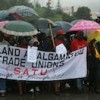
AFRICA: Swaziland in Crisis as Customs Union Revenue Is Slashed
Apart from the looming job losses in Swaziland’s public sector, small and medium enterprises (SMEs) have also warned of retrenchments following the government’s decision to suspend procurement from small businesses.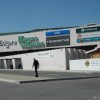
DEVELOPMENT: African LDCs Won’t Benefit Much from BRICS Arrival
South Africa landed a coveted membership with the Brazil, Russia, India and China bloc (BRIC) by marketing itself as a gateway to Africa but analysts doubt whether this development holds real benefits for poor countries on the rest of the continent.NGOs Want Reforms Tied to New World Bank Funding
With the World Bank expected to announce a new funding package for the world's poorest countries Wednesday, NGOs are making a last-minute appeal to donor countries to use their leverage to compel reforms at the institution.LAOS: World Bank-backed Dam Powers Ahead, Despite Social Cost
As the World Bank returns to the big dam business with the inauguration of Laos’ largest hydropower project, it is coming under the scrutiny of familiar adversaries: green groups and grassroots activists.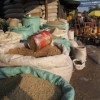
DEVELOPMENT-MOZAMBIQUE: Hunger Stalks 55 Percent of Adults
Baptista Macule is sitting on a sack of groundnuts in a dusty side-alley near the sprawling, makeshift Malanga market on the outskirts of Maputo. He squints into the sun as he tries to explain the extent of poverty in his country.
DEVELOPMENT: Economic Boom Worsened De-industrialisation of LDCs
Least developed countries (LDCs) in Africa did not use the commodity export boom of the mid-2000s to diversify their economies from commodity dependence to manufacturing value-added products. Significantly, the agricultural sector has also not benefited, with the result that LDC reliance on imported food has become even worse.
RIGHTS-ZIMBABWE: “Sanctions Are Hurting the Right People”
The word "sanctions" was among the first five words mentioned to the new European Union (EU) ambassador to Zimbabwe Aldo Dell Ariccia when he first arrived and met with government officials in Zimbabwe a few months ago.INDIA: India Edges Closer to Permanent UN Seat
A permanent seat in United Nations Security Council (UNSC) is no longer a pie in the sky for India with U.S. President Barack Obama formally endorsing the candidature of this Asian giant with 1.2 billion people.
LABOUR-SWAZILAND: Jobs to be Cut to Secure International Loan
Thousands of public servants in Swaziland are due to lose their jobs in cutbacks as part of a government bid to gain approval from the International Monetary Fund for a loan. But some Swazis would rather see the budget slashed for the country’s autocratic royals.IMF Criticised for “Fancy Footwork” over Real Reforms
In what the International Monetary Fund is calling a historic moment, the institution approved long-awaited reforms Friday that would shift some decision-making weight to emerging economies. Some NGOs, however, do not see the reform as nearly that momentous.FINANCE: Ahead of G-20 Summit, Capital Controls Gain New Currency
South Korea’s closing of ranks with Asian countries that have recently embraced capital controls signifies that such measures will be up for discussion at next week’s summit of the world’s 20 major economies in Seoul.Runaway Global Economy Decimating Nature
One-fifth of all birds, fish and animals are threatened with extinction - as many as six million unique and irreplaceable forms of life – an authoritative new assessment warned Wednesday.« Previous Page — Next Page »


They underpin the world's financial architecture, with the power to revamp whole economies and channel billions of development dollars each year. But the so-called International Financial Institutions -- the World Bank Group, International Monetary Fund and regional investment banks -- face a new era of public scrutiny and challenges to their relevancy. How are the IFIs responding to growing demands from the South and civil society groups for greater democracy and accountability? And are they living up to their stated mission of promoting economic prosperity for all? IPS reports.

The Week with IPS

NEXT STOP - SDGs
Tracking global progress towards a sustainable world
Tracking global progress towards a sustainable world
