Languages
Thursday, September 17, 2026



News and Views from the Global South
Global Geopolitics
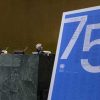
UN at 75: Slow Death or a New Direction – Part 1
Let me begin with an appeal to our venerable friend, the UN: get down on the ground with the grandchildren. Just having celebrated its 75th birthday, we can hear your knees creak! The UN, for as long as I have known it up close- since its thirties- has often seemed prematurely old.
Building Blocks for Nuclear Ban Treaty: NPT & Advisory Opinion of the International Court of Justice
The Treaty on the Prohibition of Nuclear Weapons (TPNW) will become binding law for participating states on January 22, 2021. Entry into force was triggered on October 24, the date marking the 75th anniversary of the United Nations, when Honduras become the 50th state to ratify the TPNW, reaching the threshold set by the treaty.
US Groups Linked to COVID Conspiracies Pour Millions of ‘Dark Money’ into Latin America
Half a dozen US Christian right groups have poured millions of dollars into Latin America and have promoted misinformation about COVID-19 and other health and rights issues, openDemocracy can reveal today.
The Day After
For Europe, the region closest by culture and political tradition to the United States, the mood of the day after the presidential election may be very different from that assumed a priori depending on the verdict.
Nuclear Arms Control in Crisis While US Exerts Pressure on Treaty Signatories
Responding to a question, Albert Einstein, the German-born physicist who won the 1921 Nobel Prize for Physics, predicted rather ominously: “I do not know with what weapons World War III will be fought, but World War IV will be fought with sticks and stones.”
COMMENTARY: The Sinatra Doctrine Confronts a Global Consensus
By late September, the COVID-19 pandemic in the United States had claimed 200,000 lives. That’s equivalent to a slightly higher toll than the 418,500 United States deaths in World War II, adjusted for relative population and duration. [See note below.]
UN Survives a World Turned Upside Down
As the United Nations plans to commemorate its annual UN Day, come October 24, Secretary-General Antonio Guterres is presiding over a world body which has remained locked down since last March because of the spreading coronavirus pandemic.
Time to End the Lethal Limbo of the U.S.-Mexican Drug Wars
Sporadic but spectacular acts of violence remind the global public of how deeply parts of Mexico have slid into lethal conflict over recent years.
Does COVID-19 Imply an End to the Epoch of Science?
Around the 16th century there was a radical shift in the way humans perceived nature. New thinking in physics, chemistry, biology and mathematics heralded a deeper understanding of the world around us. Between the 17th and 18th century this new thinking had resulted in spate of technological inventions such as the steam engine, railways, electricity and the telephone.
The Wreckage Of Trump’s Presidency*
Like many Americans, I have been observing Trump’s rise to power with some perplexity, often asking myself how and why a man of his character became the President of the United States, which is viewed as the most powerful political office in the world.
World Peace is Not Only Possible But Inevitable
COVID-19 has shifted our world. Over the last six months, no matter where we live, our lives, assumptions, and relationships have changed. Now, more than ever, we have witnessed people from all backgrounds and all ages rise to assist each other.
Will COVID-19 Change the Global Balance of Power?
Lockdowns, social distancing, face-masks and other restrictions on personal and social behaviour have helped slow the progress of the COVID-19 virus. Enough to allow health systems to start catching their breath, for doctors to work out treatment protocols, and for work to start on a vaccine. There is now a need to take stock of the many other impacts the pandemic is likely to have, particularly at the economic and political level.
Staff to UN Management: Please Drop Your Plans for Uber-Style Contracts
As the United Nations prepares to celebrate its 75th anniversary we have been made aware of an extremely worrying development concerning the future of UN staff contracts.
#TurnItAround: One Week to Mobilize for the Future
The year 2020 will most certainly mark a critical moment for the planet and future mobilizations. In a society shaken by Covid-19, people are gathering, regrouping and acting collectively for a sustainable world, an egalitarian future, and for global awareness on the climate emergency.
What UN Needs is a Cease-Fire Inside its own Security Council
With more than 20,000 civilians killed last year in conflicts in 10 countries — including Afghanistan, Central African Republic, Iraq, Libya, Nigeria, Somalia, South Sudan, Syria, Ukraine and Yemen-- UN Secretary-General Antonio Guterres reiterated his call for a “global cease-fire”: a proposal which failed to generate a positive response since he first announced it last March.
The Future We Want, The UN We Need
As we reflect on this week and celebrate the United Nations’ rise in the war-ravaged world some 75 years ago, humanity is again being asked to lay the foundation for a new world.
Trump Pitched his Vision of a Global Order — at Odds with the UN Charter
President Trump took the UN stage to settle scores and shift blame as he sought to spin an alternate version of his administration’s response to the pandemic.
A Third World War – Which so Many Had Feared — Has Been Avoided, Says UN Chief
The ideals of the United Nations – peace, justice, equality and dignity — are beacons to a better world. But the Organization we celebrate today emerged only after immense suffering. It took two world wars, millions of deaths and the horrors of the Holocaust for world leaders to commit to international cooperation and the rule of law.
At 75, is the UN Still Fit for Purpose?
This September, New Yorkers will be a lot less annoyed. They’ve been spared the annual disruptions from road closures, sirens and movement of security forces accompanying world leaders who attend the UN General Assembly. By largely moving online due to COVID-19, the world’s most significant gathering will be missing some of its excitement even as the UN celebrates an important 75th anniversary in 2020.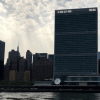
Will Trump Threaten to Pullout or De-fund the United Nations?
Back in 1998, Senator Jesse Helms, a rightwing Republican from the US state of North Carolina, carried out a virulent one-man hate-campaign against the UN-- and its very presence in New York.
TikTok, Trump and the Need for a Digital Non-Aligned Movement
Recent weeks have seen a dramatic escalation in the U.S.’ stance towards tech companies from the People's Republic of China (PRC). After hounding the telecommunications company Huawei for years, the social networking app TikTok is the latest Chinese company to enter the firing line.« Previous Page — Next Page »


Is the world dominated by three great empires -- the U.S.A, China and the European Union? How much power do the great behemoths of the south -- India, Brazil, and South Africa -- wield? And where does Russia fit in that equation? Are we in the middle of a new Cold War? What are the implications of the armed conflict with Georgia? What about the new axis: Venezuela-Russia? And what role does Turkey play? What about issues like Climate Change and other global forces like the food crisis and the high energy prices? How is all this reshaping the world's forces? IPS looks for some answers.

The Week with IPS

NEXT STOP - SDGs
Tracking global progress towards a sustainable world
Tracking global progress towards a sustainable world
