Languages
Thursday, November 26, 2026



News and Views from the Global South
Global Geopolitics
SOUTH KOREA: Public Frustration Over Afghanistan Hostage Crisis
South Koreans are shocked, confused and furious over the uncertain fate of 21 compatriots held hostage by the Taliban in Afghanistan, as the government presses the United States and Pakistan to support its efforts to bring them back alive.
Q&A: 'Targeting Fundamentalism Does Not Help Muslim Women'
Rising fundamentalisms around the world are challenging human rights, and particularly women's rights, feminist groups say. But this is not an Islam-related problem only, and isolating Muslim fundamentalism does not help Muslim women.CLIMATE CHANGE: EU Car Makers Have a Long Road Ahead
Over the next few months, members of the European Parliament (MEPs) will mull proposed limits on the amount of greenhouse gases emitted by the traffic that clogs up the continent's roads each day. If the experience so far this year is anything to go by, the MEPs will almost certainly be heavily lobbied by car makers determined to avoid measures that could prove vital in fighting climate change but which they deem too costly.DEVELOPMENT-MAURITIUS: ”Our Sea and Lagoon Are Not For Sale”
‘‘We are selling everything in this country: from our bodies to our land and now our sea and lagoons. Is there anything left for us?’’ asked Jack Bizlall, spokesperson for a nongovernmental network of organisations called Kalipso.TRADE-CHINA: Safety Complaints Force Beijing to Tighten Quality Control
Dogged by a plethora of reports in the foreign media highlighting problem Chinese goods and worried that product-safety recalls are spiralling into a major problem for its export juggernaut, Beijing has shifted gear to defend its battered "Made in China" reputation.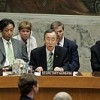
POLITICS: U.N. Passes Unanimous Resolution on Darfur
A resolution to create the world's largest peacekeeping operation was unanimously adopted by the U.N. Security Council Tuesday.
FILM: Ingmar Bergman, a "Mighty Force", Dies at 89
Great film directors are invariably linked with their home countries and the places where they made their artistic and commercial successes.PAKISTAN: Uncontrolled Population Blamed for Climate Change
When it comes to climate change population matters, particularly for countries in South Asia, Africa and some Arab countries, says Prof. Khalid Rashid. A mathematician and physicist in Pakistan, he has long been studying the phenomenon of global warming and views the uncontrolled population explosion with much trepidation.TRADE: EU On Its Way To What It Wants
As European trade officials prepare for their summer holidays, they have good reason to be satisfied with the latest efforts to revive the Doha round of talks on global commerce. Their counterparts from poor countries, however, are unlikely to be so cheerful.ENERGY: ‘Gas OPEC’ Still a Long Way Off
A cartel of natural gas-producing nations similar to OPEC (Organisation of Petroleum Exporting Countries), an idea floated by countries like Iran, Russia and Venezuela, remains a distant possibility due to the nature of the market.ASIA: Iraq’s Fairytale Journey Gives Football a Shot in the Arm
Asia's premier football championship received unprecedented global coverage thanks to the fairytale journey of the national team from war-ravaged Iraq. On Sunday night, Iraq's footballers were crowned the new heroes of the region after defeating the more fancied Saudi Arabians in Jakarta.TRADE: United They Talk, So Far
Unprecedented unity among a large majority of developing countries has put paid to aggressive attempts by rich countries to tilt the balance in the precarious Doha trade negotiations in their favour.MEDIA: Poverty, Development Goals Hard Subjects to Tackle
Water used to be carried home, usually by women, in large jugs, as is still the case in many poor countries. But now that many people around the world have piped water, they go to the supermarket to buy bottled water.ENERGY: Biofuels Pushing Up Food Aid Prices
A dramatic increase in the production of biofuels has led to rising food prices with serious implications for developing countries reliant on food aid to combat famine.
HEALTH: A New Weapon in the Fight Against Anaemia
A nutritional supplement known as Sprinkles, which is a simple powder that parents can easily add to their children's food, reduces childhood anaemia by more than half, according to a recent study published in the Journal of Nutrition.POLITICS: Most Muslims Reject Extremism
Growing numbers of Muslims in the Middle East and in predominantly Muslim countries in Asia and Africa are rejecting "Islamic extremism" and the use of suicide bombing, according to a new 47-nation global attitudes survey released by the Pew Research Centre on Tuesday.
HEALTH: ‘Protect Our Future’ – AIDS Drugs Needed for Children
The 4th International AIDS Society (IAS) Conference on HIV Pathogenesis, Treatment and Prevention concluded here Wednesday with a call for antiretroviral drugs developed specifically for HIV-infected children.CAMBODIA: Time for Answers Arrives at ‘Killing Fields’ Trial
For nearly 30 years, the Khmer Rouge regime that unleashed a reign of terror during it rule of Cambodia in the 1970s has been accused of committing genocide. But was this so?FINANCE-US: OPIC Extension Tied to Terror and Environment
The U.S. House of Representatives extended funding until 2011 for the Overseas Private Investment Corporation (OPIC), a government agency that backs U.S. corporations in developing nations, in an act that prohibits investment in "terrorist nations" and requires more rigorous human rights and environmental standards.POLITICS: Poor Countries More Optimistic About Future
Public opinion in most poor countries and Central Europe is generally significantly more optimistic about future living conditions for their children than in wealthy, developed nations, according to newly released findings of the latest Pew Global Attitudes Project (GAP) survey released here Tuesday.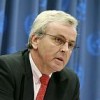
Q&A: "What's Important Is the Need, Not the Politics"
When conflicts and natural disasters flare up around the world, the United Nations Office for the Coordination of Humanitarian Affairs (OCHA) plays a critical role in delivering relief through a wide and complex array of U.N. agencies and non-governmental aid groups.« Previous Page — Next Page »


Is the world dominated by three great empires -- the U.S.A, China and the European Union? How much power do the great behemoths of the south -- India, Brazil, and South Africa -- wield? And where does Russia fit in that equation? Are we in the middle of a new Cold War? What are the implications of the armed conflict with Georgia? What about the new axis: Venezuela-Russia? And what role does Turkey play? What about issues like Climate Change and other global forces like the food crisis and the high energy prices? How is all this reshaping the world's forces? IPS looks for some answers.

The Week with IPS

NEXT STOP - SDGs
Tracking global progress towards a sustainable world
