Languages
Friday, November 13, 2026



News and Views from the Global South
Global Governance
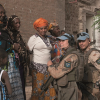
UN Member States, With Exceptions, Pay Lip Service to Women & Peacekeeping
A UN Security Council (UNSC) resolution adopted on 31 October 2000, underlying the role of women in peacekeeping, has long been described as both historic and unprecedented.
Slave Labour, Another Setback for the Government of Brazil
The wave of conservativism is testing its limits in Brazil, as reflected by a Labour Ministry decree that seeks to block the fight against slavery-like working conditions, which has been provisionally revoked by the justice system.
The Roots of Exodus: Why Are People Compelled to Leave their Homes?
Facts are facts, and one of them is that while everybody talks about the growing forced movement of people --be they migrants or refugees—decision-makers haven’t seriously acted on the root causes of why millions of humans are compelled to leave their homes.
Western Sahara’s Locked Positions Might be Loosening
In August last year armed forces from both sides pushed forward into the desert and into the no-go buffer zone that the UN had established.
Historic Resolution on Women & Peacekeeping Remains Mostly Unimplemented
At the 26 October launch of GNWP’s (Global Network of Women Peacebuilders) manual “No Money, No NAP” on dedicated budgetary allocation to fund the implementation of the 1325 National Action Plans, Executive Director of UN Women Phumzile Mlambo-Ngcuka characterized UNSCR 1325 as the most unimplemented resolution of the UN Security Council.
Cuban Immigration in the Eye of the Storm
Cuban migration to the United States is the great loser under Donald Trump's hostile policy toward Cuba, and creates additional difficulties for citizens of this Caribbean island nation who were accustomed to benefits that their neighbors in the rest of Latin America never enjoyed.
Ending the Male Monopoly on Peace: Women Still Need More Seats at the Table
Whether targeted by perpetrators of sexual violence, oppressed by ideological extremists, or uniquely threatened by the bombing of hospital maternity units, women often bear the brunt of conflicts. Yet when it comes to peace negotiations, women too often don’t have a seat at the table. The continuing reality that men, particularly armed men, enjoy an almost exclusive role in peace processes defies both logic and evidence.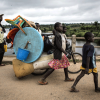
Congo’s Wake Up Call
Late last week, the humanitarian community activated a Level 3 emergency for the Democratic Republic of the Congo (DRC). This trigger in the global humanitarian system is seldom used, and only after serious deliberation by the top echelons of the UN system.
Pollution or How the ‘Take-Make-Dispose’ Economic Model Does Kill
The prevailing “Take-Make-Dispose” linear economic model consisting of voracious depletion of natural resources in both production and consumption patterns has proved to be one of the world’s main killers due to the huge pollution it causes for air, land and soil, marine and freshwater.
Russian & US Vetoes Protect Client States
The vote on the latest American-sponsored resolution in the UN Security Council (UNSC) on Syria was predictable: of the five big powers, China abstained and Russia vetoed, while the US, UK and France voted for it.
Latin America Heads to Climate Summit with Uneven Progress
Difficult to measure and unequal in their scope are the advances that the countries of Latin America will have to show, regarding their voluntary commitments to greenhouse gas emissions, during the climate summit to be hosted by Bonn, Germany in November.
The United Nations Is Needed More than Ever Before to Promote Peace and Justice Worldwide
In commemoration of the 2017 United Nations Day, the Chairman of the Geneva Centre for Human Rights Advancement and Global Dialogue H. E. Dr. Hanif Hassan Ali Al Qassim called for enhancing the role of the United Nations to address issues related to the promotion of peace and security as a platform for collaboration and the advancement of human rights.
Let’s Harness the Egalitarian Spirit of Sport for Global Cohesion
24 October has been celebrated as United Nations Day since 1948. In his message to the world the UN Secretary General, Mr Antonio Guterres remarked, “When we achieve human rights and human dignity for all people – they will build a peaceful, sustainable and just world”.
Role of the Fashion Industry in UN’s Sustainable Development Goals
Fashion is not a sector that exists in a vacuum. In fact, the fashion industry is not unlike any other key economic drivers; it is a key component of a global economy and certainly an important sector to consider when thinking about the UN’s 17 Sustainable Development Goals (SDGs).
Austrian Elections: The Crisis of Europe Continues
The Austrian elections show clearly that media have given up on contextualising events. To do that, calls for a warning about Europe’s future, as a vehicle of European values is required. Europe has been weakened by all the recent elections, with the notable exception of France. Common to all, France included, were some clear trends, that we will hastily, and therefore maybe imperfectly, examine.
Global Interfaith LGBTIQ Leaders Convene at UN for Expert-level Dialogue
On September 29, 2017, Yvette Abrahams, an indigenous religious leader from Cape Town, South Africa who served as the country’s Commissioner For Gender Equality for five years, gasped when she learned that South Africa had just voted in favor of United Nations Human Rights Council resolution condemning the death penalty for those found guilty of committing consensual same-sex sexual acts. She could not believe that the United States had not.
World Campaign to Clean Torrents of Plastic Dumped in the Oceans
With 30 countries from Kenya to Indonesia and from Canada to Brazil now involved in the world campaign to beat pollution by countering the torrents of plastic trash that are degrading oceans and endangering the life they sustain, the UN has strengthened its massive efforts to clean up the seas, which are the Earth’s main buffer against climate change.
Mexican Immigrants Help Sustain Two Economies – and Are Discarded
They work for years to bolster the economies of two countries. For one, the United States, they provide labour and taxes; for the other, Mexico, they send remittances that support tens of thousands of families and communities. Then they are deported, and neither government takes into account their special needs.
One of the World’s Most Dangerous PIaces For Aid Workers
I will travel to the Central African Republic early next week to spend United Nations Day with a peacekeeping operation in order to pay tribute to peacekeepers across the world.
US Withdrawal from UNESCO: Abandonment of Principles
A woman shopkeeper is standing on a plastic chair to avoid knee high swirling rainwater mixed with sewage. “I work with a women’s cooperative selling products made by Palestinian women in my shop. The sewage water has gone into the electric wires, so I have no electricity. Everything in the shop is destroyed. The metal door [that was] installed to protect the settlers prevents the water from flowing out into the main drain. . . . This means we suffer every time it rains. They [the settlers] want us to move from here. This is why they make our life hard,” she cries.
What Do You Really Eat When You Order a Steak, Fish or Chicken Filet?
The world is running out of antibiotics to combat the growing threat of antimicrobial resistance, the UN World Health Organization (WHO) warned while announcing the World Antibiotic Awareness Week on 13-19 November.« Previous Page — Next Page »


The Week with IPS

NEXT STOP - SDGs
Tracking global progress towards a sustainable world
Tracking global progress towards a sustainable world
