Languages
Wednesday, November 18, 2026



News and Views from the Global South
Global Governance

UN Staff Unions Demand Stronger Action on Sexual Abuse
The United Nations claims it is doing its best to curb widespread sexual abuses in its peacekeeping operations overseas – from Haiti all the way to the Central African Republic.Rethinking Fiscal Policy for Global Recovery
Global economic recovery is being held hostage by the ideological dogma of the last three and a half decades. After long contributing to neo-liberal conventional wisdom, in its October 2015 World Economic Outlook, the IMF identified the vicious circle undermining global recovery and growth. Low aggregate demand is discouraging investment; slower expected potential growth itself dampens aggregate demand, further limiting investment.
Worldwide Displacement At Levels Never Seen Before
Displacement has increased to unprecedented levels due to war and persecution, the UN Refugee Agency (UNHCR) has found.
Xenophobic Rhetoric, Now Socially and Politically ‘Acceptable’ ?
“Xenophobic and racist rhetoric seems not only to be on the rise, but also to be becoming more socially and politically acceptable.” The warning has been heralded by the authoritative voice of Mogens Lykketoft, current president of the United Nations General Assembly, who on World Refugee Day on June 20, reacted to the just announced new record number of people displaced from their homes due to conflict and persecution.
African Fisheries Plundered by Foreign Fleets
In 2011, Dyhia Belhabib was a volunteer in the Fisheries Centre at the University of British Columbia in Vancouver when she was asked to participate in the Sea Around Us’s project to determine how much fish had been taken out of the world’s oceans since 1950 in order to better avoid depleting the remaining populations of fish.
Fearing Violence, LGBT Refugees Rarely Seek Help
Despite their extreme vulnerability, lesbian, gay, bisexual, transgender and intersex (LGBTI) refugees often do not seek the assistance they need, since revealing their sexual or gender identities can put them in grave danger.
Latin America and the Caribbean: What does it take to prevent people from falling back into poverty
Latin America and the Caribbean countries have experienced historic economic and social transformation in recent years. This has led to a considerable reduction in poverty and inequality and to advances in closing gender, labor and education gaps. These achievements are the result of a favorable economic environment as well as proactive social inclusion policies.
Is globalization the death knell of branding?
SPEAKING to his company’s investor conference last Tuesday, Alibaba founder Jack Ma made a controversial, and entirely valid, observation: “The problem is that the fake products today, they make better quality, better prices than the real products, the real names,” Ma said, according to a Bloomberg report. “It’s not the fake products that destroy them, it’s the new business models.”
The Environment: Latin America’s Battleground for Human Rights
2015 was the deadliest year on record for the killings of environmental activists around the world, according to a new Global Witness report.
Yoga Unites the UN for Sustainable Development
The word yoga means "unite" in Sanskrit, and the Indian government hopes that the ancient practice will help United Nations member states to work together to achieve the Sustainable Development Goals (SDGs).
Mixed Progress at UN on Rights of Persons with Disabilities
Nearly 10 years after UN members adopted a progressive Convention on the Rights of Persons with Disabilities (CRPD), progress implementing the convention has been mixed, even at the UN itself, say disability advocates.
Unmet Expectations
Donald Trump’s rise in America, a wave of pro-Brexit and xenophobic sentiment in the UK, mass demonstrations in France and Brazil, a political crisis in South Africa, communal polarisation in India, and religious zealotry coupled with anti-corruption agitation in Pakistan. On the face of it, there’s very little that connects these disparate events. Each appears unique to a country’s history and its contemporary interaction of domestic and global events.
Case for Overcoming the Ostrich Syndrome
The final week of May 2016 was a grisly one. More than 700 asylum seekers and migrants died as three boats attempting to carry them to Italy sunk in the Mediterranean, and the death toll for the year crossed 2000. A week ago, Unicef reported a doubling of the number of unaccompanied children arriving as asylum seekers this year. The report also highlighted that these children are subjected to sexual violence, forced prostitution and other forms of abuse.
Civil Society in Latin America Campaigns Against Trans-Pacific Partnership
Civil society organisations from Chile, Mexico and Peru are pressing their legislatures and those of other countries not to ratify the Trans-Pacific Partnership (TPP).
Fences and Walls: A Short-sighted Response to Migration Fears?
European nations from which millions once left to escape hardship and hunger – Greece, Ireland, Italy - are today destinations for others doing the same.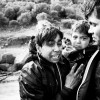
Xenophobia: ‘Hate Is Mainstreamed, Walls Are Back, Suspicion Kills’
“Hate is becoming mainstreamed. Walls – which tormented previous generations, and have never yielded any sustainable solution to any problem – are returning. Barriers of suspicion are rising, snaking through and between our societies – and they are killers…”
Children of a Lesser God: Trafficking Soars in India
Sunita Pal, a frail 17-year-old, lies in a tiny bed in the women’s ward of New Delhi’s Ram Manohar Lohia Hospital. Her face and head swathed in bandages, with only a bruised eye and swollen lips visible, the girl recounts her ordeal to a TV channel propped up by a pillow. She talks of her employers beating her with a stick every day, depriving her of food and threatening to kill her if she dared report her misery to anybody.
A Courageous Life After Escaping the Lord’s Resistance Army
Evelyn Amony’s bravery not only helped her survive and escape captivity from the Lord's Resistance Army (LRA), but has made her an advocate for thousands of abducted women and children who face long term consequences after returning home.
What If Turkey Drops Its “Human Bomb” on Europe?
Will the rapid--though silent escalation of political tensions between the European Union and Turkey, which has been taking a dangerous turn over the last few weeks, push Ankara to drop a “human bomb” on Europe by opening its borders for refugees to enter Greece and other EU countries?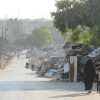
Majority of Vulnerable Refugees Will Not Be Resettled in 2017
Only a small percentage of the world’s most vulnerable refugees will be resettled in 2017, according to new figures released by the UN High Commission for Refugees (UNHCR) this week.
Not Politically Correct Reflections on Brexit
Allow me a rare personal anecdote. In 1965 I met Lord Hume, who had just left the post of Prime Minister and we had a mutual sympathy. Lord Hume invited me for lunch at the Chamber of Lords. Over an extremely delicious rump of Scottish lamb, I asked if I was allowed to ask a complex question. I explained that I had started my professional career as a Kremlinologist, which had served me well in following British foreign policy. One day London was looking to Europe as its compass, and another day, to Washington. All this on the basis of small signals, difficult to detect. Could his Lordship explain to me how to address this dualism?« Previous Page — Next Page »


The Week with IPS

NEXT STOP - SDGs
Tracking global progress towards a sustainable world
Tracking global progress towards a sustainable world
