Languages
Friday, November 20, 2026



News and Views from the Global South
Global Governance

Sri Lankan Women Stymied by Archaic Job Market
Wathsala Marasinghe, a 33-year-old hailing from the town of Mirigama, just 50 km from Sri Lanka’s capital, Colombo, once had high hopes that the progressive education and employment policies of this South Asian island nation would work in her favour. Today, she feels differently, believing that “an evil system” has let her down.
Opinion: Let’s End Chronic Hunger
At the 1996 World Food Summit (WFS), heads of government and the international community committed to reducing the number of hungry people in the world by half. Five years later, the Millennium Development Goals (MDGs) lowered this level of ambition by only seeking to halve the proportion of the hungry.
ACP Aims to Make Voice of the Moral Majority Count in the Global Arena
“Four decades of existence is a milestone for the ACP as an international alliance of developing countries,” Dr Patrick I. Gomes of Guyana, newly appointed Secretary-General of the African, Caribbean and Pacific group of countries, said at the opening of the 101st Session of the group’s Council of Ministers.
The U.N. at 70: Drugs and Crime are Challenges for Sustainable Development
With terrorism, migrant smuggling and trafficking in cultural property some of the world's most daunting challenges, "the magnitude of the problems we face is such that it is sometimes hard to imagine how any effort can be enough to confront them. But to quote Nelson Mandela, 'It always seems impossible until it is done'. We must keep working together, until it is done."
Opinion: A Critical Moment to Fortify Nuclear Test Ban
The 2015 Nuclear Non-Proliferation Treaty (NPT) Review Conference wrapped up last week in New York without agreeing on an outcome document. While this is unfortunate, it is important to remember that the future of the nuclear non-proliferation regime will be determined by more than whether the Review Conference participants produced a document addressing all that currently ails the NPT-based regime.
Iran Sanctions Regime Could Unravel with Failed Nuclear Deal
Internationally supported sanctions against Iran could begin to crumble if talks over Iran's nuclear programme fail to produce a final deal, according to Germany’s envoy to the United States.
Terror Groups May Be Winning Digital War on Extremist Ideology
The United Nations is quick to point out the increasing pace at which digital technology is racing across the world.
The U.N. at 70: A Glass Half Full
As the U.N. enters its 70th year, it is legitimate to ask whether it has been a success so far. Over the years, the media, in particular the Western media, has tended to highlight the U.N.'s failures.
Opinion: Tobacco Taxes Too Effective to Overlook in Financing for Development
Governments are in the midst of tough talks in New York over the text of the Addis Ababa Accord, which is scheduled to be adopted at the end of the Third Conference on Financing for Development (FfD) , to be held in Ethiopia in July.
Opinion: Finance Like a Cancer Grows
It is astonishing that every week we see action being taken in various part of the world against the financial sector, without any noticeable reaction of public opinion.
Q&A: Papua New Guinea Reckons With Unmet Development Goals
As Papua New Guinea celebrates 40 years of independence, 2015 marks a defining year for the largest Pacific Island nation, set to record 15 percent GDP growth this year.
Accusations of ‘Apartheid’ Cause Israelis to Backpedal
A decision by the Israel Defence Forces (IDF) to segregate buses in the occupied West Bank has backfired after causing an uproar in Israel’s Knesset, or parliament, and political damage on the international stage.
Failure of Review Conference Brings World Close to Nuclear Cataclysm, Warn Activists
After nearly four weeks of negotiations, the Nuclear Non-Proliferation Treaty (NPT) Review Conference ended in a predictable outcome: a text overwhelmingly reflecting the views and interests of the nuclear-armed states and some of their nuclear-dependent allies.
Slum-Dwelling Still a Continental Trend in Africa
Nompumelelo Tshabalala, 41, emerges from her dwarf ‘shack’ made up of rusty metal sheets and falls short of bumping into this reporter as she bends down to avoid knocking her head against the top part of her makeshift door frame.
Bougainville: Former War-Torn Territory Still Wary of Mining
From Arawa, once the capital city of Bougainville, an autonomous region in eastern Papua New Guinea in the southwest Pacific Ocean, a long, winding road leads high up into the Crown Prince Ranges in the centre of the island through impenetrable rainforest.
Opinion: Voice of Civil Society Muffled in Post-2015 Negotiations for Better Future
In September, the United Nations will agree on new Sustainable Development Goals (SDGs) which will set development priorities for the next 15 years. The draft goals that have been developed are ambitious – they seek to end poverty and ensure no one is left behind.
A Chimera in Growing Cooperation Between China and Brazil
A total of 35 agreements and contracts were signed during Chinese Prime Minister Li Keqiang’s visit to Brazil, as part of the growing ties between the two countries. But there is one project that drew all the attention: the Transcontinental Railway.
Germany’s Asylum Seekers – You Can’t Evict a Movement
In a move to take their message of solidarity to refugees across the country and calling for their voices to be heard in Europe’s ongoing debate on migration, Germany's asylum seekers have taken their nationwide protest movement for change on the road under the slogan: “You Can't Evict a Movement!”.
Opinion: New World Information Order, Internet and the Global South – Part I
More than four decades ago, the Non-Aligned Movement (NAM) launched the concept of a New International Information Order (NIIO).
Climate Change: Some Companies Reject ‘Business as Usual’
When it comes to climate change, business as usual is simply “not an option”.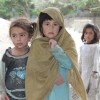
Pakistan’s Streets Kids Drop the Begging Bowl, Opt for Pencils Instead
Khalil Ahmed's life story sounds like it could have come straight out of the plot of a Bollywood flick, but it didn’t. And that makes it all the more inspiring.« Previous Page — Next Page »


The Week with IPS

NEXT STOP - SDGs
Tracking global progress towards a sustainable world
Tracking global progress towards a sustainable world
