Languages
Saturday, October 17, 2026



News and Views from the Global South
Global Governance

How NOT to Win Friends and Influence People
After four years of Trump’s ‘America first’ isolationism, US President Joe Biden announced “America is back”. His White House has since tried to find allies against China and Russia. But it has not found many, especially in the Global South. His summit with Southeast Asian leaders was well attended, but promised little. Worse, his Summit of the Americas revealed fading US influence in its long-time backyard.
Pelosi’s Trip to Taiwan, And Its Aftermath: Management of Missteps
Coral Bell, one of the finest strategic thinks of contemporary times had famously, but somewhat optimistically, advocated that peace-treaties be written without first fighting the wars. Her image of a 'crisis slide' saw the process beginning when adversaries are persuaded that there is no way out other than going to war. Thereafter it becomes an inexorable descent to the abyss of a military conflict. This simple but incontrovertible logic was extrapolated from her perception of global politics through the lens of a 'classical realist'. So, can it be argued that China and the United States are slowly but surely approaching this dangerous watershed point? Rapidly evolving events following Speaker Nancy Pelosi's recent trip to Taiwan sadly point to this possibility.
Why Electoral Malpractices are the Leading Form of Governance in Africa
Once again, Kenya finds itself at a crossroads. The current events in Kenya illustrate how and why electoral malpractices and not democracy and human rights are the leading form of governance in Africa.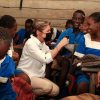
It Takes a Village to Raise and Support a Child in a Humanitarian Crisis
As we come together to celebrate people helping people on this year’s World Humanitarian Day, we honor the courageous and remarkable humanitarians delivering on the frontlines to help us achieve our goals for peace, universal human rights, and education for all.
Afghanistan: What Went Wrong?
After the horrendous tragedies of 9/11 in the year 2001, the US intervened in Afghanistan. Promising statements such as "we are going to smoke them [Al-Qaeda and their Taliban protectors] out" and "we are after ending terrorism" received warm receptions.
Chinese Fleet Threatens Latin America’s Fish Stocks
Illegal and excessive fishing, mainly attributed to Chinese fleets, remains a threat to marine resources in the eastern Pacific and southwest Atlantic, as well as to that sector of the economy in Latin American countries bathed by either ocean.
Tapping into the Power of Young People for Climate Action
Today, our world is 1.1°C warmer than it was in the pre-industrial era, and failure to act urgently could possibly result in increases of 1.5°C-2°C between 2026 and 2042. Climate change poses a serious risk to the fundamental rights of people of every age.
Global Public Investment: Time to Build the Movement Now
Global Public Investment. A short and simple phrase. But one that means so much. At its most basic, GPI means public money being used to invest in goods and services that are of global benefit. There is no shortage of goods and services that need GPI, whether they be used to prevent or respond to environmental catastrophe, international war and conflict, or the next pandemic.
Gender Equality & Women’s Rights Wiped out Under the Taliban
In the year that has passed since the Taliban’s takeover in Afghanistan we have seen daily and continuous deterioration in the situation of Afghan women and girls. This has spanned every aspect of their human rights, from living standards to social and political status.
Democracy in Iraq Under Threat Following the Storming of Parliament
The storming of the Iraqi parliament by supporters of Al-Sadr was motivated by years of political impasse — threatening Iraq's democracy and peace
A Safe Haven for Ousted Political Leaders Escaping Executions and Hangings
When world political leaders, mostly presidents and prime ministers, are ousted from power following military coups or street demonstrations, they flee to “safe havens” to avoid being jailed, executed by firing squads or hanged in public. Perhaps one of the secure “safe havens”—and a popular “political retirement home”-- is Saudi Arabia, a traditionally authoritarian regime, which has provided sanctuary for leaders from Uganda, Tunisia, Pakistan, Yemen and Qatar.
Pariah Solidarity Between Myanmar & Russia
On August 3rd residents of the Myanmar capital Naypyitaw were suddenly awakened by the sound of military helicopters in the air. The helicopters hovered over the city all day. The way to the regime's foreign ministry was also blocked for hours.
UN’s Education Summit: An Opportunity to Create a Bottom-Up Global Governance
The upcoming summit on Education, part of the UN Secretary General’s ambitious agenda, can truly bring accountability and participation to the inevitably new ways education will be imparted in the future.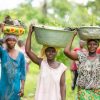
Indigenous Women at the Forefront of Transformational Change
The International Day of the World’s Indigenous Peoples, commemorated annually on August 9, is a day to celebrate the many contributions of the 476 million Indigenous peoples worldwide.
The Politics of the Hangman’s Noose: Judge, Jury & Executioner
A spike in state-sanctioned executions worldwide – including in Iran, Singapore, Saudi Arabia, and more recently Myanmar – has triggered strong condemnations from the United Nations and several civil rights and human rights organizations.
The Myanmar Junta Continues to Wreak Death & Destruction
Myanmar has been embroiled in violence and civil unrest since the military ousted the elected government of Aung San Suu Kyi in a coup in February 2021. The initially widespread peaceful protests were crushed with deadly force by the military and police.
Fear Returns to Argentina, Once Again on the Brink
Darío is a locksmith in Flores, a traditional middle-class neighborhood in the Argentine capital, who will have to stop working in the next few days. "Suppliers have suspended the delivery of locks, due to a lack of merchandise or because of prices," he laments. His case is an illustration of an economy gone mad in a country that once again finds itself on the brink of the abyss.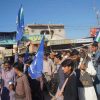
The Tragedy of Pakistan: Feudalism Camouflaged as Democracy
In recent days, as Pakistan’s economic woes have intensified, a veritable cottage industry has developed to suggest ways of putting the country back on track.
We’re on the Cusp of the Most Catastrophic Food Crisis in 50 Years: Where Is the Global Response?
A growing mountain of data and analysis points to an unprecedented global crisis in the making, due to the convergence of “Four Cs” (Conflict, Covid, Climate and Costs).
UN to Host Over 190 World Leaders & Delegates — Despite Threats from a Deadly New Covid-19 Variant
The United Nations is planning to host a high-level “in-person” General Assembly session, September 20-26, with over 190 world leaders and delegates listed to speak, including heads of state, heads of government, high-ranking ministers and senior officials. The world body is apparently on a risky path, with hundreds of delegates due in New York for the opening of the 77th session—and, most worryingly, at a time when a new Covid-19 variant BA.5 is sweeping across the United States, including New York.
Reject CPTPP, Stay out of New Cold War
Joining or ratifying dubious trade deals is supposed to offer miraculous solutions to recent lacklustre economic progress. Such naïve advocacy is misleading at best, and downright irresponsible, even reckless, at worst. TPP ‘pivot to Asia’ US President Barack Obama’s ‘pivot to Asia’ after his 2012 re-election sought to check China’s sustained economic growth and technological progress. Its economic centrepiece was the Trans-Pacific Partnership (TPP).« Previous Page — Next Page »





The Week with IPS

NEXT STOP - SDGs
Tracking global progress towards a sustainable world
Tracking global progress towards a sustainable world
