Languages
Thursday, October 15, 2026



News and Views from the Global South
Peace
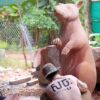
Cambodia Unveils Statue Honouring Tanzanian-Born Bomb-Sniffing Rat Magawa
At Mazimbu village, not far from Tanzania’s Sokoine University of Agriculture (SUA), Stephano Jaka still remembers the night he trapped and killed a rat that had been feasting on his maize cobs – stored in a meticulously woven basket designed to protect grains from rodents.
UNECA Warns Africa Risks Remaining Uncompetitive, Urges AI Adoption
Africa must move swiftly to harness data and frontier technologies such as Artificial Intelligence (AI) to drive its economic growth and make the continent globally competitive in the digital economy, a senior official at the United Nations Economic Commission for Africa (ECA) has told policymakers.
Europe and Multilateralism
“Europe can no longer be a custodian for the old-world order, for a world that has gone and will not return (…) we need a more realistic and interest-driven foreign policy.” These were some of the words pronounced one week ago by the President of the European Commission, Ursula von der Leyen, at the EU Ambassadors’ Conference in Brussels. A speech that sparked considerable controversy: an almost immediate rebuttal from the President of the Council, Antonio Costa; rumours of a motion of censure against Von der Leyen in the European Parliament; more or less public reproaches from several European leaders; and a swift and complete retraction by the President herself.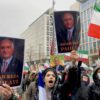
Iran Conflict: “Civil War Will Be Inevitable”
Iranian and Israeli flags fill the centre of Manchester, in northern England. There are also portraits of a king overthrown almost half a century ago and of his son, now a claimant to the throne from exile. It is yet another march of Iranians calling for Reza Pahlavi as an alternative to the regime of the ayatollahs.
Syria’s Mobile Cultural Bus: Championing Cultural Justice, Delivering Art and Literature to Children of War
In the Al-Azraq camp in northern Syria, 10-year-old Abeer Al-Qaddour sits, browsing a colourful book with intense focus and curiosity. Nearby stands a bus, elegantly inscribed with the words 'The Cultural Bus'.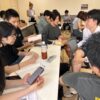
Before We Label Others: Why Listening Is the First Step Toward Peace
Around the world, conflicts often begin not with violence, but with assumptions. When people judge others before understanding them, labels replace dialogue—and division replaces trust. For young people growing up in an increasingly polarized world, learning to listen may be one of the most powerful tools for peace.
Imagery, Algorithms, and the Ballot: What Takaichi’s Victory Says About Youth Politics in the Digital Age
Sanae Takaichi’s electoral victory in February marks a historic turning point in Japanese politics. As Japan’s first female prime minister and the leader of a commanding parliamentary majority, she represents change in both symbolic and strategic terms. Conventional wisdom long held that younger Japanese voters leaned progressive, were sceptical of assertive security policies, and disengaged from ideological nationalism. Yet a segment of digitally active youth rallied behind a politician associated with constitutional revision, expanded defence capabilities, and a more unapologetic articulation of national identity. This shift cannot be reduced to a simple conservative swing. Rather, Takaichi’s rise reflects a deeper transformation in how democratic politics is constructed in the digital age: the growing power of imagery, digital mobilisation, and algorithm-driven branding in shaping political choice—particularly among younger voters.

UN Leaders, Diplomats Warn of Middle East Instability Following Weekend Air-Strikes in Iran
The United States and Israel launched a joint military strike on Iran on February 28. Iran followed with military strikes on Israeli bases and on Arab Gulf states, including Bahrain, Oman, and the United Arab Emirates. The realized threat of a new war has caused alarm for the security situation in the Middle East and its impact on civilian populations.
Can “Human Fraternity” Move Peace?
As wars drag on and the international order grows increasingly unstable, Abu Dhabi has been offering a different kind of narrative. It sought to recognize early efforts at reconciliation, bring religious leaders into the same space, and place former adversaries under the same spotlight. At the heart of the February 4, 2026 Zayed Award for Human Fraternity ceremony was an attempt to make visible, in a public setting, the choice of moving in the direction of easing conflict.
‘Nothing Compares to Human Lives Lost’ – Reflections on Ukraine War
“We have a saying here in Ukraine now – ‘young people meet at their friends’ funerals rather than at weddings.' It’s sad, but very true.”
UN Security Council: Reform or Irrelevance
In early January, an emergency UN Security Council meeting on Venezuela followed a familiar path of paralysis. Members clashed over the US government’s abduction of Nicolás Maduro, with many warning it set a dangerous precedent, but no resolution came.
Ahead of Brutal Winter Season, Intensified Attacks Cripple Basic Services Across Ukraine
In recent weeks, the Russo-Ukrainian War has taken a considerable turn for the worse, with armed hostilities escalating in both frequency and intensity, causing extensive damage to civilian infrastructure and a significant loss of life across Ukraine. Attacks on energy infrastructures and the resulting power outages are forcing the most vulnerable civilians to deal with a “cold, frightening ordeal” in the winter season, warned the United Nations (UN) human rights chief.
As Attacks on Women Defenders Intensify, so Must Our Support
A global crackdown on civic freedoms is intensifying – and women are on the frontlines of the attack. CIVICUS’s 2025 People Power Under Attack report analyses the extent to which freedoms of association, expression and peaceful assembly are being respected or violated. The report reveals that people in 83 countries now live in conditions where their freedoms are routinely denied, compared to 67 in 2020. In 2020, 13 per cent of the world’s population lived in countries where civic freedoms were broadly respected; now it’s more like 7 per cent. Among the most documented violations in 2025 were detention of human rights defenders, journalists and protesters, and women human rights defenders (WHRDs) were among the most affected.
The New Fragility: Peacebuilding Meets Digital Democracy
Established democracies are exhibiting governance stresses that were once associated primarily with fragile and conflict-affected states. Polarisation is weakening institutional trust, fragmenting civic norms, and reducing societies’ ability to solve problems collectively. This is the new fragility. At the same time, governments and civil society organisations are adopting digital tools to support public participation. These deliberative technologies hold real promise, but in polarised environments they also carry risks. Their success depends on the same principles that have guided peacebuilding efforts for decades.

‘Seven Million People Have Taken to the Streets to Stand up for Democracy’
CIVICUS discusses US civil society action under the second Trump administration with Bridget Moix, General Secretary of the Friends Committee on National Legislation, the oldest faith-based lobbying organisation in the USA, advocating for peace, justice and environmental stewardship. Bridget has participated in the No Kings movement, a nationwide grassroots response to democratic backsliding and attacks on rights.

Innovative Approaches to Climate, Peace and Security: Opportunities for India–Germany–Australia Collaboration
Emerging research on the nexus between climate, peace and security (CPS) supports the integration of climate adaptation and mitigation methods to advance sustainable peace. While climate change itself may not be the direct cause of conflict, its cascading effects such as resource scarcity, displacement, and economic stress could become focal points of tension. Although these links remain debated, meaningful responses could have delayed stabilizing effects. Locally driven responses become essential in addressing climate change as a security concern, to mitigate future cycles of conflict. A nuanced CPS framing can support smarter climate action while enhancing security at multiple levels. India’s scalable local models, Germany’s technical expertise, and Australia’s Pacific engagement pose an opportunity for the three countries to collaborate on advancing integrated CPS approaches.

‘This People’s March for Climate is For My Son’s Future’
In the scorching heat and humidity, Canru Pataxo marched with his one-year-old son firmly held in his arms.
Nuclear Disarmament Conversations Cannot Lose Traction
In recent days, nuclear state leaders have flouted the regulations and norms around nuclear non-proliferation and are flirting more openly with nuclear might in the name of projecting strength.
At Rome’s Colosseum, Faith Leaders Confront a World at War — and Dare to Speak of Peace
In the shadow of Rome’s Colosseum — once a monument to imperial violence — religious leaders from across the world gathered this week to deliver a message that felt both ancient and urgent: peace must once again become humanity’s sacred duty.
Rajagopal PV’s Blueprint for Another World: Peace
"If nations can have defense ministries, why not peace ministries?" asks Rajagopal PV, the soft-spoken yet formidable founder of Ekta Parishad. "We are told to see issues through a gender lens—why not a peace lens? Why can’t we imagine a business model rooted in non-violence or an education system that teaches peace?”
With Ceasefire in Effect, Tonnes of Aid Expected to be Delivered into Gaza
After two years of conflict with Israel, Hamas has released the remaining 20 living hostages, while Israel has freed 250 Palestinian prisoners and over 1,700 detainees who have since returned to Gaza. Following a ceasefire agreement that took effect on October 10, Israeli forces are set to withdraw from designated areas within the Gaza Strip as humanitarian organizations mobilize to assist Palestinians in urgent need.« Previous Page — Next Page »





The Week with IPS

NEXT STOP - SDGs
Tracking global progress towards a sustainable world
Tracking global progress towards a sustainable world
