Languages
Sunday, October 11, 2026



News and Views from the Global South
Peace

Obama Renews Push For Nuclear Arms Control
Reactions have been mixed to President Barack Obama's call for greater nuclear arms reductions in the United States and Russia, made during his speech in Berlin on Wednesday.
Border Weakens Between Bombs and Cherries
It all happened within ten days – Syria’s civil war fought metres away from Israeli orchards abutting the ceasefire line; Austrian peacekeepers hastily evacuating the Demilitarised Zone (DMZ) that separates Israel from Syria; fears of a total collapse of the UN Disengagement Observer Force (UNDOF). All while the cherry-picking season is at its peak.
U.S.-Taliban Talks Set to Begin
Nearly 12 years after the United States ousted the Taliban from power, the White House announced Tuesday that the United States will begin formal talks with the militant Islamist group in Qatar later this week as part of Afghanistan's national reconciliation process.
Colombia, the United States, and Montesquieu
The United States and Colombia are the leaders in mental anxiety in the Americas. Both have good reasons: Colombia has witnessed the longest lasting violence in any contemporary country: from 1949, with some interruptions, then on again from 1964 with the notorious guerilla group, the FARC (Revolutionary Armed Forces of Colombia).
The Taliban Torches a Lifeline
The United States is laying meticulous plans ahead of its 2014 withdrawal from Afghanistan, but it has clearly overlooked how its continued drones strikes on the tribal areas of neighbouring Pakistan will affect the much-anticipated pullout.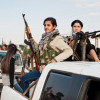
Kurds Advance, Into the Unknown
A ban on political and even social gatherings, a bar on Kurdish language and culture; uprooting people, forced disappearances and a ‘caste’ of hundreds of thousands of local Kurds deprived of citizenship... life for Kurds in pre-war Syria was probably as dire as it is today for their kin in Iran.Washington Mulls Surprise Rouhani Victory in Iran Vote
The surprise victory of Hassan Rouhani in Iran's Jun. 14 election has provoked a range of reactions here, ranging from cautious optimism about possible détente between Tehran and Washington to outright rejection of the notion that his presidency will produce any substantive change in policy, foreign or domestic.
Former War Zone Craves Democracy
For the first time since Sri Lanka’s 30-year-long civil conflict drew to a bloody finish in May 2009, casting an eerie hush over the Northern Province that had grown accustomed to the sounds of war, there is a buzz in the air generated by the prospect of provincial elections that hold the promise of radical change.
Coming Out in Droves Against Drones
Though the constant hum of unmanned aerial vehicles flying overhead makes a strong case for staying indoors, residents of Pakistan’s North Waziristan Agency are emerging in droves from their humble homes, some no bigger than huts constructed from mud and stones.Intra-Asian Security Ties Good for U.S. – Report
Deepening security ties between East Asian nations offer substantial benefits to the United States as it "rebalances" its military forces towards the Asia-Pacific region, so long as the move is not perceived as a U.S.-led effort to contain China, according to a new report by a think tank close to the administration of President Barack Obama.
Globe Less Peaceful Than Five Years Ago – Report
The world - especially the Greater Middle East – has become less peaceful than it was five years ago, according to the 2013 edition of the annual Global Peace Index (GPI) released here Tuesday by the Institute for Economics & Peace (IEP).
Q&A: “The U.N. Is Too Slow to Respond to Crisis”
As the situation in Myanmar deteriorates, thousands of Rohingyas have fled the country in search of a safe haven.Libya’s Deserts a Source of Worry for its Neighbours
All eyes have turned to Libya since Nigerien President Mahamadou Issoufou’s statement claiming that recent attacks in north Niger were perpetrated by Malian terrorists based in south Libya.
As Erdogan Remains Firm, No End in Sight for Turkey’s Protests
Now approaching its third week, the "Occupy Taksim" movement, a peaceful sit-in to save Istanbul's Gezi Park from redevelopment, has taken on a festival-like atmosphere, with protesters organising to stand guard around the clock, provide uninterrupted food and water supplies, and carry out a self-initiated cleaning of the grounds.
Q&A: Turkish Opposition Leader Expects Unrest to Continue
As protests in Turkey stretch into their second week, the precise terms and conditions that could bring the social unrest to an end are unclear, though many speculate about what would end the deadlock between the government and protesters.
U.S. Syria Hawks Can’t Get No Traction
With Syrian government forces and their allies scoring a major victory over Western- and Gulf Arab-backed rebel forces this week, neo-conservatives and other anti-Damascus hawks are trying hard to turn up the pressure on President Barack Obama to sharply escalate U.S. support for the opposition.
Overcoming “Strategic Suspicion” – Goal of Obama-Xi Summit
This week’s relatively informal and unscripted summit between the presidents of the United States and China on a private estate in southern California is being welcomed by most analysts here as a virtually unprecedented opportunity for each side to gain a better understanding of the strategic aims of the other.Shift in Latin America’s Approach to Drugs – from Security to Health Issue
The drug problem should be tackled not as a security issue but as a public health question, with policies for "prevention, treatment and rehabilitation," delegations from the 34 countries participating in the 43rd General Assembly of the Organisation of American States agreed.“Syria Peace Meeting Will Not Happen in June”: UN Envoy
A conference on ending the fighting in Syria will not happen in June, as planned, because both sides in the conflict are unprepared to attend, the U.N.'s international envoy Lakhdar Brahimi said.
46 Years on, Arab-Israeli War Still Leaving Its Mark
Majda el-Batsch was eight years old in June 1967 when she heard about the war that year. "I didn't know what war meant," she recalled. More than four decades later, the Palestinian reporter is still grappling with the meaning of what is known as the Six-Day War.
Despite Peace Talks, Forced Displacement Still Climbing in Colombia
Drugs and arms traffickers are muscling in on Colombia's Pacific coastal region, forcibly displacing local people, according to a new report by the Consultancy for Human Rights and Displacement (CODHES).« Previous Page — Next Page »





The Week with IPS

NEXT STOP - SDGs
Tracking global progress towards a sustainable world
Tracking global progress towards a sustainable world
