Languages
Sunday, November 8, 2026



News and Views from the Global South
Headlines

From Chemical Engineer to Climate Justice Avenger: A Journey with Yamide Dagnet
As a child on the French-Caribbean island of Guadeloupe, Yamide Dagnet dreamed of launching rockets into space. She stuck to science, discovering her path in chemical engineering. She became a scientist focused on critical reactions to solving real-world problems like improving water quality in the United Kingdom.
Martin Luther King’s Message Shook the Powerful: Vital People can Hear it Today
All through this week, leading up to January 15th, the world will commemorate Martin Luther King. In a world as wounded as ours is today, the lessons of his life’s work offer a vital opportunity for healing.
Technology Transfer Critical to Revolutionizing Africa’s Pharma Industry
An agreement signed between the Rwandan government and the Africa Pharmaceutical Technology Foundation (APTF) gives impetus to Africa’s domestic industry with the hope of helping the continent tackle vaccine inequity and fill the critical gap in vaccine manufacturing.
Time to End the Israeli-Palestinian Conflict with a Two State-One Nation Solution
Since October 9 2023, Israel’s war on Gaza has displaced over 1.8 million, according to UN estimates and killed almost 22,000 people in Gaza as of 2 January 2024, most of them women and children, according to the Hamas-run territory’s health ministry. Hamas' October 7 surprise attacks on Israel killed 1,200 people.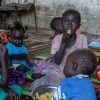
2024 Demands Swift Action to Stem Sudan’s Ruinous Conflict
Nearly nine months of war have tipped Sudan into a downward spiral that only grows more ruinous by the day. As the conflict spreads, human suffering is deepening, humanitarian access is shrinking, and hope is dwindling. This cannot continue.
Is it Time for Palestine to be Voted UN Member State?
The atrocities against Palestinians in a ruthlessly devastated Gaza — with over 21,000 mostly civilian deaths in retaliation to the killings of 1,200 inside Israel —have resurrected a longstanding question: is it time for Palestine to be recognized as a full-fledged UN member state? The question has also been triggered by a statement by China, a veto-wielding permanent member of the UN Security Council (UNSC).
Homeless Families Now a Growing Issue in Zimbabwe
It is do or die on the streets of Zimbabwe as homeless families battle for survival solely depending on begging. Such is the life of 69-year-old Gladys Mugabe, who lives with her disabled son in Harare Gardens, a well-known recreational park in the Zimbabwean capital, Harare. Over the decades, Zimbabwe’s economy has underperformed. It started in 2000 with the departure of white commercial farmers, and the country has experienced subsequent periods of hyperinflation, which the International Monetary Fund estimated reached 172% in July last year.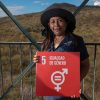
There Is No Democracy Without Gender Equality
Violence against women and girls is one of the most widespread and persistent abuses of fundamental rights at a global level that, to a certain extent, derives from what we consider "normal" in our societies. In addition to firmly condemning that every three women in the world suffer from physical or sexual violence, we must question what we are normalizing as a society for this to happen.
Will the Human Rights Movement Survive the Gaza War?
In its military campaign in Gaza, Israel faces a seemingly endless list of alleged human rights violations. International monitors argue the Israel Defense Forces have starved Gazans, targeted journalists attempting to cover the carnage, tortured detainees, and attacked hospitals full of wounded civilians.
Fear as Russian Anti-LGBT Law Comes into Effect
“This is what you get after ten years of state propaganda and brainwashing,” says Anatolii*. The Moscow-based LGBT rights activist’s ire is directed at a recent ruling by Russia’s Supreme Court declaring the “international LGBT movement” an extremist organization.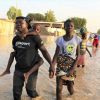
Nigeria Prioritizes Climate Action to Mitigate Natural Disasters
In 2022 alone, flooding killed at least 662 people, injured 3,174, displaced about 2.5 million, and destroyed 200,000 houses individuals. As far back as 2012, the World Bank reported that erosion was affecting over 6,000 square kilometres of land in the country, with about 3,400 square kilometres highly exposed.
Europe’s Shift to the Far Right and its Impact on Immigration
The recent elections in the Netherlands signals the increasing power of the far right in Europe. The populist party of Geert Wilders, the Party for Freedom, won a decisive, albeit unexpected, victory taking 37 seats out the 150 seat in parliament. Wilders will likely be the head of the next Government. His policies include stopping all immigration into the Netherlands, holding a referendum on leaving the EU, and banning mosques and the Quran.
US Hypocrisy Over Russian and Israeli Killings
When US President Joe Biden lambasted “the largest aerial assault,” which hit “a maternity hospital, a shopping mall and residential areas killing innocent people”, he was not talking of the devastating Israeli attacks on Gaza but criticizing the most recent Russian military assault on Ukraine.
Amidst a Horrendous 2023, Civil Society is Fighting Back Society
The year 2023 has brought so much tragedy, with incomprehensible loss of lives, whether from wars or devastating ‘natural’ disasters, while our planet has seen yet more records broken as our climate catastrophe worsens. And so as the clock ticks towards the (mostly western) New Year, readers are traditionally subjected by media outlets like ours to the 'yearender'—usually a roundup of main events over the previous 12 months, one horror often overshadowed by the next.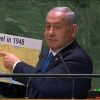
Regime Change in Israel
Benjamin Netanyahu must go. Under the guise of judicial reform, Netanyahu has undermined the rule of law and divided the country. He is toxic to Arab states, even those which have signed the Abraham Accords. Netanyahu has become an impediment to Israel’s democratic development and regional relations.
Catastrophic Shortage of Food in Gaza—Starvation as a Weapon of War
As the killings of civilians in Gaza rose to over 20,000, the besieged city—which has been virtually reduced to rubble by Israeli bombardments—is also being ravaged by hunger and starvation. In new estimates released on December 21, the Integrated Food Security Phase Classification (IPC), a global partnership that includes the World Health Organization (WHO), said Gaza is facing “catastrophic levels of food insecurity,” with the risk of famine “increasing each day.”
South Asian Women, Girls Need Responsive Legal System to Gender Violence
Criminal justice systems in South Asia are failing women, despite stark statistics on the prevalence of violence. WHO estimates translate to one in every two women and girls in the region experiencing violence daily.
What’s in Store for Indian Farmers After Cop 28’s Conclusion in Dubai?
Durga Das*, a 59-year-old farmer from the Indian state of Maharashtra, committed suicide last year by ingesting a poisonous substance. He was unable to repay the loan he had taken from the bank for the renovation of his single-story house. This year, his 32-year-old son, Pradeep Das, a father of two children, is equally desperate. The family owns half an acre of cultivated land where they grow cotton. The harvest has been devastated due to intense heat waves, leaving farmers like Dass and his son Pradeep in dire straits. The loan the family had taken is yet to be paid, and the land they had mortgaged in the bank is about to be confiscated. This means no crops, no cultivation, no business, and no food.
From Bureaucratic Labyrinths to Accessible Civil Registration
Have you ever tried to register a birth, a death or maybe your own marriage? Unfortunately, many of these vital events in Asia and the Pacific remain unregistered often with dire consequences for individuals, families and communities.
The Opaque Chain of Electric Cars Assembled in Mexico
The city of Austin, Texas, on the U.S.-Mexico border, had 945,000 residents in 2021 and on average each household owned two cars, hundreds of them electric. Among the manufacturers of these electric vehicles are companies such as the US Tesla, Ford and General Motors (GM).
Saving Energy, Saving Forests: How Kindle Stoves Are Changing Women’s Lives
Five years ago, farmer Sehlisiwe Sibanda would walk into a nearby forested area to fill a scotch cart with huge wood logs for cooking and heating; a pile of firewood would last her a week during the summer. But now she does not need a cartful of huge logs. Small branches and twigs are enough to last for more than a month.« Previous Page — Next Page »





