Languages
Sunday, November 15, 2026



News and Views from the Global South
Headlines

Nobel Laureate Kailash Satyarthi on Where to Find the $1 trillion Needed for Marginalised Children
 Nobel Laureate Kailash Satyarthi says that $1 trillion can solve many of the problems the world's most marginalised communities are facing.

Exclusive: Kailash Satyarthi Warns over a Million Children Could Die Because of COVID-19 Economic Crisis
Nobel Laureate Kailash Satyarthi warns of the danger that over one million children could die, not because of the COVID-19 pandemic, but because of the economic crisis facing their families. In an exclusive interview with IPS, Satyarthi said that without prioritising children we could lose an entire generation as evidence mounts that the number of child labourers, child marriages, school dropouts and child slaves has increased as the COVID-19 pandemic spread across the globe.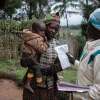
COVID-19: Lessons from the Losses
If countries considered Universal Health Coverage (UHC) a central policy in their health systems, the COVID-19 has surely demonstrated the need for its urgent and widespread roll out. The pandemic has upended world systems in a manner that no scientists or sophisticated global intelligence could have foreseen.
A Red Notice against Trump?
When INTERPOL is asked to intervene against targeted killing. Introduction Last June, news broke that Iran had issued an arrest warrant and asked INTERPOL for help in detaining US President Donald Trump and dozens of others it believed had carried out the drone strike that killed a top Iranian general in Baghdad.1 INTERPOL denied this request,2 stating that it “would not consider requests of this nature” because “it is strictly forbidden for the Organisation to undertake any intervention or activities of a political, military, religious or racial character.”3

US Poll Predictions and Presidential Politics in the American Polity
The US residential polls are akin to a drama that is staged every four years in which the American are actors on stage and the rest of the world is the audience. With one major difference, however. While in a usual theatrical performance the viewers are there mostly for amusement, though some may be enlightened and enriched by the experience, in the case of the US elections, unlike in others, their fates are inextricably linked to the outcome of the play. This is not predetermined by any playwright, though it can often be predicted. It is not implausible therefore for some on-lookers to want to intervene in what’s happening onstage. It must be done discreetly, and with great circumspection. Take for instance, the Russians in the American elections in 2016. The Russians and President Donald Trump hotly dispute allegations of any such interference.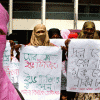
UN Women Calls for Accelerating its Unfinished Business
Twenty-five years ago, the Fourth World Conference on Women in Beijing set a path-breaking agenda for women’s rights. As a result of the two-week gathering with more than 30,000 activists, representatives from 189 nations unanimously adopted the Beijing Declaration and Platform for Action.
World Risks Losing Entire Generation of Children, Nobel Laureates Warn
The COVID-19 pandemic has upended the lives of millions of people worldwide, accounted for over 869,000 deaths, destabilised the global economy and triggered a marked rise in poverty and hunger in the developing world. But the fallout from one of the most devastating consequences of the spreading virus is on the lives of a growing new generation: children.
COVID-19: Presidents, the Press, and the Pandemic
The presidents of the Americas, beyond their ideological differences, seem to agree in questioning the role of journalists and the media in the coverage of the COVID-19 pandemic. On the other hand, human rights organizations remind us of the fundamental role of information, especially in times of crisis and uncertainty like the one we are experiencing in this 2020.
Americans By Force
Why, in the United States, where change is the most pronounced hallmark, do some aspects never change? Why do many bad habits resist giving way to novelties that prove to be the basis of the success of the most developed country on earth and still the leading power? Why is the explanation for that leadership due to a few factors? Why does Trump profess a visceral opposition to immigration, knowing that it is the key to the country's success? Because millions of his compatriots interpret the sinew of American DNA as a threat to their comparative social advantage.
Mozambique Reels from Repeated Attacks on Press Freedom
While Mozambique was recently rattled by an arson attack on a local media organisation, experts say that it’s only a part of a worrying pattern of continuous attacks on the media in the country.

Nobel Laureates and Global Leaders Call for Urgent Action to Prevent COVID-19 Child Rights Disaster
Regina Njagi’s four children, aged between 11 and 17, have not benefitted from online learning since the COVID-19 led to the closure of all schools in Kenya, earlier in March. With the closure, Njagi lost her job as a teacher at a local private school.
Not Guilty Verdict in Kuciak Killing – a Chilling Message for Journalists
A Slovak businessman with alleged links to organised crime has been found not guilty of ordering the murder of journalist Jan Kuciak in a ruling that has left press freedom campaigners and politicians shocked.
The First “Virtual” Post-Pandemic UN General Assembly Meeting
Although we have not convened in this Hall since March, New York-based delegations have worked tirelessly to uphold the values and principles set out in the Charter of the United Nations, whilst contending with the COVID-19 pandemic.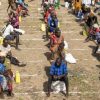
COVID-19: Without Help, Low-Income Developing Countries Risk a Lost Decade
While the COVID-19 crisis is sending shockwaves around the globe, low-income developing countries (LIDCs) are in a particularly difficult position to respond. LIDCs have both been hit hard by external shocks and are suffering severe domestic contractions from the spread of the virus and the lockdown measures to contain it. At the same time, limited resources and weak institutions constrain the capacity of many LIDC governments to support their economies.
Qatar Accuses UAE of Racial Discrimination in UN’s Highest Court
Qatar officials reiterated their claim on Wednesday that the United Arab Emirates (UAE) be held responsible for their “discrimination” against Qatari citizens, as the third day of public hearings proceeded at the International Court of Justice (ICJ), the United Nation’s highest court. But foreign policy experts caution that the case is not good for stability in the Persian Gulf region.
“Hidden” Costs of Our Food Systems
Five years after the adoption of the 2030 Agenda we are far from achieving the Sustainable Development Goals (SDGs). According to the recently launched SOFI Report (The State of Food Security and Nutrition in the World 2020), we are not on track to eradicate poverty, hunger and malnutrition. On the contrary, with the current trends, the global number of undernourished people in 2030 would exceed 840 million. Moreover, WHO has reported alarming rates of overweight and obesity, globally affecting 39% and 13% of the adult population, respectively.
Music Collective ‘Megative’ Dubs Out the Negative
Even as their income dries up and their touring opportunities disappear because of the Covid-19 pandemic, some artists are using their work to call out injustice, criticize inept leaders and spark social change.
Trinidad and Tobago – Protecting the iconic Three Sisters
Trinity Hills in Trinidad and Tobago’s southeast region, also affectionately known as the Three Sisters, is home to a wildlife sanctuary that serves as a sort of incubator for fauna to reproduce and replenish the surrounding forest reserves of the Victoria-Mayaro region that includes the communities of Guayaguayare and Moruga. But a draft management plan for the Trinity Hills environment project and reports from surrounding communities suggest that urgent action is needed to prevent losses to the sanctuary and forest reserve.
A Pandemic Cannot Justify Child Labour
For the past five months, our screens have been flooded with distressing imagery of one catastrophe after another: From the impact of the COVID-19 pandemic on vulnerable communities, to cyclones in West Bengal, Odisha, and Maharashtra.
It Is Time to End the Controversial World Bank’s Doing Business Report
On 27 August the World Bank announced that it will suspend the Doing Business Report over data irregularities, until it conducts a review and audit. The halting of the report was welcomed by trade unions, academics and human rights groups.
Seeking Asylum? Not Here!
Although the right to seek asylum is recognized nearly universally, governments across the globe are increasingly declaring, “Not Here!”. Those governments view the large and growing numbers of men, women and children seeking asylum in their countries as serious threats to their native populations, ways of life and cultures.« Previous Page — Next Page »


