Languages
Tuesday, November 17, 2026



News and Views from the Global South
Headlines

The Future of Journalism
All over the world, journalism is going through an era of uncertainty. It is not yet clear what the business model for the news field will be, and this is happening precisely at a time when information is a central issue in every person's life.
**Correction**How the COVID-19 Pandemic is Affecting Women’s Sexual and Reproductive Health
A little over half of women across the globe are able to freely make choices about their sexual and reproductive health, according to a latest report based on data from 57 countries. However, as much of the world has gone into lockdown because of the coronavirus pandemic, with countries implementing social distancing and restricting the free movement of people, experts are concerned that even this small gain in sexual and reproductive health may suffer negatively.
NGOs Pivot to COVID-19 Prevention in Refugee Camps
We are living in uncertain times. All of us are experiencing the Corona pandemic in various ways. For most it means quarantine and physical isolation. We worry about family members, loss of income and not knowing what the future will look like- or how long this will continue.
Green Counter-Revolution in Africa?
In 2006, the Bill and Melinda Gates Foundation and the Rockefeller Foundation jointly launched the Alliance for a Green Revolution in Africa (AGRA). The African Green Revolution Forum claims AGRA is the “world’s most important and impactful forum for African agriculture”.
The Boardwalk For Birds: Protecting Lake Victoria’s Dunga Beach Wetland
At around 11am on a Saturday, Luke Okomo arrives at Dunga Beach, on the outskirts of Kenya’s Kisumu City, and heads straight to what is known as the ‘Dunga Papyrus Boardwalk’.
The Economic Impact of COVID-19 on Developing Countries – Part 2
What is likely to be the impact of the COVID-19 pandemic on developing economies? In the first of this two part article we looked at possible short term disruptions and discussed actions by the private sector and Governments.
Diverse Voices Should Be Represented in Coronavirus Experts on TV
During a crisis, such as the novel coronavirus, whose impact changes with every passing minute, the urge to listen to and watch the news, and get firsthand insights and real time updates can be constant. Indeed, millions of Americans are frequently checking the news. I know I am. What I’ve noticed on three of the major TV stations I’ve watched across the day is the absence of diversity in the experts commenting on the pandemic. This is inexcusable.
Reimagining Farming Post-Covid Pandemic
Together with medical services and transportation, farming and food production have been correctly identified as ‘essential services’ by all countries under lockdown. The Covid-19 pandemic has not yet made a dent in the food supply and so far, there are no reports of shortage of essential food and agricultural goods. All cities and towns are actively coordinating with government agencies, farms, businesses and transport companies to maintain the supply chain and ensure full availability of food for the population,
Human Rights and Compassion Must Guide Enforcement of COVID-19 Mitigation
Covid-19 infections continue to rise, bringing normal life to a virtualstandstill and causing countries to shut themselves off from the rest of the world.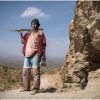
Growing Youth Activism for Environmental Protection in Africa
The mining sector in Africa is facing radical change as youth activists take action against the environmental degradation caused by mining industries. Tensions between activists and the mining industry have raised, however, concerns over human rights abuses.
Pandemic Crisis May Trigger Societal Restructuring
The Chinese word for crisis consists of two characters - “weiji”. Wei means danger and ji means opportunity. Every crisis is pregnant with danger and risks but also with opportunities – for some to make money, for others to learn valuable lessons, and for society to reorient or restructure its priorities, institutions and even the system.
Latin America Has Weak Defences Against the Pandemic
Health systems in Latin America, already falling short in their capacity to serve the population, especially the poor, are in a weak position and face serious risks when it comes to addressing the COVID-19 pandemic.
Coronavirus: Country Comparisons are Pointless Unless We Account for These Biases in Testing
Suppose we wanted to estimate how many car owners there are in the UK and how many of those own a Ford Fiesta, but we only have data on those people who visited Ford car showrooms in the last year. If 10% of the showroom visitors owned a Fiesta, then, because of the bias in the sample, this would certainly overestimate the proportion of Ford Fiesta owners in the country.
U.N. Releases Report on Socio-economic Effects of Coronavirus
As the number of coronavirus cases continues to grow, concerns are simultaneously growing about the current and long-term effects this will have on certain demographics -- specifically, women, the youth, migrant workers, and many employees around the world.
In memoriam ‒ Martin Khor
We are greatly saddened by the passing of Martin Khor, a long-time friend and colleague, an undaunted fighter for the poor and underprivileged, a passionate believer in a more balanced and inclusive multilateralism, a rare intellectual and eloquent orator, an icon of the Global South worthy of veneration, greatly respected for his struggle for justice and fairness against the dominance and double-standards of big economic powers.
What More than COVID-19 to Jolt G20 into Collective Action?
My recent study on “The G20@10: Time to shift gears” 1 shows that, during the past decade, the main joint, collective action of the G20 has been to issue communiqués and other types of statements.
Can We Use Digital Technology to Cushion the Pandemic’s Blow?
As the world grapples with COVID-19, governments face a daunting challenge: limiting the adverse impact of a pandemic that has ground economic activity to a halt, affecting people at a scale rarely seen before.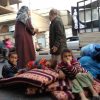
The Gaza Strip and COVID-19: Preparing for the Worst
The coronavirus is now present in Gaza, the populous Palestinian enclave blockaded by air, land and sea since 2007. An epidemic would be calamitous. Hamas should tighten public health measures; Israel should loosen restrictions so that medical supplies can enter and afflicted Palestinians can
Snapshot of Life under Lockdown in Bangladesh
 The Coronavirus pandemic is changing how we live our daily lives. The scale of the COVID-19 and its impact on our lives is unprecedented. When humanity gets past this, the world will be a very different place than the one we have known.

Coronavirus Proves Need for Free Healthcare for All– Now
The multi-layered crisis of the Coronavirus epidemic has been a dramatic shock to everyone. But, to communities affected by HIV and AIDS, the crisis has not only brought a further shock to already vulnerable people, it has brought other reactions too – a troubling sense of déjà vu, and a passionate, empathetic, fierce solidarity with all those affected by Coronavirus.
Surviving Domestic Violence in times of Covid19
“I come from Baglung District, a part of Dhawalagiri Zone in Nepal. My house overlooks the river. Do you know, our district is known for the suspension bridges?”, her eyes glimmer for a fraction of a second and then she breathes a heavy sigh! Her right hand is still wrapped in a scarf, while with the other she pats her 17-month-old. “If I ever get a chance I will take you to my village, we have a lot of medicinal plants.” She pauses while tears roll down as she continues our Facetime session. “I was 16 when I had my first child and I was 17 when my arm was broken by my mother-in-law.”« Previous Page — Next Page »


