
Saturday, September 19, 2026



News and Views from the Global South
Combating Desertification and Drought
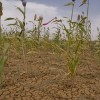
Sahel Region Learning to Reap the Benefits of Shade
In Africa's Sahel region, agroforestry techniques using traditional plantings known as "fertiliser trees" to increase soil fertility, as well as harvesting and grazing regulations, are offering new solutions to both food and human security.
Thawing Permafrost May Be “Huge Factor” in Global Warming
Thawing permafrost is emitting more climate-heating carbon faster than previously realised. Scientists have now learned that when the ancient carbon locked in the ice thaws and is exposed to sunlight, it turns into carbon dioxide 40 percent faster.
New Era of Food Scarcity Echoes Collapsed Civilisations
The world is in transition from an era of food abundance to one of scarcity. Over the last decade, world grain reserves have fallen by one third. World food prices have more than doubled, triggering a worldwide land rush and ushering in a new geopolitics of food.

World Bank Unmoved on Auditor’s Criticism of Forest Policy
Officials at the World Bank are forcefully rejecting a new internal evaluation that is highly critical of the institution’s decade-long forest policy, expressing their “strong disagreement” with some assertions in the report.
OP-ED: Weird, and Getting Weirder
Weird is the only way to describe January temperatures whipsawing between record warm and arctic cold over a span of a few days. Experts say that is what climate change looks like: weird, record-shattering weather.
Peering into the Energy Crystal Ball
Trying to predict the future of the energy sector is like trying to predict the weather in London in an era of global warming. But delegates had a go at it during the three-day World Future Energy Summit that ended in Abu Dhabi on Jan. 17.
Digging for Water, But Striking Oil
The volatile politics of the Middle East have long been dominated by the fluctuating fortunes of a single commodity: oil.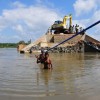
Experts Fear Collapse of Global Civilisation
Experts on the health of our planet are terrified of the future. They can clearly see the coming collapse of global civilisation from an array of interconnected environmental problems.
OP-ED: Climate Inaction Is a Clear Failure of Democracy
Around the world, 2012 was the year of extreme weather, when we unequivocally learned that the fossil fuel energy that powers our societies is destroying them. Accepting this reality is the biggest challenge of the brand new year.
OP-ED: A Universal Climate Change Agreement Is Necessary and Possible
The results of the United Nations climate change conference that closed in Doha, Qatar on Dec. 8 show once again that the international negotiations are moving steadily in the right direction, but alarmingly slow.
Critics Brand Climate Talks Another Lost Opportunity
Rich countries came to the U.N. climate talks in Doha intent on delaying needed action on climate change for another three years and a still to be hammered out new global treaty.
Doha Climate Summit Ends With No New CO2 Cuts or Funding
The United Nations climate talks in Doha went a full extra 24 hours and ended without increased cuts in fossil fuel emissions and without financial commitments between 2013 and 2015.
A Hotter World Is a Hungry World
Food prices will soar and hundreds of millions will starve without urgent action to make major cuts in fossil fuel emissions. That is what is at stake here on the last day of the U.N. climate talks known as COP 18, scientists and activists say.
An Empty Table at Doha Climate Talks
United Nations climate talks are on the edge of collapse Thursday, according to a coalition of civil society and representatives from half of the world's countries.
A Storm Brews in Doha
While the Philippines copes with the aftermath of powerful super-typhoon Bopha, which killed more than 300 people this week, tempers flared at the U.N. climate summit here.
From Doha to Dakar, Food Insecurity is the Norm
Qatar may be one of the richest countries in the world, but it has something in common with its African counterparts – food insecurity.

OP-ED: Loss and Damage from Climate Change Must Not Become the “New Normal”
As United Nations climate talks get underway this week in Doha, Qatar, they show a subtle, unsettling shift in the global climate change debate.
Deep Emissions Cuts Urged at Climate Summit
Extreme weather disasters, including floods and droughts intensified by climate change, have totalled many billions of dollars in damages this year.Planet on Path to Four C Warming, World Bank Warns
Coal, oil and gas companies and their backers in the financial and investment industry must stop putting billions of dollars into finding and extracting new sources of fossil fuels. If they don't shift their investments, temperatures will soar four to 10 degrees C higher, devastating many parts of the world, the World Bank said Monday.
Worms, Termites, Microbes Offer Food Security
Worms and termites are not likely to win hearts and minds, but they, along with lichens and microbes, are vital to food security, say biodiversity specialists who attended this month’s United Nations conference on the Convention on Biological Diversity (CBD) in this south Indian city.
Shadow Over Aichi Biodiversity Targets
With negotiations to mobilise resources for preservation of biodiversity at a major United Nations conference going nowhere, the Group of 77 and China have hinted at possible suspension of the ‘Aichi targets’ under the Nagoya Protocol.« Previous Page — Next Page »


Today, some two billion people depend on ecosystems in dryland areas, with 90 percent of them living in developing countries. But the pace of arable land degradation is accelerating – now estimated at 35 times the historical rate -- impacting biodiversity, availability of clean water and food security, as well as exposing vulnerable communities to the harsh impacts of climate change. As the only legally binding international agreement linking environment and development to sustainable land management, the United Nations Convention to Combat Desertification (UNCCD) works to improve the living conditions of people in the drylands. IPS looks at local solutions being implemented around the world, from restoring soil productivity and mitigating the effects of drought, to projects that empower communities to manage their dryland resources more effectively.

The Week with IPS

Tracking global progress towards a sustainable world
