Languages
Monday, November 23, 2026



News and Views from the Global South
Asia-Pacific

RIGHTS-IRAN: Groups Call for Special U.N. Probe
Just ahead of Iranian President Mahmoud Ahmadinejad's speech to world leaders at the United Nations General Assembly, two human rights organisations asked the international media to seize what they termed a crucial opportunity to hold him accountable for post-election violence in Iran.POLITICS-BURMA: Two Years After, Monks Remain Closely Watched
"I'm being watched all the time. I am considered an organiser. Between noon and 2 p.m., I am allowed to go out of the monastery. But then I'm followed," Buddhist monk U Manita said. "I'm prepared to march again when the opportunity arises. We don't want this junta. And that's what everyone at my monastery thinks as well."POLITICS-EAST TIMOR: ‘The Quality of Women Is Very Important’
For more than seven years, the men and women of East Timor have been working to rebuild their nation after a destructive 24-year occupation by the Indonesian army.RIGHTS-BANGLADESH: Glimmers of Hope Amid an Elusive Peace
Sultana Kamal dreams of a country "where every single citizen will live in democracy, in equality" and where everyone has "equal share to resources and opportunities." Fulfilling this dream has been her lifelong advocacy as a human rights advocate.RIGHTS-PHILIPPINES: ‘Desaparecidos’ — A Family’s Search Continues
In September 2007 the United Nations Working Group on Enforced and Involuntary Disappearance sent a letter to the Philippine government urging it to investigate the case of Jonas Burgos, a 37-year-old agriculturist who was abducted five months earlier in a crowded mall in Quezon City, one of the major cities comprising the metropolitan area in the national capital region.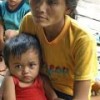
LAOS: What People Cannot Eat is of Great Importance to Women – Part 2
"When I was born my mother could not eat anything but tiny fish and tea made from herbs for one whole year," says Dr Bhounsouane. "She was so weak that she could hardly walk. Post partum food taboos (phit kam) are a major problem in Laos for women," he said.RIGHTS-MALAYSIA: Win Some, Lose Some for Beleaguered Penan Tribe
In wealthy Malaysia that employs over four million Asians to service its high- rolling lifestyle, a tiny indigenous tribe is fighting for its survival against state inaction and bureaucratic apathy, as well as marauding giant multinationals and timber loggers.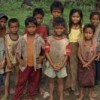
LAOS: Land Legislation Disempowers Women – Part 1
Ki is seven years old but looks more like three. His legs are bowed and skull misshapen. He looked at me with a blank stare. The health worker, Kheo, suggests rickets.ENVIRONMENT: Electric Fence as Lifesaver for Endangered Elephants
Dennawa is a typical rural Sri Lankan agriculture village, located deep in the dry zone. Behind the houses made of dry brick stretch the fields where villagers tend vegetables and fruit plantations.SOUTH ASIA: Disunity Hovers over a Region Battling Climate Change
As the Copenhagen Conference on climate change draws nearer, South Asia, which appears poised for severe threats from the impacts of climate change, faces a stiff challenge on two fronts.IRAN: New Poll Finds Strong Domestic Support for Regime
Despite persistent mass demonstrations protesting June's disputed reelection of President Mahmoud Ahmadinejad, a new survey of Iranian public opinion released here Saturday suggests majority domestic support for both him and the country's basic governing institutions.POLITICS: Nuclear Agency Demanding Iranian Missile Blueprints
Iran stopped meeting with the International Atomic Energy Agency last year over Western allegations of covert Iranian nuclear weapons work because the nuclear agency was demanding access to the designs for its Shahab-3 missile and other secret military data, according to both Iranian and IAEA officials.
AFGHANISTAN: Media Outrage Over Coalition Killing of Reporter
For many Afghans, slain Afghan journalist Sultan Munadi has become a symbol for all that is wrong with the United States-led war in Afghanistan.POLITICS-AFGHANISTAN: Battle for Balkh
Events currently unfolding in Afghanistan's northern province of Balkh may be a preview for the future.
DRC: Electricity Lines Overhead But Never Seen a Light Bulb
"We produce electricity but we manage darkness. We have big energy sources of electricity but only 20 percent of the population has access to electricity because most of the energy is sold to foreign countries."THAILAND: Licence to Arm Civilians against Muslim Insurgency
With an insurgency threatening to worsen, Thailand’s military is turning to civilians like Nipa Waya to return fire in the three southern provinces close to the Malaysian border.POPULATION: Where’s Family Planning on Climate Change Radar?
Are climate change and reproductive health two disparate subjects?
GULF: Gender Discrimination in Citizenship Rights
There is inequality in citizenship laws for women and men in the Gulf Arab states.
INDIA/CHINA: Dalai’s Planned Visit to Border State Sparks Row
The Dalai Lama’s planned visit to Arunachal Pradesh appears to be a simple, pastoral response to Buddhist flocks in that north-eastern Indian state.BURMA: Rights Group Tallies Growing Ranks of Political Prisoners
The number of political prisoners held by the ruling military junta in Burma has reached 2,200, according to a report released here by Human Rights Watch Wednesday.ASIA: Region Lags Behind in Reducing Maternal Mortality Rates
In landlocked Laos, pregnancy brings with it the spectre of death. South-east Asia’s poorest country has recorded over 700 women dying every year due to complications during childbirth.« Previous Page — Next Page »


The Week with IPS

NEXT STOP - SDGs
Tracking global progress towards a sustainable world
