Thursday, October 8, 2026



News and Views from the Global South


Permeable Dams Prevent Land Loss and Save Mangroves in Suriname
Suriname’s coastline is eroding so quickly scientists predict the country’s maze of mangroves could disappear in just 30 years unless there is urgent action on climate change.
Making the Case for Caribbean Fishers at Paris Climate Conference
Horace Walters has made the 6,903km journey from his native St. Lucia to Paris to deliver a simple, yet urgent message to the international community.
Antigua: Surrounded by Sea but Catchments are Empty
Antiguan Veronica Yearwood no longer panics when she hears that the rainfall forecast for the tiny Caribbean island is again lower than average rainfall.
Climate Change and Floods, the Uninvited Guests of Guyana
Mrs Doodnauth is being interviewed about the fact that the effects of climate change are what led the family to abandon their home and farmlands in the Mahaica Creek and relocate to an area identified by the authorities. She was clear climate change was not the reason.- “And what’s the reason?”
Climate Change Will Increase Damage, Losses in Coastal Communities
Residents of Rocky Point, a sleepy fishing village on Jamaica’s south coast, woke up one July morning this year to flooded streets and yards. The sea had washed some 200 metres inland, flooding drains and leaving knee-deep water on the streets and inside people’s home, a result of high tides and windy conditions.
Women Farmers Strive to Combat Climate Change in the Caribbean
In the Caribbean, some women find themselves on the frontline with the battle to mitigate climate change. Meet Dr. Krystal Cox. She is one of three girls who all studied medicine and got medical degrees.
Sinking into Paradise: Climate Change Worsening Coastal Erosion in Trinidad
As unusually heavy rainfall battered Trinidad's east coast a year ago, a lagoon here was overwhelmed, flooding a major access road to the island’s south-eastern communities. As the flood waters poured over Manzanilla beach, they washed sand away, caved in sections of road and collapsed a seawall at a tourist beach facility. Further damages were also incurred with the flooding of homes and agricultural plots.
Against the Odds, Caribbean Doubles Down for 1.5 Degree Deal in Paris
Negotiators from the 15-member Caribbean Community (CARICOM) are intent on striking a deal to keep the global temperature rise at 1.5 degrees of pre-industrial levels, but many fear that a 10-year-old agreement to buy cheap petroleum from Venezuela puts their discussions in jeopardy.
Jamaica’s Aging Water Systems Falter Under Intense Heat and Drought
This past summer Jamaicans sweltered through their third consecutive year of reduced rainfall resulting in wild fires, a crop-killing drought and daily water cuts.
Caribbean Agriculture Looks to Cope with Climate Change
Climate change represents a clear and growing threat to food security in the Caribbean with differing rainfall patterns, water scarcity, heat stress and increased climatic variability making it difficult for farmers to meet demand for crops and livestock.
Central America Seeks Recognition of Its Vulnerability to Climate Change
For decades, the countries of Central America have borne the heavy impact of extreme climate phenomena like hurricanes and severe drought. Now, six of them are demanding that the entire planet recognise their climate vulnerability.
Honduran Fishing Village Says Adios to Candles and Dirty Energy
A small fishing village on the Caribbean coast of Honduras has become an example to be followed in renewable energies, after replacing candles and dirty costly energy based on fossil fuels with hydropower from a mini-dam, while reforesting the river basin.
Caribbean Artists Raise Their Voices for Climate Justice
Award-winning St. Lucian poet and playwright Kendel Hippolyte thinks that Caribbean nationals should view the Earth as their mother.
Caribbean Seeks Funding for Renewable Energy Mix
A leading geothermal expert warns that the small island states in the Caribbean face “a ticking time bomb” due to the effects of global warming and suggests a shift away from fossil fuels to renewable energy is the only way to defuse it.
Jamaica’s Coral Gardens Give New Hope for Dying Reefs
With time running out for Jamaica's coral reefs, local marine scientists are taking things into their own hands, rebuilding the island’s reefs and coastal defences one tiny fragment at a time - a step authorities say is critical to the country’s climate change and disaster mitigation plans.
Views from the Caribbean ahead of COP21, the December 2015 Climate Change Summit in Paris – Building Resilience to Disaster: Biodiversity
 Thanks to its varied geography and climate, the Caribbean region is one of the world's greatest centers of unique biodiversity. With most people living near the coast, marine ecosystems, including mangroves, beaches, lagoons and cays, are essential not only for biodiversity, but as protection from storms. Many are now threatened, along with the coral reefs the region is famous for.
Caribbean Fights to Protect High-Value, Declining Species
Threats from climate change, declining reefs, overfishing and possible loss of several commercial species are driving the rollout of new policy measures to keep Caribbean fisheries sustainable.
Union Islanders Wonder if Their Home Will Be the Next Atlantis
Fifteen years ago, Stephanie Browne, a former Member of Parliament in St. Vincent and the Grenadines, needed only to look at the beach outside her house to know why her community in Union Island was called “Big Sand”.
Trees are the Earth’s Lungs, Says Guyana’s President, We Must Finance Their Survival
Guyana's new president, David Granger, sits down with IPS correspondent Desmond Brown to talk about how his country is preparing for climate change – and hoping to avert the worst before it happens.
An Interview with Guyanese President David Granger
 Guyana's new president, David Granger, sits down with IPS correspondent Desmond Brown to talk about how his country is preparing for climate change – and hoping to avert the worst before it happens.
Grenada Rebuilds Barrier Reefs
The Eastern Caribbean nation of Grenada is following the example of its bigger neighbours Belize and Jamaica in taking action to restore coral reefs, which serve as frontline barriers against storm waves.« Previous Page — Next Page »





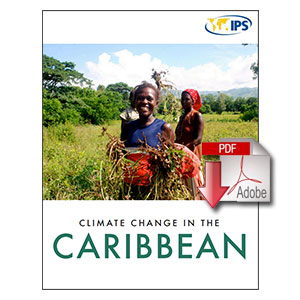
As the world moves to implement the Paris Climate Change Agreement, the Caribbean—one of the most vulnerable regions to rising sea levels—faces a host of challenges, including accessing funding for adaptation and mitigation, protecting key sectors like tourism and agriculture, building resilience to natural disasters, and moving to a low-carbon development path. Much of the world’s most interesting work in addressing climate change, adopting clean energy and coming up with plans to stem deforestation has its roots in the developing world, where climate change impacts are often felt first and strongest. IPS looks at the wide variety of local, national and regional initiatives in the Caribbean that offer creative solutions to these problems.
 |
|||
 |
 |
 |
 |

Caribbean Climate Wire