Languages
Friday, October 23, 2026



News and Views from the Global South
Civil Society
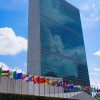
A UN 2.0 Needs Robust People’s Civil Society Participation
A cascade of crises endangers our world. Wars conducted without rules, governance devoid of democratic principles, surge in discrimination against women and excluded groups, accelerating climate change, greed-induced environmental degradation and unconscionable economic deprivation in an age of excess are threatening to roll back decades of human progress made by the international community.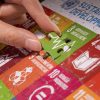
A Better Tomorrow with South-South Cooperation
The annual United Nations Day for South-South Cooperation, commemorated annually on September 12, serves as a powerful reminder of the spirit of solidarity and cooperation that transcends geographic borders — a spirit that is crucial for securing a better and thriving future for all. In a world facing cross-cutting challenges, the importance of this South-South solidarity cannot be overstated.
TOGO: ‘The International Community Must Send a Clear Message That Power Grabs Won’t Be Tolerated’
CIVICUS discusses the crackdown on civil society in Togo with a human rights defender who asked to stay anonymous for security reasons.

Small Glacial Lakes’ Mass Destruction in the Himalayan Community
Small glacial lakes can cause destruction, which may impact the livelihoods of entire communities. Now this is the harsh reality that the community of Thame village in the Mt. Everest region of Nepal now faces as they rebuild after the August 16 disaster.
Bangladesh Flash Floods ‘Tragic Reminder’ of Impact of Climate Disasters
Since late August, severe flash floods and monsoons plaguing Bangladesh have affected nearly 6 million people. Bangladeshi officials have declared the floods to be the country’s worst climate disaster in recent memory. These recent floods follow the wake of Cyclone Remal, which devastated Bangladesh and West Bengal earlier this year.
Knowledge is Power. Gaza War Supporters Don’t Want Students to Have Both
With nearly 18 million students on U.S. college campuses this fall, defenders of the war on Gaza don’t want to hear any backtalk. Silence is complicity, and that’s the way Israel’s allies like it.
Rural Survival: Guardians of Mother Earth Saving Mau, Revitalizing Native Lands
The Great Rift Valley is part of an intra-continental ridge system that runs through Kenya from north to south. A breathtaking, diverse mix of natural beauty that includes dramatic escarpments, highland mountains, cliffs and gorges, lakes and savannas. It is also home to one of Africa’s greatest wildlife reserves—the Maasai Mara National Reserve.
At 76, India’s ‘Super Granny’ to Run Marathon in Australian Masters Event
Kmoin Wahlang, a 76-year-old woman, starts her running training every morning at 4 a.m. Dressed in track pants, a jacket, and running shoes, she sets out to navigate the hilly terrain of the small village of Shngimawlein in the southwest Khasi Hills district of Meghalaya, a state in northeastern India.
INDIA: ‘Civil Society Organisations Are at the Forefront of the Fight Against Gender-based Violence’
CIVICUS discusses the recent wave of protests against gender-based violence (GBV) in India with Dr Kavitha Ravi, a member of the Indian Medical Association (IMA).
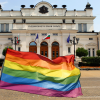
New Bulgarian LGBT+ Law Marginalizes Communities, Rights Groups Warn
A law banning the portrayal of LGBT+ identities in Bulgarian educational institutions is just the latest piece of repressive legislation in a wider assault on minorities and marginalized communities across parts of Europe and Central Asia, rights groups have warned.
New Zealand: Māori Rights in the Firing Line
A New Zealand bill that would roll back Indigenous rights is unlikely to pass – but it’s emblematic of a growing climate of hostility from governing politicians. A recent survey shows that almost half of New Zealanders believe racial tensions have worsened under the right-wing government in power since December 2023.
Kenya’s Unanswered Questions About Enforced Disappearances
As the world marked International Day of the Disappeared, Kenya grapples with a shadowy and persistent crisis—enforced disappearances. This harrowing violation of human rights has left countless families in anguish, searching for their loved ones while battling a wall of government denial and indifference.
Climate Assemblies Seek Citizen Participation in Latin American Solutions
Danilo Barbosa had never taken part in political processes until his name was drawn in a lottery to join the climate assembly of the municipality of Bujaru, in the Amazon region of Brazil.
VIETNAM: ‘Human Rights Conditions Will Likely Worsen as the Country Descends into a Police State’
CIVICUS discusses recent leadership changes in Vietnam with David Tran, coordinator of the Alliance for Vietnam’s Democracy, a civil society platform that promotes democracy in Vietnam and the region through international cooperation and the strengthening of local civil society.
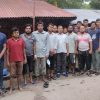
Bangladesh Students, Community Moves to Protect Minorities Following Fall of Hasina Government
Immediately after the fall of the Sheikh Hasina government on August 5, 2024, following weeks of deadly demonstrations staged by students, people carried out attacks on the houses and temples of the Hindu community in Dacope of Khulna, about 225 kilometres from Dhaka. They particularly attacked and vandalized the houses of minorities believed to be involved in the politics of the ousted Awami League government.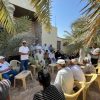
UN Efforts for a Resilient Iraq
Climate change and water scarcity pose significant threats to Iraq's stability, prosperity, and the well-being of its people. The environmental challenges facing the nation are complex and interconnected, requiring a comprehensive and coordinated response.
Nicaragua, China, India among 55 Nations Restricting Freedom of Movement
At least 55 governments in the past decade have restricted the freedom of movement for people they deem as threats, including journalists, according to a Freedom House report published last Thursday.
Explainer: COP16—What’s It About and What Does It Need to Achieve?
‘Peace with Nature’ is the theme for the 16th meeting of the Conference of the Parties (COP16) to the Convention on Biological Diversity (CBD), which will take place in Cali, Colombia, between October 21 and November 1, 2024.
Climate Activists Target Culture Greenwashing
Civil society is working on all fronts to tackle the climate crisis. Activists are protesting in numbers to pressure governments and corporations to cut greenhouse gas emissions. They’re using non-violent direct action and high-profile stunts, paying a heavy price as numerous states criminalise climate protest.
Clean Energy Boosts Autonomy for Brazilian Women Farmers – VIDEO
 A community bakery, family production of fruit pulp, and the recovery of water springs are some of the initiatives of the Energy of Women of the Earth, organised since 2017 in the state of Goiás, in central-western Brazil.

Fast-Acting Interventions Needed for Sudanese Refugee Children as Needs Outpace Response
As peace eludes war-torn Sudan, thousands of displaced people fleeing the deadly battle between the Sudanese Armed Forces (SAF) and Rapid Support Forces (RSF) have found refuge in neighboring countries, including Egypt.« Previous Page — Next Page »





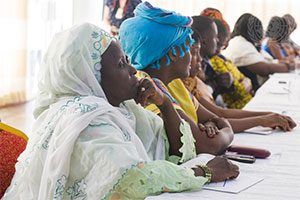 Representatives of Civil Society, Sierra Leone. Credit: UN Photo/Eskinder Debebe
Civil society faces mounting threats worldwide, even as it remains essential for democratic accountability, especially in countries struggling with economic instability and social inequality. However, at the same time, nations with weak democratic governance structures also systemically suppress the power of civil society. Human rights activists across the Global South frequently challenge issues such as political persecution and gender oppression, but in return face state-sanctioned punishment for their advocacy. Imprisonment and exile are common mechanisms of punishment that seek to erode the strength of civil society. The 2026 World Press Freedom Index has reached its lowest level in 25 years, with more than half of the world’s countries now falling into the "difficult" or “very serious” category for press freedom. IPS seeks to highlight the work of civil society across the Global South as well as the challenges that they face.
Updated by Yilan Batista and Shuli Wong August 2026

The Week with IPS

NEXT STOP - SDGs
Tracking global progress towards a sustainable world
Tracking global progress towards a sustainable world
