Languages
Saturday, October 17, 2026



News and Views from the Global South
Civil Society
Will Changes to the UN Resident Coordinator System Damage the Development Pillar & Downgrade its Assistance to Middle-Income Nations?
A letter to staff unions from economists working in the resident coordinator system, blows the whistle on a restructuring that could damage the development pillar and downgrade support to middle income countries.
UN Peacebuilding Week: Military Expenditure Soars as Funding for Civilian Protection and Prevention Collapses
From June 22 to 26, the United Nations (UN) commemorated its first annual Peacebuilding Week, marking the 20th anniversary of the UN Peacebuilding Commission’s inaugural session. Featuring discussions among world leaders, policymakers, civil society, and advocates, the event explored how collaboration among governments, international organizations, and the private sector can enhance the visibility and effectiveness of peacebuilding efforts worldwide.
Tunisia: Civil Society Criminalised
In May, Tunisian lawyer and journalist Sonia Dahmani was handed her second conviction of the year. Her latest sentence, a two-year jail term, came in reaction to her criticism of poor prison conditions. She previously received an 18-month sentence for calling out the government’s anti-migrant policies. Dahmani faces five more charges under a 2022 cybercrime law that criminalises the spreading of what it calls ‘false information’.
Xenophobia Won’t Bring Wealth – Only Misery – To South Africans Too
Usually, the fiesta to celebrate St Antony at the church with the same name in Crown Mines, Johannesburg, is a lively affair. The church is usually packed with congregants from the Portuguese community, including recent migrants from Mozambique and Angola.
Building Peace Infrastructures: African Leaders Reflect on Peacebuilding
As the United Nations held its first-ever Peacebuilding Week (June 22-26), UN officials and developmental partners gathered at Egypt's Permanent Mission on June 23 to hold a dialogue on the main question that emerged from the 2025 Peacebuilding Architecture Review (PBAR): “How can global commitments to peacebuilding translate into tangible results on the ground?”
GHANA: ‘This Is Bigger than Lgbtqi+ Rights – It’s about the Kind of Society We Want to Be’
CIVICUS discusses Ghana’s anti-LGBTQI+ law with Leila Lariba, Executive Director of One Love Sisters Ghana, a community-driven organisation that advances human rights, social inclusion and wellbeing for Muslim LGBTQI+ people in Ghana.
Colombia’s next President: A Reckoning for Peace, Climate and Human Rights
On 21 June Colombians made their choice. By the narrowest of margins, Abelardo de la Espriella, a far-right criminal lawyer who’s never held elected office, became president-elect. Climate activists, human rights defenders, Indigenous communities and peace advocates have the most to lose from the incoming government’s agenda.
From Nets to Numbers: How Kenya’s Small-Scale Fishers Use Data to Save Their Ocean
As the afternoon sun casts a golden glow over Mukwiro village on Wasini Island on Kenya’s Indian Ocean South Coast, Mwanasiti Mwalola, 26 and Mzungu Mohammed Dhossa, 45, stand at the community fish landing site, carefully receiving baskets of freshly caught fish from returning fishers. A weighing scale hangs before them, with a pen and notebook in their hands; the two have one duty: to collect data on the stock being delivered by artisanal fishers.
From Rotten Tomatoes to AI: Ugandan Commonwealth Youth Award Winner Takes Aim at Hunger Across Africa
Before anyone called her an innovator, before artificial intelligence entered the conversation, before solar-powered cold rooms, before the language of sustainable development, Shifra Ainomugisha knew food loss in its painful form.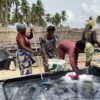
In West Africa’s Benin, Women Make Centuries-Old Salt Production Methods Sustainable
It is barely noon, and a group of women sit near the beach on the outskirts of Djégbadji village, in West Africa’s Benin, sifting through mounds of salt harvested from the Gulf of Guinea’s ocean.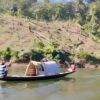
New GEF Project Raises Hope for Change in India’s Indigenous Lake Community
At dawn, when the waters of Dumboor Lake lie still under a pale grey sky, Santo Chakma, 63, nudges his narrow wooden boat into a reservoir that swallowed his childhood.
WORLD CUP: ‘FIFA Has Placed Itself on the Side of the Polluters, Not the Rest of the Planet’
CIVICUS speaks about the climate impacts of the 2026 World Cup with Frank Huisingh, founder of Fossil Free Football, a fan-led group that campaigns to end fossil fuel sponsorship in football and make the game more sustainable.

Our Ocean Conference: After Mombasa – Will Africa and the World Make Ocean Promises Real?
« James Alix Michel warns that without real finance and precaution, ocean pledges risk remaining only on paper. » Now that the lights have dimmed in Mombasa and the delegations have gone home, a simple but necessary question remains: did the first Our Ocean Conference on African soil truly move the world from promises to protection? The conference was indeed the first held in Africa, under the theme “Our Ocean, Our Heritage, Our Future,” with a stated focus on culture, communities, livelihoods, marine protection, climate resilience and sustainable blue economies.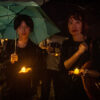
Hong Kong: No Safety in Exile
When performance artist Sammu Chen tried to tie a red thread to a streetpost, plainclothes police stopped him before he could finish. Chen has twice been detained for his symbolic acts of commemoration of the 4 June 1989 Tiananmen Square Massacre, when Chinese authorities killed hundreds, perhaps thousands, to crush democracy protests.
RightsCon’s Cancellation Signals a Growing Threat to Human Rights and Digital Freedoms
RightsCon, the world’s leading summit on human rights in the digital age, has served for over a decade as a vital global gathering, bringing together civil society, academics, technologists, policymakers, and the private sector in cross-border collaboration. The abrupt cancellation of RightsCon 2026, following intervention by Zambia’s government just days before the convening was due to commence in Lusaka, should concern us all.
In Sikkim, Snow Leopards and Communities Share the High Mountains
The tea arrives before the conversation starts. Jayanta Mukhia sets two cups on the wooden table and pulls up a chair across from the couple who arrived that afternoon with trekking poles and rucksacks. They have come to walk the Goechala trail into the heart of Khangchendzonga National Park in India. They will leave in two days. Before they go, she has something to tell them.
GLOBAL TAX TREATY: ‘Without Sustained Pressure from Organised Movements, the Political Space to Win Simply Doesn’t Open’
CIVICUS discusses a proposed United Nations (UN) tax treaty with Jenny Ricks, General Secretary of Fight Inequality Alliance, a global movement that organises to counter the concentration of power and wealth in the hands of a small elite.

New Caledonia’s Election to Set the Stage for New Talks With France on Its Political Future
The French overseas territory of New Caledonia in the Pacific will hold elections on 28 June in the wake of the latest agreement on its political status with France being rejected. The representatives elected in the three provincial assemblies and territorial congress will then determine a new round of negotiations as the mission of achieving consensus on New Caledonia’s future continues.
Systematic Vilification of Russian LGBTQ+ Community Pushes Them Underground
LGBTQ+ people in Russia are being forced to increasingly use self-censoring strategies in their daily lives as they struggle with systemic vulnerability, one of the largest surveys of the LGBTQ+ community in the country has shown.
This Is Not Just Ukraine: The Global Danger of Normalising Russia’s Occupation Crimes
People often discuss Russia’s aggressive war against Ukraine in terms of drones, missiles, shifting front lines, and territorial borders. But this war has another dimension — the human one.
Erdoğan’s Race to Avoid Orbán’s Fate
When Hungary’s Prime Minister Viktor Orbán lost by a landslide to a unified opposition in April, Turkey’s President Recep Tayyip Erdoğan was watching. The lesson he drew was not that he should be more moderate; it was that he needed to crack down harder. He had already arrested Istanbul Mayor Ekrem İmamoğlu, the opposition Republican People’s Party (CHP)’s leading presidential contender, in March 2025. After Orbán’s defeat, he has accelerated his campaign to fracture the opposition and rewrite the rules before the next election in 2028.« Previous Page — Next Page »





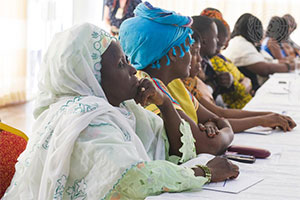 Representatives of Civil Society, Sierra Leone. Credit: UN Photo/Eskinder Debebe
Civil society faces mounting threats worldwide, even as it remains essential for democratic accountability, especially in countries struggling with economic instability and social inequality. However, at the same time, nations with weak democratic governance structures also systemically suppress the power of civil society. Human rights activists across the Global South frequently challenge issues such as political persecution and gender oppression, but in return face state-sanctioned punishment for their advocacy. Imprisonment and exile are common mechanisms of punishment that seek to erode the strength of civil society. The 2026 World Press Freedom Index has reached its lowest level in 25 years, with more than half of the world’s countries now falling into the "difficult" or “very serious” category for press freedom. IPS seeks to highlight the work of civil society across the Global South as well as the challenges that they face.
Updated by Yilan Batista and Shuli Wong August 2026

The Week with IPS

NEXT STOP - SDGs
Tracking global progress towards a sustainable world
Tracking global progress towards a sustainable world
