Languages
Saturday, October 31, 2026



News and Views from the Global South
Climate Change Finance
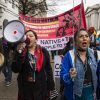
Standing Firm: Civil Society at the Forefront of the Climate Resistance
The recent US court case that ordered three Greenpeace organisations to pay damages of over US$660 million to an oil and gas company was a stunning blow against civil society’s efforts to stop runaway climate change and environmental degradation. The verdict, following a trial independent witnesses assessed to be grossly unfair, came in reaction to Indigenous-led anti-pipeline protests. It’s vital for any prospects of tackling the climate crisis that Greenpeace’s appeal succeeds, because without civil society pressure, there’s simply no hope of governments and corporations taking the action required.
Europe Is Now the Fastest Warming Continent—Report
It is now official that the European continent is experiencing the fastest rate of global warming, according to a new scientific report released by Europe’s Copernicus Climate Change Service and the World Meteorological Organization (WMO). Last year record temperatures, heatwaves, and floods unleashed a massive toll on infrastructure, cities, economies, and people’s lives and livelihoods in the region.
Reflections on CGIAR’s Week-Long Discussions on Food System Science
More than 13,600 participants from around the world registered for the inaugural CGIAR Science Week at the UN Complex, Nairobi, April 7-12, 2025. Dr. Ismahane Elouafi, the organization’s Executive Managing Director, said, “This is a testament that people are thirsty for science and for good news.”
Global Climate Action Progressing, but Speed and Scale Still Lacking
2025 marks the tenth anniversary of the Paris Climate Agreement. One of its chief architects, Christiana Figueres, says the world is heading in the right direction but warns that urgent action is needed to close critical gaps. The pact, adopted in 2015 by 195 nations, set out to limit global warming to "well below 2°C" above pre-industrial levels, striving for 1.5°C. But in 2024, the world shattered records as the hottest year ever, surpassing that crucial threshold.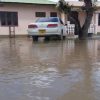
The Ocean Creeps In: Tanzanian Coastal Communities Fight a Losing Battle
The first time Jumanne Waziri tasted salt in his morning tea, he thought his wife had made a mistake. “Why did you put salt instead of sugar?” he asked, setting his cup down in their home in Ununio, a quiet suburb north of Dar es Salaam.
International Day of Forests
‘Now is the time for decisive, collaborative action’
The Forest Declaration Assessment Partners have called for urgent reforms to the international financial system to halt deforestation and protect biodiversity. It has also pitched for redirecting the public subsidies to mitigate the direct and indirect environmental risks from both public and private finance. 
CARICOM Leaders Take Steps to Tackle Crime, Climate, Trade and Food Crises
CARICOM leaders wrapped up a crucial meeting on February 21, reaffirming their commitment to tackling pressing regional challenges with unity and resolve. From crime and security to education, trade and climate change, the leaders highlighted the need for decisive action amid global uncertainties.
Food, Water, Crime, Climate Change: CARICOM Leaders Begin 48th Conference with Commitment to Joint Action on Critical, Common Concerns
Leaders of the Caribbean Community (CARICOM) are meeting in Bridgetown from Feb. 19-21, as the world grapples with multiple crises, including escalating geopolitical conflicts, climate change and rising food insecurity.
Shaping Conditions for Fair, Equitable and Enduring Climate Finance
The global commitment to fair climate finance is at a crossroads. COP29 concluded with a disappointing New Collective Quantified Goal on Climate Finance (NCQG), leaving developing nations at risk of being left behind. With the U.S. withdrawing from the Paris Agreement and slashing development aid, prospects for more ambitious fair climate finance are getting out of sight.
Who Will Save Nigeria’s Coastal City on the Brink of Extinction?
In 2021, Ojajuni Olufunsho, a 53-year-old resident of Ayetoro, a town along the Atlantic coast, southwestern Nigeria, saw her home swept away by the encroaching sea. What was once a spacious 10-room house, a sanctuary for Olufunsho and her five children, was swallowed by the relentless force of rising sea waters.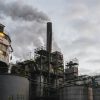
The Climate Crisis as a Diplomatic Battlefield
The climate crisis, a defining challenge of the 21st century, is not just an environmental issue; it is increasingly a critical arena for international diplomacy. From intense negotiations at COP summits to the politics of energy transitions and resource control, climate change is shaping the geopolitical landscape.
Small Island States Put Faith in International Court’s ‘Wayfinding’ Advisory Opinion
The “crazy, weird and at some point (what seemed like) insurmountable” plan to ask the International Court of Justice for an advisory opinion on the obligations of UN member states regarding climate change was a success, Vishal Prasad, a representative for the. Pacific Islands Students Fighting Climate Change (PISFCC) said at a post-hearing press conference today (December 13).
‘We Will Not Go Quietly Into the Rising Sea,’ Tuvalu Tells International Court of Justice
Rising sea level caused by greenhouse gas emission-fueled climate change is threatening existence in coastal communities and island nations. At the International Court of Justice (ICJ), on Thursday, December 12, 2024, small island states, including Tuvalu and a Pacific-based fisheries agency detailed their ongoing existential threats caused by the climate change-induced sea level rise and impacts on fishery-based livelihood.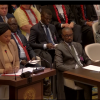
Once Scattered by Colonialism, Today United in Urgent Pursuit of Climate Justice
The Seychelles consider the ongoing public hearings at the International Court of Justice (ICJ) both timely and critical “for the people of the small island developing state in the middle of the Indian Ocean,” Flavien Joubert, Minister for Agriculture, Climate Change and Environment of the Seychelles, told the court today.
Pacific Community Calls Out Urgency of Climate Loss and Damage Finance for Frontline Island Nations
Advancing development of the new Climate Loss and Damage Fund was a key call by Pacific Island nations at the COP29 United Nations Climate Change Conference being held in Azerbaijan in November. For Pacific Island Countries and Territories, the fund represents a critical step towards addressing what they consider a gross climate injustice: despite contributing less than 0.03 percent of global greenhouse gas (GHG) emissions, they bear the brunt of climate change's devastating impacts.
Climate Change’s Dire Consequences Laid Bare at International Court of Justice Hearings
At the International Court of Justice on Tuesday, December 4, 2024, Brazil called for climate justice, and Canada urged swift action on the world's "greatest challenge," while China advocated for equity and development rights. These countries are among the 98 that will make presentations during the fortnight of hearings, after which the court will give an advisory opinion.
Small Island States Urge International Court to Look Beyond Climate Treaties
A few UN member states responsible for the majority of emissions have breached international law, Ralph Regenvanu, a special climate envoy from Vanuatu, told the International Court of Justice in the Hague in his opening address.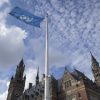
Youth-Led Landmark Climate Change Case Starts in The Hague
The intersection of law, diplomacy, and science will come under the spotlight at the International Court of Justice hearings starting today (Monday, December 2, 2024) in The Hague as the court starts its deliberations into the obligations under international law of UN member states to protect people and ecosystems from climate change.
Explainer: Why COP29 Baku Outcome is a Bad Deal for Poor, Vulnerable Nations
The culmination of bitter, difficult, and challenging climate negotiations concluded with an announcement from the COP29 Presidency of Azerbaijan of the "agreement of the Baku Finance Goal—a new commitment to channel USD1.3 trillion of climate finance to the developing world each year by 2035." This is on top of the USD 300 billion that the developed world is to extend to developing nations annually by 2035.
Can Pay, Won’t Pay—COP29 Outcome Far from Promised Historic Deal of a Lifetime
They say it is taboo to talk about money. But this is exactly what developing countries came for: to haggle and push for the climate finance deal of a lifetime, as the climate crisis is, for them, a matter of life and death. Wealthy nations also came for their own deal of a lifetime—to hoist the climate finance burden on the private sector as they take the bare minimum financial responsibility.
Insights From Negotiator into How COPs Move Needle Towards Healthy, Liveable Planet
Every year, the Conference of the Parties creates a global milestone for the climate movement, setting new standards and advancing action towards a net-zero planet to sustain all life on earth. COPs provide a platform for the global community to agree on what it would take to restore planet Earth and the contributions that all signatories to the Paris Agreement should make.« Previous Page — Next Page »





The Week with IPS

NEXT STOP - SDGs
Tracking global progress towards a sustainable world
Tracking global progress towards a sustainable world
