
Saturday, November 21, 2026



News and Views from the Global South
Climate Change
CLIMATE CHANGE: Uruguay Fends Off Health Threats – So Far
The incidence of cardiovascular, respiratory and water-borne diseases is rising in Uruguay in tandem with climate change, while dengue fever and malaria lurk at the country's borders. Higher temperatures are encouraging the presence of insect vectors carrying diseases that were eradicated decades ago, experts say.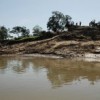
Bolivian Lowlands Get Life-Saving Flood Warning System
An early warning system to alert people living in the lowlands of the northern Bolivian department of Beni about imminent flooding of the mighty Mamoré and Ibare rivers is saving lives, food and goods, and overcoming the uncertainty that led to enormous losses in the past.The Return of the Bicycle
The bicycle has many attractions as a form of personal transportation. It alleviates congestion, lowers air pollution, reduces obesity, increases physical fitness, does not emit climate-disrupting carbon dioxide, and is priced within the reach of the billions of people who cannot afford a car.AMERICAS: We Need Sustainable Development Banks, Say NGOs
Non-governmental organisations from across the Americas are demanding that the World Bank and the Inter-American Development Bank institute policies that favour sustainable energy and help mitigate climate change.Caribbean Summit Seeks United Front to Economic Crisis
Caribbean Community (Caricom) leaders are gathering here next week for their annual summit still struggling to recover from the two-year global economic and financial crisis that has taken a major toll on their individual economies.Free Ride for Oil and Coal Industry May Be Over
Every day, governments give away an estimated two billion dollars of taxpayer money to the fossil fuel industry. This unmatched largesse to a highly profitable sector by countries verging on bankruptcy or unable to feed large numbers of their own people is "complete madness", according to many experts.AUSTRALIA: New PM Called On to Tackle Climate Change
Australia’s newly appointed prime minister, Julia Gillard, has hardly warmed her seat, yet she has already been urged to take action on climate change.
Love, Commitment and Anger in Detroit
The 2010 U.S. Social Forum ended Saturday in Detroit, a city viewed by many as a metaphor for the excesses of U.S. capitalism, with strong parting words from Pablo Solon, Bolivia's permanent representative to the United Nations.BRAZIL: Forestry Law Reforms Augur More Disasters
While the Brazilian authorities tally the death toll and the economic losses caused by recent torrential rains in the northeast, activists warn that a legislative bill to modify the Forestry Code will only worsen the effects of extreme weather, which is increasingly frequent in the context of climate change.
U.S.: Youth on Frontlines of Green Justice Struggles
The committed determination of young people in the environmental justice movement is emerging as a highlight of the 2010 U.S. Social Forum, which opened in Detroit this week with some 20,000 activists meeting in 'Motor City' to network and share their visions for social change.
Q&A: “Sustainability Is Paramount for Latin American Development”
Although the financial, climate, energy and food crises continue to create new challenges, Colombian biologist Margarita Astrálaga believes that now could be the time for Latin America "to advance towards a more equitable and sustainable development."EU: To Kill, But Not Pollute
European Union subsidies earmarked for reducing air travel's contribution to climate change may help develop deadlier warplanes than those already found in the world's arsenals, Brussels officials have admitted.ARGENTINA: Turning Wasteland into Woodland
In Santiago del Estero, one of the Argentine provinces hit hardest by deforestation and desertification, an oasis of native tree species is being created to restore the soil and entice back farmers who were forced to leave their land.
INDIA: Farmers Push Comeback of ‘Cereal of the Poor’
Eshwarappa Banakar has been a farmer most of his adult life, but these days he has also turned banker – banker of seeds, that is, and especially of millet strains.
PARAGUAY: “Pause” Farming Expansion in Gran Chaco, Say Activists
Extensive cattle farming in northwestern Paraguay is the leading cause of deforestation in the Gran Chaco, one of the world's leading regions in biodiversity and South America's second largest forested area, after the Amazon.Obama Vows Clean Energy Push, Green Groups Want Details
Despite the pleas of some conservative politicians that parallels should not be drawn between the oil spreading over the Gulf of Mexico and the need to transition out of a reliance on fossil fuels, U.S. President Barack Obama made it clear Tuesday night that he sees the race against the spreading oil as inherently connected to the race against a changing climate.
CUBA: How to Hurricane-Proof a Caribbean Island
The residents of Isla de la Juventud (Isle of Youth), the second largest of the Cuban archipelago, know a lot about hurricanes, but it wasn't enough to avoid the destructive power of Hurricane Gustav two years ago.CENTRAL AMERICA: Food Security Further Undermined by Climate Disasters
Adverse climatic conditions and weather-related disasters are damaging crops in El Salvador and neighbouring countries in Central America, aggravating the food vulnerability that the region already faces.Polar Heat Bringing Harder Winters
Last winter's big snowfall and cold temperatures in the eastern United States and Europe were likely caused by the loss of Arctic sea ice, researchers concluded at the International Polar Year Oslo Science Conference in Norway last week.CLIMATE CHANGE: Maldives Inches Closer to HCFC Phase-out
The Maldives Islands, fast gaining a reputation for ‘walking the talk’ as it raises its tiny island voice in the climate change discourse, has launched an action plan to phase out hydrochlorofluorocarbons (HCFCs) by 2020, or 10 years ahead of other countries and the target set by an international agreement known as the Montreal Protocol on Substances that Deplete the Ozone Layer.
CLIMATE CHANGE: As Humans Advance, Andean Glaciers Recede
The spectacular glacier Number 15 of Antisana, one of the Ecuadorean capitals' sources of potable water, lost at least 36 percent of its original mass in the last 50 years.« Previous Page — Next Page »


As unsustainable human consumption and production systems are driving changes in average temperatures and weather patterns, "abnormal" is increasingly becoming the norm. So far, a lack of financing has been standing in the way of a comprehensive global plan for climate adaptation, and a global financial crisis has contributed to an increasing reliance on public-private partnerships. Our Climate Change page provides you with the latest news about international and local efforts to address what's frequently been called "the challenge of our time", the forces behind the climate change and the impact it has on the world's most vulnerable populations. Along the way, we bring you stories on growing citizen awareness, new scientific data, and emerging climate policies towards sustainable development.

The Week with IPS

Tracking global progress towards a sustainable world

