
Saturday, November 21, 2026



News and Views from the Global South
Climate Change

U.S. Lawns Getting an Eco-Makeover
A radical, underground movement is growing in the suburbs of the United States.INDIA: Experts Rue Untold Damage to Marine, Coastal Ecosystems
In mid-April this year, MV Malavika, a cargo ship of the Essar Shipping Corporation, a major sea logistics firm in India, leaked an estimated eight tonnes of furnace oil after being struck by a barge near the Gopalpur port on the eastern Indian coast of Orissa.
THAILAND: Scientists Race to Find Microspecies Useful for Medicine
She spends so much time immersed in water that she may soon turn into a mermaid. But Jariya Sakayaroj looks like she does not mind even if she ends up developing scales.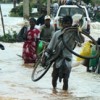
SRI LANKA: Build Better Infrastructure or Expect More Floods – Experts
Sri Lankans should be ready for more urban flash flooding, like those experienced in May, unless proper infrastructure is built to allow the onrushing waters to flow unhindered, experts warn.CLIMATE CHANGE: Restoring Trust After ‘Horrible’ Copenhagen Conference
Six months after failing to reach a binding agreement on climate change, negotiators are meeting in Bonn to try to get the process back on track. But deep disagreement over measuring developing countries' emissions and finding funds for adaptation to climate change remain unresolved.Europe’s Green Energy Portfolio Up in Smoke?
Europe seems hell-bent on burning the world's forests for bioenergy, even as it offers billions of euros to save them, critics say.Wildfires Increasing Despite Efforts to Slow Deforestation
An agreement reached at an international conference last week pledged over four billion dollars to the U.N.'s effort to reduce the greenhouse gas emissions that come from deforestation and forest degradation. But a study published Friday questions what impact that effort, called REDD, can have.MEXICO: Civil Society Divided Ahead of Climate Summit
With less than six months before Mexico hosts the next global climate change summit, Mexican environmental organisations hosting the parallel civil society forum are divided on how to carry it out -- which some fear could ultimately weaken their role at the negotiating table.Money Begets Environmental Evils, Study Finds
Rising global wealth spells disaster for the planet, with environmental impacts growing roughly 80 percent with a doubling of income, reports the first comprehensive study of consumption.
Fouls and Goals for Climate Change at World Cup
South Africa, where the FIFA Football World Cup is to kick off Jun. 11, has introduced cleaner transportation, while Brazil is planning ecological stadiums for the championship it will host in 2014. But these and other initiatives clash with the countries' overall environmental performance.
AFRICA: Climate Change Assistance so Near and Yet so Far
Technology transfer and aid for trade could assist least developed countries (LDCs) suffering the effects of climate change. But negotiations in the World Trade Organisation (WTO) are not helping to make this a reality, while aid for trade lands up at the wrong institutions, such as the World Bank.North-South Conservation Divide: “Show Me the Money”
Developing countries rich in plants and animals but poor in financial and technical resources refused to make binding commitments to halt the unraveling of the planet's biological infrastructure at the close of a major meeting Friday at the U.N.'s African headquarters in Nairobi.PAKISTAN: Lake Disaster Triggers New Displacements
Up until Saturday the Attabad Lake in northern Pakistan had been rising one metre every day and was thus on the verge of breaking its banks, observed Lieutenant General Nadeem Ahmed, chairman of the National Disaster Management Authority (NDMA).
URUGUAY: Environmental Partners
A wide range of strategies are being followed in the southeastern Uruguayan province of Rocha to counteract the environmental damages of activities like soy cultivation, plantation forestry and tourism. But challenges abound.EUROPE: Cutting Emissions, and Costs
Deeper cuts to the European Union's greenhouse gas emissions than those approved by its governments would be less expensive than previously thought, according to a new analysis.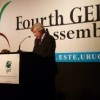
LATIN AMERICA: Governments Call for Greater Voice in Environmental Funding
"There should be a mechanism for recipient countries to help bring about a more balanced distribution of GEF funds," Cuban delegate Jorge Luis Fernández told IPS after a forum Tuesday on how to boost the efficiency and effectiveness of the Global Environment Facility.
Historic Conservation Pact a Decade in the Making
It was here in Yellowknife, on an inlet of the Great Slave Lake, that Stephen Kakfwi, then a minister of wildlife and economic development who would go on to become premier of the Northwest Territories, brought together in 1996 a group that would decide which areas of the forest needed to be protected and which areas could be developed.CLIMATE CHANGE: Latin America, EU Set Sights on Cancun Summit
Governments from the European Union and from Latin America and the Caribbean are confident that at year's end the international climate conference will produce a concrete legal mandate to truly protect the environment.GULF: Search On for Green Options to Forestall Water Shortage
Realising that achieving water security in the future is not an option but a necessity, oil-rich Gulf countries are striving to find new environment-friendly and more economical ways of producing freshwater.
More Funds, Less Red Tape, NGOs Tell GEF Assembly
Civil society organisations called for more funds, less bureaucracy and greater decision-making power, at the opening of the Fourth Global Environment Facility (GEF) Assembly Monday in this Uruguayan resort town.
How to Spend Environmental Funds
The world's multilateral credit institutions have often faced the criticism that they cause more problems than they prevent. As the challenges increase, such as those posed by climate change, the debate is shifting to environmental financing.« Previous Page — Next Page »


As unsustainable human consumption and production systems are driving changes in average temperatures and weather patterns, "abnormal" is increasingly becoming the norm. So far, a lack of financing has been standing in the way of a comprehensive global plan for climate adaptation, and a global financial crisis has contributed to an increasing reliance on public-private partnerships. Our Climate Change page provides you with the latest news about international and local efforts to address what's frequently been called "the challenge of our time", the forces behind the climate change and the impact it has on the world's most vulnerable populations. Along the way, we bring you stories on growing citizen awareness, new scientific data, and emerging climate policies towards sustainable development.

The Week with IPS

Tracking global progress towards a sustainable world

