Languages
Wednesday, September 23, 2026



News and Views from the Global South
Democracy

Are We Going from San Francisco?
Seventy-five years ago, on 26 June 1945, before the Japanese surrender ending the Second World War, fifty nations gathered at San Francisco’s Opera House to sign the United Nations (UN) Charter.
Sudan’s Partners Pledge almost $2Bn but Is it Enough?
This week, when Sudan's Minister of Energy and Mining Adil Ibrahim addressed the country, stating that households will face power-cuts for up to seven hours a day, people had already been sitting on plastic chairs outside their homes, scouring the internet to purchase battery-operated fans. This Northeast African nation has seen temperature highs of up to 41 degrees Celsius recently.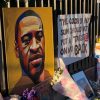
The UN’s Failure to Act on Race
Racism is not only an American problem but a plague that people of African descent have had to endure since time immemorial. Rather than seizing this historic moment to act decisively, the United Nations, the world’s highest platform for human rights, dithered on the issue when it was called on to establish a full commission of inquiry on race following the outrageous killing of George Floyd on May 25 2020.
Scourge of Racism Violates UN Charter
I welcome this opportunity to speak to this urgent and necessary debate of the Human Rights Council. I bring you warm greetings from Secretary-General António Guterres, who shares your abhorrence of racism and is committed to fighting it with every tool we have.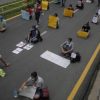
Social Movement Through Social Media
Last week, Kathmandu erupted with protests organised collectively through the social web by Nepal’s urban young fed up with the shenanigans of the country’s septuagenarian rulers.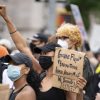
World Protests Show Rising Outrage and Mounting Discontent
After a period of forced silence because of the Covid-19 quarantines, citizens around the world are defying coronavirus restrictions and claiming the streets to fight for real democracy, jobs, living wages, public services, human rights and against corruption, inequality and injustice. We predict an increasing wave of protests all over the world led by different types of people defying the status quo. Unless policies change, clashes in the street are likely to become the new normal.
The Need, Within the UN, for an Honest Conversation on Racism
I want to once again express to all colleagues my enormous appreciation, my enormous gratitude, for your fantastic professionalism, your flexibility and the way you have been able to fully deliver for the people we care for during this period.
Zimbabwe and US Diplomacy – this Time the Fight is About George Floyd
“As tall as he is, if he continues to do that I will kick him out of the country,” thundered Zimbabwe’s former President Robert Mugabe in 2008, his anger aimed at the then United States ambassador James McGee after the diplomat questioned the results of Zimbabwe’s 2008 general elections.
George Floyd: US’ Week of Broken Glass and Broken Dreams
The United States has been a story of broken dreams and broken glass this past week. Once again, an unarmed black man died at the hands of a white police officer, with George Floyd being pinned to the ground under a lawman’s knee in Minneapolis, Minnesota, as stunned passersby made cell-phone videos of the incident to post on social media.
‘I Can’t Breathe!’ Australia Must Look in the Mirror to See our Own Deaths in Custody
I can’t breathe, please! Let me up, please! I can’t breathe! I can’t breathe! These words are not the words of George Floyd or Eric Garner. They weren’t uttered on the streets of Minneapolis or New York. These are the final words of a 26-year-old Dunghutti man who died in a prison in south-eastern Sydney.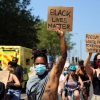
The Pandemic Underlines America’s Ingrained Racism
The murder of George Floyd by a police officer in broad daylight came amid a high point in the continuing rampage of the coronavirus throughout the country, killing over 100,000 and infecting nearly 2 million while more than 45 million have lost their jobs.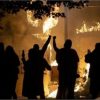
As Minneapolis Burns, Trump’s Presidency is Sinking Deeper into Crisis. And yet, he may still be Re-elected
Violence has erupted across several US cities after the death of a black man, George Floyd, who was shown on video gasping for breath as a white police officer, Derek Chauvin, knelt on his neck. The unrest poses serious challenges for President Donald Trump and former Vice President Joe Biden as each man readies his campaign for the November 3 election.
Is the Fight for Human Rights & Racial Justice Overriding the Coronavirus Risk?
The deadly coronavirus pandemic, which has claimed the lives of over 372,000 people worldwide, has reinforced the concept of “social distancing” which bars any gathering of over 10 or 20 people – whether at a social event, a wedding, a political rally or even a funeral.
UN@75 & the Future We Want
Crises make us think smaller. When everything is uncertain, we turn inward: to our families, our communities, the immediate needs around us. We focus on the essential and the immediate; we survive.
On the Agenda of Iraq’s New Government: An Empty Treasury, Low Revenue, and COVID-19
Iraq’s newly-announced leader has brought hope to a country embroiled in a 17-year-long conflict, but authorities must ensure that issues such as swift and rapid response to COVID-19, security concerns, and corruption among others are addressed with urgency, experts said on Tuesday.
Governments Cautioned Not to Use COVID-19 Lockdown to Cause Harm
 The United Nations High Commissioner for Human Rights is calling on governments and leaders around the world to ensure that their respective lockdown measurements don’t end up causing harm to people by those enforcing the lockdowns.
On World Press Freedom Day, the EU Must Rescue Media Independence in Hungary Before It’s Too Late
Censorship, smear campaigns and harassment. These are just some of the daily struggles that media professionals are facing in Hungary. And now the threat of jail time may be looming. In the context of World Press Freedom Day, there is little to celebrate in the Eastern Bloc region.
A Gender-equal Ethiopian Parliament can Improve the Lives of all Women
Recent gains by women in the Ethiopian political landscape offer a chance to improve gender equality around the country and put an end to long-standing societal iniquities. Since coming to power in 2018, Prime Minister Abiy Ahmed has reorganised the cabinet to ensure that 50 percent of the government’s top ministerial positions have been given to women.
Chinese vs. Western Governance: The case of COVID-19
During January the onslaught in the Western media, notably the US and the UK, against the Chinese government’s handling of the Covid-19 epidemic, was merciless. The Chinese government stood accused of an inhumane attitude towards its people, secrecy, a cover-up, and an overwhelming concern for its own survival above all other considerations.
Polycephaly* in Afghanistan: Failure of the US or Curse of History
The fourth and last presidential election in Afghanistan on 28 September 2019 was yet another setback to the democratic process. Not only did it take months for the Independent Election Commission to announce the results but they were again marred by allegations of massive fraud that culminated with two candidates declaring themselves as winners.
A Woman Peacebuilder’s Reflections on Beijing+25 & the Generation Equality Forum
Where are the women and youth peacebuilders in the Beijing+25 and the Generation Equality Forum processes? Their absence raises serious questions about the effectivity and coherence of the work of the UN on gender equality since armed conflict is both a cause and a consequence of gender inequality.« Previous Page — Next Page »


The Week with IPS

NEXT STOP - SDGs
Tracking global progress towards a sustainable world
Tracking global progress towards a sustainable world
