Languages
Monday, September 21, 2026



News and Views from the Global South
Democracy

Time to End the Lethal Limbo of the U.S.-Mexican Drug Wars
Sporadic but spectacular acts of violence remind the global public of how deeply parts of Mexico have slid into lethal conflict over recent years.
The Lebanese Disaster
The 26th of September, the Lebanese prime minister Mustapha Adib stepped down after less than a month on his post. The president, Michael Auon, stated: ”Lebanon will be going to Hell if a new government is not formed soon.” The question is if his nation is not there already. A horrifying image of the state of the nation was provided on the 4th of August when 2,750 tons of ammonium nitrate, stored in a dockside hangar, blew up in an explosion killing more than 190 people, injuring 6,500 and damaging thousands of buildings.
Papua New Guinea: Bougainville Elects Former Revolutionary Leader as President ahead of Tough Talks on Independence
Ishmael Toroama, a former revolutionary leader and fighter during the decade long civil war which engulfed the remote islands of Bougainville in Papua New Guinea (PNG) in the 1990s, has been elected the autonomous region’s new President ahead of high-level talks about its political future.
Why Is Women’s Leadership Not in the Headlines?
The question has never been whether women can lead as capably as men. Women have always led, and women will always lead, especially when the times are hard, and their communities are in need. The question that we need to ask is, why is women’s leadership invisible? Why is their potential and their power stifled?
Ruth Bader Ginsburg Forged a New Place for Women in the Law and Society
Justice Ruth Bader Ginsburg’s death has generated an outpouring of grief around the globe. Part of this grief reflects her unparalleled status as a feminist icon and pioneer for women in the legal profession and beyond.
Philanthropy’s Role in the Missing Global Architecture
The promise of the United Nations, as articulated 75 years ago, is a global system capable of managing global issues. As UN leadership knows, that promise is needed now more than ever in a multipolar world with increasingly complex challenges. This mission must be fulfilled, but is not possible without the collaboration of broad-based coalitions made up of innovative thinkers from all sectors of society working together.
The Culture of Peace: Change our World for the Better in the Age of COVID 19
Last year, we paid tribute to the 20th Anniversary of the 1999 Declaration of the Program of Action on a Culture of Peace. Today, we need to ask ourselves if we had genuinely carried out our moral responsibilities to transition from a culture of hatred and violence to a culture of tolerance and peace.
US Poll Predictions and Presidential Politics in the American Polity
The US residential polls are akin to a drama that is staged every four years in which the American are actors on stage and the rest of the world is the audience. With one major difference, however. While in a usual theatrical performance the viewers are there mostly for amusement, though some may be enlightened and enriched by the experience, in the case of the US elections, unlike in others, their fates are inextricably linked to the outcome of the play. This is not predetermined by any playwright, though it can often be predicted. It is not implausible therefore for some on-lookers to want to intervene in what’s happening onstage. It must be done discreetly, and with great circumspection. Take for instance, the Russians in the American elections in 2016. The Russians and President Donald Trump hotly dispute allegations of any such interference.
COVID-19: Presidents, the Press, and the Pandemic
The presidents of the Americas, beyond their ideological differences, seem to agree in questioning the role of journalists and the media in the coverage of the COVID-19 pandemic. On the other hand, human rights organizations remind us of the fundamental role of information, especially in times of crisis and uncertainty like the one we are experiencing in this 2020.
Americans By Force
Why, in the United States, where change is the most pronounced hallmark, do some aspects never change? Why do many bad habits resist giving way to novelties that prove to be the basis of the success of the most developed country on earth and still the leading power? Why is the explanation for that leadership due to a few factors? Why does Trump profess a visceral opposition to immigration, knowing that it is the key to the country's success? Because millions of his compatriots interpret the sinew of American DNA as a threat to their comparative social advantage.
It is Time for a Democratic Global Revolution
The people of the world need to seize the moment and bring about a democratic global revolution. It is time for a global parliament and real representation. More than 21 million people got infected with the novel coronavirus and over 770,000 have died. Never before did the world witness similar collective lockdowns of social and economic activity that had to be enforced to contain the pandemic.
Another Mutiny Turned Coup: Mali Is No Stranger to Military Unrest
What appears to have started as a mutiny, and resulted in a coup, came on the heels of renewed civilian protests in Bamako, the Malian capital. Tensions have been high since president Ibrahim Boubacar Keïta’s 2018 re-election which was marred by irregularities. All the while, he has continued to face allegations of corruption and fraud.
How to Help Belarus
President Aliaksandr Lukashenka’s government is teetering after he declared victory in a rigged 9 August vote. Protests have exploded. Moscow, Brussels and other stakeholders should avoid transforming the Belarus crisis into a European one, cooperate to warn against repression and insist on new, fair elections.
Leading in Time of COVID: A True Test of Leadership
In 1918, the Spanish Flu, a deadly influenza caused by the H1N1 virus, decimated the world. Over the course of four successive waves, it infected 500 million people, about a third of the world’s population at the time, resulting in 50 million deaths.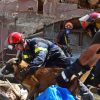
The Beirut Blast: An Accident in Name Only
The catastrophic explosion in Beirut’s port is a manifestation of the Lebanese political elite’s predation and dysfunction. Among the country’s long-suffering citizens, shock is quickly yielding to fury. It may be the last chance for those in power to effect long-overdue structural reforms.
Make a Fool of Yourself in the Third Act
Long ago, I was reviewing the offer of readings on the Internet, as a break from the search for academic sources for one of those articles with which to comply with professional rules, impress colleagues and students, and continue climbing steps in the university.
South China Sea Provocations & Meeting China Halfway
In the words of (ret.) Colonel Lawrence Wilkerson, Secretary of Defense Colin Powell’s Chief of Staff, the Trump Administration has been dangerously “poking China in the eye.”
Miracle or Mirage? Gangs and Plunging Violence in El Salvador
After decades of harrowing gang crime, homicides have plunged in El Salvador on the watch of the new president, Nayib Bukele. Faced with the growth of the MS-13 and 18th Street gangs, previous governments resorted to “iron fist” policies to crush them, only to find these fuelled a backlash.
Q&A: How Kazakhstan’s Transgender and Lesbian Women are Being Impacted by COVID-19
The coronavirus lockdown in Kazakhstan, and the resultant limited public oversight and limited publication engagement, has paved the way for the government to propose amendments to the country's laws around gender that could see the exclusion of the rights of the Lesbian, Gay, Bisexual, Transgender, and Queer (LGBTQ) community.
The Return
"As we were saying yesterday." When, after an abnormal interruption of the school calendar, as happened recently with the extension of spring break (which does not coincide with "Easter"), I return to teach a class surprising my students with this phrase: "as we were saying yesterday. "
”Murder Most Foul” – the Death of Olof Palme
Just as the U.S. is haunted by the 1963 murder of John F. Kennedy, Sweden is troubled by the 1986 murder of its Prime Minister Olof Palme. The American feelings were aired on Bob Dylan´s latest album, Rough and Rowdy Ways, containing a 16 minutes long song with lines like:« Previous Page — Next Page »


The Week with IPS

NEXT STOP - SDGs
Tracking global progress towards a sustainable world
Tracking global progress towards a sustainable world
