Languages
Sunday, October 4, 2026



News and Views from the Global South
Democracy
13 Commitments to Tackle Hate Speech
In June 2019, the Secretary-General of the UN, António Guterres, launched the UN Strategy and Plan of Action on Hate Speech. Respect for human rights, without any form of discrimination is one of the core fundamentals of this strategy.
Religious Leaders’ Plea to Member States: Honour Your Commitment to the UN
On the 8th of October, the United Nations Secretary General Antonio Guterres warned that the organisation is running out of money by the end of October - "member States have paid only 70 percent of the total amount needed for [our] regular budget”.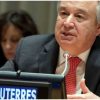
UN’s 75th Anniversary Shadowed by Right-Wing Nationalism, Widespread Authoritarianism & Budgetary Cuts
When the six much-ballyhooed high-level UN meetings concluded late September, there were mixed feelings about the final outcomes. And civil society organizations (CSOs), who were mostly disappointed with the results, are now gearing themselves for two upcoming key climate summit meetings: COP25 in Santiago, Chile in December and COP26 in Glasgow, UK in late 2020, along with the 25th anniversary of the Beijing Women’s Conference scheduled to take place in September 2020 in New York.
Holding Transnational Corporations Accountable for Human Rights Abuses
In Geneva this week, a treaty process is underway that promises to usher in a new era for human rights around the globe. The process—the intergovernmental working group on the binding treaty on transnational corporations and human rights—could mean that for the first time, human rights would be prioritized above corporate profits.
Election Death Toll Underscores Afghanistan’s Fragile Democracy
A wave of bloody Taliban attacks aimed at derailing Afghanistan’s recent elections killed and maimed hundreds of people, including children, the United Nations mission to the country said on Tuesday.
The Most Important Meeting You’ve Never Heard Of — & the Grand Challenge on Inequality
Last month 195 world leaders once again met in New York for big speeches and grand events. But on inequality, when all is said and done, more has been said than done.
South Sudan’s Authorities Allow Serious Human Rights Abuses to Flourish and go Unpunished – Report

Human rights movement Amnesty International has accused South Sudanese authorities for lack of independence as they have allowed allowing human rights abuses, war crimes and crimes against humanity to go unpunished.

Brief Reflection on Trump’s Impeachment
It is very likely that the idea of impeaching Donald Trump will be a boomerang. Trump fans are listening to a furious campaign which smacks of coup d’etat and call his accusers traitors who deserve to go to jail.
No to Ageism, Yes to Intergenerational Equality
As we are celebrating the International Day of Older Persons today, we recognize that population ageing is a human success story, a story of longer and often healthier lives of the world’s people. The many faces of older persons that we see in Asia and in the Pacific, and, indeed, all over the world, attest to this fact. Still, however, ageing is considered a threat. There is talk about the “burden of ageing”, exploding healthcare costs, and concerns about plummeting economic growth due to the shrinking labour force. In many cities of Asia-Pacific, we see advertisement for “anti-ageing cosmetics” and surgeries. The current ideal is that we must be young, dynamic and without wrinkles or grey hair, especially older women.
Constitutional Committee Breakthrough Offers ‘Sign of Hope’ for Long-suffering Syrians
There is a “sign of hope for the long-suffering Syrian people” as a Syrian-led, Syrian-owned, credible and inclusive Constitutional Committee is set to start deliberations next month, the United Nations Special Envoy for the country told the Security Council on Monday.
Q&A: A New Model for Independent Journalism in Slovakia
In 2014, worried about editorial independence after local businessmen bought a substantial stake in the major Slovak daily newspaper they worked at, a small group of journalists left in protest and set up their own paper run solely by the journalists themselves to ensure impartiality.
We Have Swung into the Dark Ages, Says Nobel Peace Laureate Jody Williams
On Monday, United States President Donald Trump continued to float the idea that he should be awarded a Nobel Prize, but that it would never happen because the system was rigged.
At the U.N., it Was the Day of Populist Strongmen
The United Nations is an institution which promotes multilateralism and preaches some of the basic tenets of multiparty democracy and liberalism, including the rule of law, universal human rights, free speech, civil liberties, the rights of refugees and freedom of the press.
50 Days of Kashmir Under Lockdown – in Pictures
It is 50 days into the lockdown in Kashmir since roads were blocked off, schools shut, and internet and communication services stopped.
The Social Impact of Economic Inequality
Increasing economic inequality is a defining challenge of our time. In recent years, it has triggered analysis and reflection by many scholars, politicians and others on its causes and consequences on economic growth and efficiency, politics and democracy, human rights, individual behaviors, access to health, social cohesion and environmental degradation. The perception that the top 1% of income earners are gaining at the expense of the other 99% has resulted in widespread public debates in many countries on the social and political repercussions of inequality.
The Costs of Heightened Conflict in the Himalayas
As a series of conflicts in the Hindu Kush Himalayan region come into sharp focus, sidelining local populations, the long-term environmental costs may leave the region degraded, poor and desperate.
Culture of Peace Takes Big Stride as UN Observes 20th Anniversary of Norm-Setting 1999 Decision
It has been a long, arduous journey – a journey ridden curiously with obstacles and indifference. Two decades have passed by since the UN General Assembly (UNGA) adopted, by consensus and without reservation, its landmark and norm-setting resolution 53/243 on the Declaration and Programme of Action on a Culture of Peace in 1999.
Kashmir: How Modi’s Aggressive ‘Hindutva’ Project has Brought India and Pakistan to the Brink – Again
August is immensely important in the history of the Asian subcontinent, marking the month that India and Pakistan gained independence from the British in 1947. Now, in 2019, it has once again proved momentous, when, ten days before India’s Independence day celebrations, prime minister Narendra Modi’s government revoked the autonomy of Indian-administered Kashmir – a status provided for under the Indian Constitution.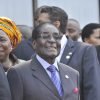
Zimbabwe’s ex-President Robert Mugabe Leaves a Mixed Legacy
Former Zimbabwe strongman Robert Mugabe, who died this week, aged 95, leaves a mixed and divisive legacy.
Reimagining ‘Crazy Rich Asians’ as Social Commentary on Inequalities in Asia-Pacific
It’s 1962, and in a modest Hong Kong neighborhood, a poetic love story unfolds. Filmed almost twenty years ago, Wong Kar-wai’s seminal movie In the Mood for Love captured the world’s imagination about lifestyle in the region.
Triumph of the Right is Changing the World Order
The crisis of regional and multilateral institutions goes hand in hand with the international rise of right-wing populism. In the US, the UK, Russia, Italy, Poland, Hungary, Turkey, the Philippines and Brazil, we are experiencing the rise of right-wing populist politicians who throw headline-grabbing barbs at global compromises and the negotiating processes of supranational institutions such as the UN.« Previous Page — Next Page »


The Week with IPS

NEXT STOP - SDGs
Tracking global progress towards a sustainable world
Tracking global progress towards a sustainable world
