Languages
Thursday, November 12, 2026



News and Views from the Global South
Democracy
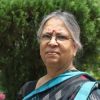
‘In Bangladesh, democracy was not allowed to take root’
Sultana Kamal, lawyer and human rights activist, member of CPD board of trustees, former Executive Director of Ain o Salish Kendra, and former advisor to the caretaker government of Bangladesh, talks to Eresh Omar Jamal of The Daily Star about the upcoming national elections and the state of human rights in Bangladesh.
Trump’s Anti-Media Rhetoric Resonates Worldwide
A former French president once remarked: Never pick a fight with a little kid or the press. The kid will throw the last stone at you and the press will have the last word. But that obviously does not apply to a teflon-coated Donald Trump because nothing apparently sticks on him – even as he survives a barrage of criticisms from the mainstream media while he continues to utter falsehoods and mouth blatant lies.The promise of democracy :The people shall rule
The promise of democracy is that the people shall rule. Not the executive, not the legislature, not the judiciary. But democracy is an ideal, not a practical reality, and it depends on institutions to make it function. When those institutions are compromised or nullified, the democratic promise is at risk of being broken.
Editorial Changes at Cumhuriyet: the Loss of a Major Independent Voice in Turkey?
Censorship, controversial judicial proceedings and imprisonment: such is the current risk run by independently-thinking journalists in Turkey.
Brazilians Decide on a Shift to the Right at Any Cost
Voters in Brazil ignored threats to democracy and opted for radical political change, with a shift to the extreme right, with ties to the military, as is always the case in this South American country.
Trump and Bolsonaro: Alarming Similarities
Observing recent political developments in the United States and Brazil, there are clearly similarities between the phenomena of 'Trumpism' and 'Bolsonarism' that do not seem to be a mere coincidence.
An Ounce of Democracy
As the old adage goes: “An ounce of prevention is worth a pound of cure”. Nowhere is this more appropriate than when it comes to conflict. Violent conflict causes not only human suffering and destruction but robs entire societies of development and growth.
Women as Liberia’s Guardians of Peace
Not long ago, images of child soldiers and the nation of Liberia were wedded in the minds of the international community. The country was struggling to end a horrific civil war, but military efforts were going nowhere.
Cyber Attacks Growing Problem in Developing Nations
Few experiences undermine a digital financial services (DFS) customer’s finances and trust in DFS like becoming the victim of a cybercrime. This is especially true of low-income customers, who are least able to rebound from the losses, and of the newly banked, whose trust in financial services may be fragile.
Poised to Become Digital-First Economies, ASEAN Countries Still Face Core Challenges
Homegrown Ride-Hailing APPS, intelligent traffic systems, advanced construction techniques, automated energy-consumption management all propel the innovation wave washing over the Association of Southeast Asian Nations (ASEAN).
Maldives Envoy tells UN About Peaceful Transfer of Power
Maldives is currently going through a peaceful transfer of power to opposition leader Ibrahim Mohamed Solih, who was elected president last month, the nation's Permanent Representative Ali Naseer Mohamed assured the UN General Assembly (UNGA).
The Growing Need for Democracy in Africa
Many scholars argue that democracy is not the answer to Africa's problems. To certain degree, I agree with such statements that democracy alone cannot guarantee African nations' happiness, prosperity, health, peace and stability. In fact, modern democracies also suffer greatly from many defects.
The Shrinking Space for Media Freedom in Uganda
Last month, a horrifying video circulated on social media in Uganda. It shows Reuters photographer, James Akena, surrounded by Uganda Peoples Defence Force soldiers who beat him as he raised his hands in the air in surrender. He was unarmed and held only his camera.
Crisis Drives Nicaragua to an Economic and Social Precipice
Five months after the outbreak of mass protests in Nicaragua, in addition to the more than 300 deaths, the crisis has had visible consequences in terms of increased poverty and migration, as well as the international isolation of the government and a wave of repression that continues unabated.
“In Two Years, Duterte Has Crushed All the Progress We’ve Made”
“Isn’t it cool? I get some hostile looks when I walk around in it, but other people come up asking where they can buy one,” Josua Mata says of his T-shirt, which reads “Resist dictatorship”. He is the Secretary General of the labour union umbrella organisation Sentro and does not hold back when he speaks about the Philippines’ hard-line president, Rodrigo Duterte.
Amid Chronic Violence, Millions of Afghans Face Risks of Drought Related Displacement
Amid a precarious security situation in Afghanistan, the worst drought in recent history, that hit two out of three provinces in Afghanistan in July, has destabilized the lives of tens of thousands of civilians, some of whom have already been displaced.
Lee, Journalist Banned from UN for Misconduct, Plans to Fight Back
The United Nation’s Department of Public Information (DPI) last week withdrew UN press credentials from Matthew Lee, a longstanding journalist who reported for his blog, Inner City Press (ICP).
Q&A: Comoros Power Grab Rejected by Opposition, Amid Pleas for International Intervention
President Azali Assoumani of the Comoros Islands is tightening his grip on power. First, he insisted on holding a referendum allowing him to extend his term of office and abolish the country’s constitutional court. Which he won. And now, the lawyer of former President Ahmed Abdallah Sambi has said that his client has been charged Tuesday with corruption and the misappropriation of public funds in a passport fraud.
Which Way Now for Zimbabwe as Constitutional Court Receives Petition Against Election Results?
Many in Zimbabwe are questioning whether the country can break with its horrid past or embrace a new future after a watershed election that saw Emmerson Mnangagwa win the presidential race by a narrow margin and the opposition lodge a formal petition challenging the results in the Constitutional Court.
Campaigns Promote Women’s Participation in Latin America
An alternative network in Brazil promotes women's participation in elected offices with media support. This campaign, like others in Latin America, seeks to reverse a political landscape where, despite being a majority of the population, women hold an average of just 29.8 percent of legislative posts.
Laws and Threats Undermine Freedom of Expression in Honduras
A series of laws that came into force in the last five years and the petition for amparo by 35 journalists and 22 social communicators against the government's "Secrecy Law" give an idea of the atmosphere in Honduras with regard to freedom of expression.« Previous Page — Next Page »





The Week with IPS

NEXT STOP - SDGs
Tracking global progress towards a sustainable world
Tracking global progress towards a sustainable world
