Languages
Tuesday, September 22, 2026



News and Views from the Global South
Development & Aid
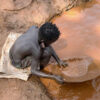
Africa at the Epicenter of Child Labour Crisis as Migration Fuels Exploitation
Although global rates of child labour have declined since 2020, the practice remains a serious and persistent violation of children’s rights, undermining their safety, social development, and long-term economic stability. These risks are intensified by structural pressures— poverty, climate shocks, protracted conflict, and unsafe migration— that continue to push vulnerable children into crisis, and in some cases, trafficking and exploitation. The United Nations Children’s Fund (UNICEF) warns that African countries remain among the most affected regions, underscoring the urgent need for coordinated policy action, cross-border cooperation, and sustained investment to protect children on the move and those at risk of labour exploitation.
Next UN Secretary-General Should Champion Human Rights
United Nations member countries will select a new UN secretary-general this year to succeed António Guterres in January 2027. The change in leadership comes at a time when human rights and democracy, as well as the international organizations created to uphold those principles and provide lifesaving assistance, are under unprecedented attack.
Bay of Despair: Rohingya Refugees Risk Their Lives at Sea
Dawn is breaking and the world’s biggest refugee camp stirs to life. Smoke rises from small cooking fires among rows of bamboo and tarpaulin shelters as children line up for food.
As Glaciers Melt, the World’s Hidden Water Banks Are at Risk
Glaciers – the world’s hidden water banks - are a source of life for billions. The seasonal melt from mountains and glaciers sustains some of the world’s most important rivers, such as the Indus, the Nile, the Ganges and the Colorado. Those and other mountain-fed rivers irrigate crops, provide drinking water for nearly two billion people, and power electricity generation.
Africa’s Food Systems Will Not Transform Without Parliamentary Accountability
Africa has never lacked agricultural strategies. Since the launch of the Comprehensive Africa Agriculture Development Programme (CAADP) in 2003, governments have pledged repeatedly to spend at least 10 per cent of public budgets on agriculture and to raise productivity through better investment and coordination. The African Union reaffirmed this target in subsequent declarations, such as Malabo in 2014 and the Kampala CAADP Strategy (2026-2035).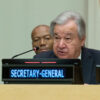
Fragile Progress in Gaza Humanitarian Response Undermined by Rampant Insecurity
Since the ceasefire agreement between Israel and Hamas in October of last year, humanitarian conditions in Gaza have notably improved — but aid agencies warn that progress is extremely fragile. Acute shortages of lifesaving medical care and psychosocial support persist, hunger remains widespread, with conditional cash assistance as the primary barrier preventing full-scale food insecurity, while Israeli attacks continue to undermine stability and humanitarian efforts.
Bridging the Capital Gap: Strategic Public-Private Partnerships Invest in Young Agri-entrepreneurs
The global aid system is crumbling amidst chronic underinvestment in rural areas, posing a systemic threat to food systems everywhere. With 1.3 billion young people in the world today – the largest generation in history, and nearly half of them living in rural areas – investing in their entrepreneurial potential is key.
When Drought Steals Childhood: How Climate Shocks in Northern Kenya Are Testing the SDGs
Every morning before sunrise, 10-year-old Amina Adan walks away from school and toward a shrinking water pan on the outskirts of Rhamu, Mandera County. By the time her classmates would be opening exercise books, Amina was already balancing a yellow jerrycan almost half her size.
Leveraging Artificial Intelligence and Enhancing Countries’ Preparedness
It is a pleasure for me to join His Excellency, Minister Al Hussaini in welcoming you to this important dialogue here in the United Arab Emirates—a fast-growing global AI hub. A recent Microsoft study reports that 64 percent of the UAE’s working age population uses AI, which is the highest rate globally.
Trade Liberalisation Undermines Development
Despite lacking both evidence and theory, many economists claim trade liberalisation accelerates development. But only a few economies have gained many jobs from external market access.
Local Resilience Can Mitigate Climate Conflicts in the Pacific
The Pacific Island countries are at the frontline of climate change. Their territories mostly consist of small, low-lying islands, with long coastlines and vast ocean spaces between them. Many livelihoods are based on agriculture or fishing, and importing water or food is often infeasible or expensive. This makes those large ocean nations highly vulnerable to the impacts of climate change, such as storms, droughts, and rising sea levels. Analysts have expressed concerns that this can result in various forms of socio-political conflict.

A Business Necessity: Align With Nature or Risk Collapse, IPBES Report Warns
Business can still remain profitable while protecting the environment but invest in nature-positive operations, says a landmark report by the Intergovernmental Platform on Biodiversity and Ecosystem Services (IPBES), which finds that global companies have contributed to the escalating loss of biodiversity.
Goal 1: End Poverty in all its Forms –Everywhere
Eradicating extreme poverty for all people everywhere by 2030 is a pivotal aim of the Sustainable Development Goals. Extreme poverty, defined as surviving on less than US$3.00 per person per day at 2021 purchasing power parity, has witnessed remarkable declines over recent decades.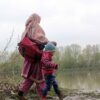
‘When Rains Come, Our Hearts Beat Faster’
When the rain begins in Kashmir's capital Srinagar, Ghulam Nabi Bhat does not watch the clouds with relief anymore. He watches them with calculation. How much can the gutters take? How fast will the river rise? Which corner of the house will leak first? Where should the children sleep if the floor turns damp?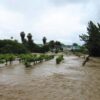
Floods and Food Security: The Hidden Cost to Crops and Soil
South Africa, Mozambique, and Zimbabwe are currently experiencing severe flooding. According to the World Health Organization, 1.3 million people have been affected. In addition, hundreds of people have died , infrastructure has been destroyed, access to health services has been disrupted, and the risks of water- and mosquito-borne diseases are rising.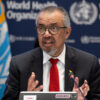
WHO Launches $1 Billion Appeal Amid Funding Shortfalls and Widening Gaps in Healthcare Access
On February 3, the World Health Organization (WHO) launched its 2026 global appeal to help millions of people living in protracted conflicts and humanitarian crises access lifesaving healthcare. Following a trend of sharply declining international funding, the agency warns that it is becoming increasingly difficult to respond to emerging health threats, including pandemics and drug-resistant infections.
When Protection Meets the Sea: Rethinking Marine Protected Areas with Fishing Communities
Melanie Brown has been fishing salmon in Bristol Bay, Alaska, for more than 30 years. An Indigenous fisherwoman and a coordinating committee member of the World Forum of Fisher Peoples, she speaks about the sea with deep care and lived knowledge.
To Fix the Rupture, Trade is not Enough
Will trade be enough to navigate the current waves of chaos and disorder that are underpinning the ongoing rifts among competing powerful and hegemon nations and the rest?
‘We Are Seeing an Economic Transition, but No Democratic Transition’
CIVICUS discusses the situation following the US intervention in Venezuela with Guillermo Miguelena Palacios, director of the Venezuelan Progressive Institute, a think tank that promotes spaces for dialogue and democratic leadership.
Humanitarian Access Collapses as Yemen’s Political and Security Crisis Deepens
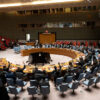
In recent weeks, Yemen’s humanitarian crisis has sharply worsened, as escalating food insecurity and brutal clashes between armed actors have prompted United Nations (UN) officials to warn that the country is approaching a critical breaking point. Intensified violence has increasingly obstructed lifesaving humanitarian operations, while deepening economic and political instability continues to erode access to essential services. As a result, millions of Yemenis now face the growing risk of being left without the support they need to survive, with children being the hardest-hit.
Myanmar: Five Years Since the Coup and No End in Sight To War
Five years of conflict since the military seized power have reduced Myanmar to a failed state and taken a huge toll of lives lost and destroyed. But with all sides seeking total victory, there is no end in sight.« Previous Page — Next Page »


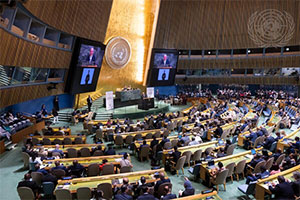 2026 High-level Political Forum on Sustainable Development. Credit: UN Photo/Eskinder Debebe
In 2015, the United Nations and its Member States adopted the Sustainable Development Goals (SDGs) in an effort to make the world a more sustainable and peaceful place for future generations. Progress on the 17 SDGs has been uneven, and inequality persists across the globe. 10 years after adoption, the 2025 UN SDGs Report revealed that only 35% of the SDG targets are on track, with more than half moving too slowly, and 18% moving backwards from the 2015 baseline. Poverty remains one of the world’s most pressing issues, with hunger, violence, and inequality impeding the opportunities for all people to achieve success. In September 2024, the United Nations Summit of the Future introduced a new goal: to eradicate global poverty by 2030, ensure universal rights to basic services, and increase the overall standard of living in terms of industrialization, economic well-being, citizen health, and literacy. Furthermore, recent shifts in United States foreign aid policy – notably, major budget cuts to USAID and the termination of thousands of development programmes– have severely threatened vital lifelines of financial aid to impoverished communities around the world. Additionally, the United States’ withdrawal from the Paris Climate Agreement has undercut international efforts at sustainable development. With the upcoming 2030 deadline, the UN Secretary-General has called for urgent multilateralism across six priority areas: food systems, energy, digital connectivity, education, jobs and social protection, and climate and biodiversity. IPS sheds light on marginalized communities that struggle on a daily basis to survive and have their stories heard and respected.
Updated by Yilan Batista and Shuli Wong August 2026

The Week with IPS

NEXT STOP - SDGs
Tracking global progress towards a sustainable world
Tracking global progress towards a sustainable world
