Languages
Friday, November 20, 2026



News and Views from the Global South
Development & Aid

The Libyan Disaster: Little Bits of History Repeating
The Libyan catastrophe and the suffering of ”illegal” migrants are generally depicted as fairly recent events, though they are actually the results of a long history of greed, contempt for others and fatal shortsightedness. Like former Yugoslavia, Libya was created from a mosaic of tribal entities, subdued by colonial powers and then ruled by an iron-fisted dictator. Now, Libya is a quagmire where local and international stakeholders battle to control its natural resources. The country holds the largest oil reserves in Africa, oil and gas account for 60 percent of GDP and more than 90 percent of exports.1 This is one reason why Egypt, France, Russia, Saudi Arabia, the U.S., and many other nations are enmeshed in Libya. Furthermore, European nations try to stop mainly sub-Saharan refugees and migrants from reaching their coasts from Libya. An attempt to understand Italy´s essential role in the struggle over Libya´s oil and attempts to control unwanted immigration may help to clarify some issues related to the current situation.
Africa’s Megacities a Magnet for Investors
Megacities, cities with a population of at least 10 million, are sprouting everywhere in Africa. Cairo in Egypt, Kinshasa in the Democratic Republic of the Congo (DRC) and Lagos in Nigeria are already megacities, while Luanda in Angola, Dar es Salaam in Tanzania and Johannesburg in South Africa will attain the status by 2030, according the United Nations.
Japan Boosts Complex Fight to Eliminate Leprosy in Brazil
When cases of Hansen's disease, better known as leprosy, increase in Brazil, it is not due to a lack of medical assistance but to the growing efficacy of the health system in detecting infections, contrary to the situation in other countries.
Of Leaders Then and Now
Richard Dossevi parks his motorcycle taxi on one of the busiest street corners in Cotonou, Benin's commercial capital, to wait for commuters amid the summer heat.
Climate Change Victims: What Will You Do Next?
Contemporary politics generates a lot of noise and smoke, with little attention devoted to understanding, analysing and fixing the causes of the noise and smoke. The global public discourse is dominated by statements made by politicians and aspirants to power, designed to shock, awe and draw support.
Climate Change Deniers Violate Human Rights
Whoever still thinks climate change is purely an environmental issue, threatening only nature, needs to think again. Climate change is also essentially a human issue because of its devastating effect on human life – and rights. It exacerbates existing inequalities, undermines democracy and threatens development at large. Likewise, by far the greatest burden will fall on those already in poverty, while the rich will be able to buy their way out of rising heat and hunger.
Sustainable Development Needs a Hardware Update
When UN Member States adopted the 2030 Agenda and its SDGs in September 2015, they signalled with the title Transforming our World that ‘business as usual’ is no longer an option and fundamental changes in politics and society are necessary.
Solar Collectors and Solidarity Change Lives in Argentina
"This is the best thing ever invented for the poor," says Emanuel del Monte, pointing to a tank covered in black tarps protruding from the roof of his house. It forms part of a system built mostly from waste materials, which heats water through solar energy and is improving lives in Argentina.
We Can Get the 2030 Agenda Back on Track – With More Empowered, Inclusive, & Equal Partnerships
The 2030 Agenda for Sustainable Development, universally adopted in 2015, is a plan to create a better and more sustainable future for all in just 15 years, through 17 Sustainable Development Goals (the SDGs). It sounds implausible.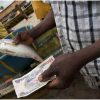
Africa’s Free Trade Area Misses Nigeria
When Africa’s free trade area launches on 7 July, a key player will be missing. However, Victor Adetula, head of research at Nordic Africa Institute (NAI) in Sweden, predicts that Africa’s largest economy, Nigeria, will gradually open up and join the project.
Zero Population Growth vs Population Control
Knowledge is power, but with the caveat that said knowledge is based in fact. Otherwise, it’s misinformation.
Libya Tragedy: Why Lock up Migrants in the First Place?
A military strike on a detention centre for migrants in Libya that claimed dozens of lives on Wednesday Jul. 3 has reignited a debate over the poor treatment of the mainly African people who transit through the turbulent country.
Why Environmental and Humanitarian Action Must Be Linked
Environmental and humanitarian action is often understood as two different sectors. However, the lack of awareness regarding its intersections could lead to further long-term devastation.
Chilean Schools Recycle Greywater to Combat Drought
Children from the neighboring municipalities of Ovalle and Río Hurtado in northern Chile are harvesting rain and recycling greywater in their schools to irrigate fruit trees and vegetable gardens, in an initiative aimed at combating the shortage of water in this semi-arid region.
Indigenous Communities Head Towards Energy Self-Sufficiency in Guatemala
 Because the government has never provided them with electricity, indigenous communities in the mountains of northwest Guatemala had no choice but to generate their own energy.

Are We Fighting a Losing Battle in the War Against Drugs?
How effective is the global war on drugs? The latest statistics released by the UN Office on Drugs and Crime (UNODC) are staggering: 35 million people across the globe currently have a substance use disorder, and as of 2017, 585,000 people have died worldwide as a result of drug use.
Paraguay Moves Towards Sustainable Commodities
The statistics are alarming. By 2050, the world will require an estimated 60 percent growth in agricultural production to meet the food demand of a population of close to 9 billion people.
Financialization Undermines Real Economy
The relationship between finance and the real economy is arguably at the root of the contemporary economic malaise. Unlike earlier acceptance of simple linear causation, recent recognition of a curvilinear relationship between finance and economic growth, implying ‘diminishing returns’, has important implications.
Food From Thought
As the weather continues to change and land becomes degraded, the socio-economic security implications are vast. In an effort to tackle these issues, climate-smart agriculture is quickly gaining traction around the world.
Unseen and Unsafe: Violence Against Women within Migrant Families
Refugee and migrant women often face inescapable violence in the home. And the potential for intimate forms of violence is exacerbated by humanitarian crises and job insecurity.
Could the Election of Qu Dongyu as FAO´s General-Director be a Turning-point for Sustainable Agricultural Development?
Agriculture is the bedrock of sedentary human civilization, without it we would have no governments or nations. It was food surplus generated by agriculture that enabled people to live in cities and form regimes able to organize food production in such a manner that some community members could engage in other activities than direct food production and thus give rise to the ideologies, techniques and goods which now constitute and govern our existence.« Previous Page — Next Page »


 2026 High-level Political Forum on Sustainable Development. Credit: UN Photo/Eskinder Debebe
In 2015, the United Nations and its Member States adopted the Sustainable Development Goals (SDGs) in an effort to make the world a more sustainable and peaceful place for future generations. Progress on the 17 SDGs has been uneven, and inequality persists across the globe. 10 years after adoption, the 2025 UN SDGs Report revealed that only 35% of the SDG targets are on track, with more than half moving too slowly, and 18% moving backwards from the 2015 baseline. Poverty remains one of the world’s most pressing issues, with hunger, violence, and inequality impeding the opportunities for all people to achieve success. In September 2024, the United Nations Summit of the Future introduced a new goal: to eradicate global poverty by 2030, ensure universal rights to basic services, and increase the overall standard of living in terms of industrialization, economic well-being, citizen health, and literacy. Furthermore, recent shifts in United States foreign aid policy – notably, major budget cuts to USAID and the termination of thousands of development programmes– have severely threatened vital lifelines of financial aid to impoverished communities around the world. Additionally, the United States’ withdrawal from the Paris Climate Agreement has undercut international efforts at sustainable development. With the upcoming 2030 deadline, the UN Secretary-General has called for urgent multilateralism across six priority areas: food systems, energy, digital connectivity, education, jobs and social protection, and climate and biodiversity. IPS sheds light on marginalized communities that struggle on a daily basis to survive and have their stories heard and respected.
Updated by Yilan Batista and Shuli Wong August 2026

The Week with IPS

NEXT STOP - SDGs
Tracking global progress towards a sustainable world
Tracking global progress towards a sustainable world
