Languages
Friday, November 20, 2026



News and Views from the Global South
Development & Aid

Cities of Light are Providing Safe Havens to Refugees
While cities around the world have been providing safe havens to refugees, a few US cities in the Upstate New York region have been integrating refugees and asylum-seekers into their communities.
The Forgotten Migrants of Central America
Rural and indigenous populations in countries like Guatemala and Honduras are increasingly on the move – either migrating internally or to neighbouring countries.
Developing Technologies for Zero-Carbon Economies
Never before has half a degree (0.5C) meant so much for humanity. We are behaving as if we have time to deal with climate change. We don’t. The main problem is that we believe we must sacrifice growth and prosperity for the sake of decarbonisation. We don’t.
Driving Financialization
The emergence and growth of financialization from the 1980s has been driven by several factors operating at various levels – national and international, ideological and political, and of course, technological. The 1971 collapse of the Bretton Woods (BW) international monetary system arguably paved the way for financial globalization.
Championing Social Changes: A Tale of Two Women
This is the story of two women who are positively transforming social norms in their respective societies, as part of the global movement towards gender equality.
A Journey from a Small-Scale Farm to International Stage
As a wife and mother in Nigeria who wanted to support my family and my community, I began my own farm in 2006. When I began, I never could have dreamed that just cultivating the earth would someday lead to my meeting government leaders, and traveling to meet other women from around the world doing their part to make a difference in their own communities.
Restoring Our Degraded Planet
On the 1st of March 2019, we saw one of the rare moments in history when the entire world comes together and agrees on a joint way forward. The United Nations General Assembly recognized the urgent need to tackle the compounded crisis of climate change and biodiversity loss, and passed a resolution to proclaim 2021-2030 as the UN Decade on Ecosystem Restoration. With the aim to restore at least 350 million hectares of degraded landscapes by 2030 – an area the size of India – the UN Decade is a loud and clear call to action for all of us. And it is a great opportunity for the UN-REDD Programme and its partner countries to build on 10 years worth of relevant experience with safeguards, impactful policies and measures, and attracting private and public investments.
Mothers in the US Are Dying: What Are We Doing to Save Them?
The maternal mortality rate in the United States is the highest of any developed country – and the rate is rising. The US is currently the most dangerous place to give birth in the developed world.
Afghan Schools Left Unprotected by Government & International Community
Attacks on Afghan schools tripled between 2017 and 2018, according to a UNICEF report released last week: from 68 attacks to 192 in 2018. This figure seems unlikely to decrease as the Afghan government prepares to use schools once again for political activity in the upcoming election.
What Standardised Testing Doesn’t Tell Us About Learning
When we look at learning outcomes for children, we only look at standardised tests, ignoring any indigenous knowledge, language, or problem solving strategies they might have.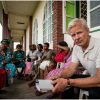
World’s Displacement Crises Worsened by Lack of Funds, Political Will or Media Attention
The world’s 10 most under reported displacement crises— which have rendered millions of people homeless– have continued to worsen due either to political neglect, a shortage of funds or lack of media attention, according to a new report released by the Norwegian Refugee Council (NRC).
Ecuador in Frontline to Address Climate Change
As the UN commemorates World Environment Day, UNDP would like to take this opportunity to commend Ecuador’s efforts to address climate change and its commitment to raising its climate ambition.
We Must do More to Speed up Ending Fossil Fuel Subsidies
Fossil fuels—oil, gas, coal and their derivatives—pollute the atmosphere and emit the greenhouse gases that are ramping up global heating to dangerous levels. But did you know that governments around the world are subsidizing this pollution?
Mobilisation Needed for Climate-Related Disasters
Climate-related displacement and food insecurity is not a future possibility, but it is already happening and it’s only projected to worsen without urgent action in coming years.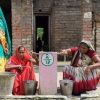
India’s Most Significant Innovations Have Roots in Civil Society
When we look at some of the things we take for granted in India today, there is a common thread to all of them. Every single one. They all originated from civil society.
Transforming Society, Financialization Destroys Social Solidarity
Finance has not stopped at dominating the real economy. The tentacles of finance have reached into significant, if not most parts of society. Gerald Davis characterises modern society, where finance is dominant, as a ‘portfolio society’, in which aspects of social life have been securitized and transformed into a kind of capital or investment to be managed.
We Won’t Achieve Gender Equality Until We Address the Lack of Water, Sanitation & Hygiene
Giving birth is a life changing moment for women. It can be - when women have a safe and caring environment, positive and empowering - a moment to find a previously untapped inner strength.
The World Has Lost Its Compass
The terrible feeling I had on waking up and seeing the Italian voting results at the recent European elections was that my country was suddenly full of strangers. How could the majority of Italians reconfirm a government which has been the most inefficient in history, quarrelling on everything every single day and looking with total indifference to the looming problem of how to establish the next budget without clashing with the European Union or squeezing Italian citizens? Its irresponsible debate on the Italian finances has now led to a spread (difference of value) of 290 points with the Germans.
An Escalating War on Reproductive Rights
Abortion has long been a contentious issue across the world, and the debate is only heating up, prompting women to stand up and speak out for their reproductive rights.
Watch Out: Your Money Is Being Used to Destroy the World!
Perhaps the most direct way to introduce this tough issue is what the United Nations Secretary-General, António Guterres, stated just one week ahead of the 5 June World Environment Day, which focuses this year on air pollution, caused chiefly by the use of fossil fuels both in transport, industry and even household cooking, heating, etc.
Exploitation and Acculturation
There are several means to make profitable use of other human beings, an endeavour that tends to turn others into tools by depriving them of their roots and self-respect. This happened in concentration - and work camps, where individuals were reduced to mere numbers.« Previous Page — Next Page »


 2026 High-level Political Forum on Sustainable Development. Credit: UN Photo/Eskinder Debebe
In 2015, the United Nations and its Member States adopted the Sustainable Development Goals (SDGs) in an effort to make the world a more sustainable and peaceful place for future generations. Progress on the 17 SDGs has been uneven, and inequality persists across the globe. 10 years after adoption, the 2025 UN SDGs Report revealed that only 35% of the SDG targets are on track, with more than half moving too slowly, and 18% moving backwards from the 2015 baseline. Poverty remains one of the world’s most pressing issues, with hunger, violence, and inequality impeding the opportunities for all people to achieve success. In September 2024, the United Nations Summit of the Future introduced a new goal: to eradicate global poverty by 2030, ensure universal rights to basic services, and increase the overall standard of living in terms of industrialization, economic well-being, citizen health, and literacy. Furthermore, recent shifts in United States foreign aid policy – notably, major budget cuts to USAID and the termination of thousands of development programmes– have severely threatened vital lifelines of financial aid to impoverished communities around the world. Additionally, the United States’ withdrawal from the Paris Climate Agreement has undercut international efforts at sustainable development. With the upcoming 2030 deadline, the UN Secretary-General has called for urgent multilateralism across six priority areas: food systems, energy, digital connectivity, education, jobs and social protection, and climate and biodiversity. IPS sheds light on marginalized communities that struggle on a daily basis to survive and have their stories heard and respected.
Updated by Yilan Batista and Shuli Wong August 2026

The Week with IPS

NEXT STOP - SDGs
Tracking global progress towards a sustainable world
Tracking global progress towards a sustainable world
