Languages
Friday, November 20, 2026



News and Views from the Global South
Development & Aid
Poor Outlook for HIV-positive Children in Pakistan
Over 785 people have been diagnosed with HIV in Larkana, Pakistan. 82% of those individuals are children, and only half are receiving the treatment they need.
Put Survivors Front and Centre
Sexual violence is still all too common and continues to threaten peace and security worldwide. How can we do better? Put survivors at the centre.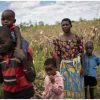
SDGs, Currently Off-Track, Need Bold Decisive Action
It has been four years since governments agreed on the most ambitious set of international commitments to fight poverty and inequality to date. The Sustainable Development Goals (SDGs), otherwise known as the Global Goals, are ‘a universal call to action to end poverty, protect the planet and ensure that all people enjoy peace and prosperity.’ The goals ambitiously aim to “Leave No One Behind.”
An Economic No-Brainer: Empower Women, Empower Economies
As the first woman to lead the International Monetary Fund (IMF), and a leader in advocating for increased investment and action toward gender equality, Christine Lagarde helps Deliver for Good explore the steps needed to build sustainable financing & economic opportunities for girls and women.
The Immense Cost 200 Million Migrant Workers Pay to Rescue their Families
Straight to the point: while right and far-right politicians keep marketing their image with intensive campaigns of hatred, discrimination and stigmatisation against migrants, 200 million migrant workers worldwide will sacrifice over half a trillion dollars from their hard-earned money, to rescue 800 million members of their impoverished families. And that’s only this year 2019.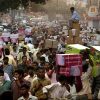
Rising Population Trends Threaten UN’s Development Goals in Asia & Africa
The world’s developing nations, currently fighting an uphill battle in their attempts to implement the UN’s Sustainable Development Goals (SDGs), are facing another stark demographic reality: a rise in world population by 2.0 billion people in the next 30 years: from 7.7 billion to 9.7 billion in 2050.
Financialization Promotes Dangerous Speculation
Financialization has involved considerable ‘innovation’, often of opaque, complex and poorly understood financial instruments. These instruments typically have large debt components involving leveraging, deepening connections across markets and borders.
Desertification ‘More Dangerous and More Insidious than Wars’
Businesses are being encouraged to follow the lead of the youth to halt desertification, reduce degradation, improve agricultural sustainability and restore damaged lands.
The Importance of the Upcoming FAO Election
With each passing day, the world gets just a little smaller as the internet and cell phones bring our communities together, reveal our shared challenges, and lay bare our failures. As global citizens, we are all concerned about the growing number of hungry people around the world and the threats to food security. The simple fact is that more than 800 million people go hungry every day, and if that number shocks you, know that experts predict the number to grow significantly over the next ten years.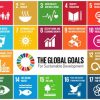
UN’s Development Goals Remain Largely Elusive
The United Nations, in a new report to be released next month, has warned “there is no escaping the fact that the global landscape for the implementation of the 17 Sustainable Development Goals (SDGs) has generally deteriorated since 2015, hindering the efforts of governments and other partners”
The Art of the Deal: What Trump May Teach Us
A friend of mine who became wealthy as an art dealer but eventually lost his fortune told me: "Money isn´t everything, but it helps." This made me think of Donald Trump, who likes to describe himself as an entrepreneur, i.e. ”owner of a business enterprise who, by risk and initiative, attempts to make profits."1 The keyword is profits. According to Trump, success is measured through wealth. Like chess and poker, entrepreneurship is about winning and losing. Trump characterizes people he dislikes as losers, while he considers himself to be a winner.
‘What it Takes to Feed 7.5 Billion People’
Events marking the 25th anniversary of the Convention to Combat Desertification (UNCCD) and the World Day to Combat Desertification opened here Monday, Jun. 17 with a call for urgent action to protect and restore degrading land.
Air Pollution Ranked as Biggest Environmental Threat to Human Health
In a world that is becoming more and more industrial by the day, air pollution appears to be on the rise. While there have been efforts in major cities to combat the grave effects that pollution can have on the overall health of its citizens, there is still more progress to be made.
South Africa’s First Carbon Farm
Land restoration could attract large private investments in the fight against climate change over the coming decades, if Governments and the United Nations put the right incentives and conditions in place.
The Implacable Desertification of Planet Earth
Yet another under-reported human-made disaster: the relentless desertification of Planet Earth that may make uninhabitable some regions like the Middle East, endanger food security, aggravate climate crisis, and force more and more millions of people to flee.
World Day to Combat Desertification and Drought – “Let’s Grow the Future Together”
 One third of the planet's land surface is under the threat of desertification, impacting over 250 million people.
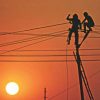
At the intersection of conflict, climate change and energy access
With the advent of the 21st century, there has been a steady rise in energy access all around the globe. For the first time ever, the total number of people without access to electricity fell below 1 billion in 2017 according to the International Energy Agency. Despite the increase in the pace of electrification, 13 percent of the global population, mostly concentrated in sub-Saharan Africa and South Asia, still lack critical access to electricity—a factor linked closely with productivity, health and safety, gender equality and education. Without much greater ambition and more intensified efforts, the Sustainable Development Goal (SDG) 7 that has an objective of “ensuring access to affordable, reliable, sustainable and modern energy for all” will be impossible to attain by 2030.
U. S. Backing for Heated Tobacco Products Triggers Misrepresentation
The U.S. Food and Drug Administration’s (FDA) decision authorizing the sale of Philip Morris International (PMI)’s heated tobacco system, IQOS, in the United States inadvertently puts a foot in the door to increase sales of new tobacco products in the developing world.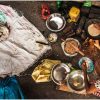
Asia-Pacific Region Falters on UN Development Goals
UN Deputy Secretary-General Amina Mohammed told a Chatham House meeting in London last week that the UN’s Millennium Development Goals (MDGs), one of the legacies of the late Secretary-General Kofi Annan, “spawned tremendous progress” in the battle against poverty worldwide.
Dignity & Strength for Venezuelan Refugees & Migrants in Colombia
Not long ago, 15-year-old Nelsmar attended a middle-class school in central Venezuela. That was before her family was uprooted by the economic and humanitarian crisis in her country, which has pushed nearly 3.9 million persons to migrate or flee, according to recent estimates of the Coordination Platform for Refugees and Migrants from Venezuela.
The Storm is Over, But in Southern Africa, Cyclone Idai Continues to Rage for Women and Girls
In late March Cyclone Idai carved a path of devastation across Zimbabwe, Mozambique, and Malawi. It was the deadliest cyclone to hit the region in more than a century, others have even referred to it as “Africa’s Hurricane Katrina.” More than 1,000 people were killed. Many more saw their homes, food crops, and even entire villages washed away.« Previous Page — Next Page »


 2026 High-level Political Forum on Sustainable Development. Credit: UN Photo/Eskinder Debebe
In 2015, the United Nations and its Member States adopted the Sustainable Development Goals (SDGs) in an effort to make the world a more sustainable and peaceful place for future generations. Progress on the 17 SDGs has been uneven, and inequality persists across the globe. 10 years after adoption, the 2025 UN SDGs Report revealed that only 35% of the SDG targets are on track, with more than half moving too slowly, and 18% moving backwards from the 2015 baseline. Poverty remains one of the world’s most pressing issues, with hunger, violence, and inequality impeding the opportunities for all people to achieve success. In September 2024, the United Nations Summit of the Future introduced a new goal: to eradicate global poverty by 2030, ensure universal rights to basic services, and increase the overall standard of living in terms of industrialization, economic well-being, citizen health, and literacy. Furthermore, recent shifts in United States foreign aid policy – notably, major budget cuts to USAID and the termination of thousands of development programmes– have severely threatened vital lifelines of financial aid to impoverished communities around the world. Additionally, the United States’ withdrawal from the Paris Climate Agreement has undercut international efforts at sustainable development. With the upcoming 2030 deadline, the UN Secretary-General has called for urgent multilateralism across six priority areas: food systems, energy, digital connectivity, education, jobs and social protection, and climate and biodiversity. IPS sheds light on marginalized communities that struggle on a daily basis to survive and have their stories heard and respected.
Updated by Yilan Batista and Shuli Wong August 2026

The Week with IPS

NEXT STOP - SDGs
Tracking global progress towards a sustainable world
Tracking global progress towards a sustainable world
