Languages
Saturday, November 21, 2026



News and Views from the Global South
Development & Aid

Unilateral Coercive Measures have Devastated the Syrian Economy & Ruined Civilian Lives
I have been entrusted by the Human Rights Council with the task of monitoring, reporting and advising on the negative impact on the enjoyment of human rights of unilateral coercive measures. The United Nations has repeatedly expressed concern that the use of such measures may be contrary to international law, international humanitarian law, the UN Charter and the norms and principles governing peaceful relations among States1.
Why Milk, Meat & Eggs Can Make a Big Difference to World’s Most Nutritionally Vulnerable People
As the world becomes increasingly aware of the growing demands being made of our planet, more and more of us are making lifestyle choices to reduce our negative environmental impact and carbon footprint.
World Environment Day Highlights Deadly Cost of Plastic
On June 5th, World Environment Day will be hosted in India under the banner of “Beat Plastic Pollution,” aiming to raise awareness and civic engagement alongside creating a global movement to reduce the amount of plastic in the environment.
Latin America Begins to Discover Electric Mobility
With 80 percent of the population living in urban areas and a vehicle fleet that is growing at the fastest rate in the world, Latin America has the conditions to begin the transition to electric mobility - but public policies are not, at least for now, up to the task.
UN Launches its Most Ambitious New Development System
I just arrived this morning from Mali – but I wanted to be here personally to thank you for your leadership, engagement and constructive spirit. Allow me to pay a special tribute to the co-facilitators Sabri Boukadoum, Permanent Representative of Algeria, and Ib Petersen, Permanent Representative of Denmark.
Peru’s Poor and Disabled Struggle in the Shadows
Eighty percent of the world’s disabled live in developing nations, according to a report by the United Nations. Their identities, lives and stories are of course varied – but what isn’t is the stigma and lack of resources they face.
Putting Tortillas on Mexico’s Tables Again
Agronomist Irene Salvador decided to learn the process of making corn tortillas in order to preserve and promote this traditional staple food in the Mexican diet, which has lost its presence and nutritional quality.
Valuing the Food System
Many factors contribute to the cost of a tomato. For example, what inputs were used (water, soil, fertilizer, pesticides, as well as machinery and/or labor) to grow it? What kind of energy and materials were used to process and package it? Or how much did transportation cost to get it to the shelf?
Harnessing the Blue Economy Must Consider Social Inclusion and Responsible Stewardship
In April 2018, Commonwealth leaders met in a retreat at a royal residence in the English county of Berkshire and agreed on strategies to deepen trade in their 53-member organisation, improve security, tackle climate change, and work together for the betterment of the lives of the people of the Commonwealth.
Food Waste Enough to Feed World’s Hungry Four Times Over
The United Nations is continuing to fight a relentless battle to eradicate extreme hunger – particularly in the world’s poorest nations—by 2030.
Hunger and Food Insecurity Plague the Lives of Millions in Africa
Africa is rising. But at the same time, Africa is the continent with the largest number of people, (390 million) living in extreme poverty.
Food Security and Growth in Asia
A disquieting finding of The State of Food Security and Nutrition in the World 2017, Building resilience for peace and food security, or (SFSN2017), Rome, is that, in 2016, the number of chronically undernourished people in the world increased to 815 million, up from777 million in 2015 although still lower than about 900 million in 2000. Similarly, while the prevalence of undernourishment rose to 11 percent in 2016, this is still well below thelevel attaineda decade ago. Whether this recent rise inhunger and food-insecurity levels signals thebeginning of an upward trend, or whether itreflects an acute transient situation calls for a close scrutiny.
Chile Debates Whether Citizens Should Profit from Generating Energy
Chile has become a model country for its advances in non-conventional energy, and is now debating whether citizens who individually or as a group generate electricity can profit from the sale of the surplus from their self-consumption - a factor that will be decisive when it comes to encouraging their contribution to the energy supply.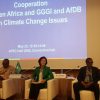
Public-Private Pacts Open Doors to Climate Finance in Rwanda and Ethiopia
The Global Green Growth Institute (GGGI) presented the African model of a National Financing Vehicle in which the governments of Rwanda and Ethiopia have successfully promoted green growth and climate resilience, at an event May 25 on the sidelines of the annual meetings of the Board of Governors of the African Development Bank (AfDB) in Busan, South Korea.
IOM, WHO, DR Congo Ministry of Health Partner to Stop Ebola from Spreading to Kinshasa, Neighbouring
Last week, in the Democratic Republic of the Congo (DRC), cases of Ebola were confirmed in Mbandaka, a city with a population of 1.2 million people some 150 kilometres from where the outbreak originated in Bikoro Health Zone, Equateur Province.
Digital Revolution Holds Bright Promises for Africa
Internet penetration is creeping up in Africa, bringing the prospect of digital dividends to a continent long marked by digital divides.
Ethiopia’s Green Growth Goals: A Launchpad for Wider Climate Action in Africa
The vision for a sustainable future in Africa is being realized at a time of great possibilities and this vision is underpinned by a shift in continental focus towards sustainable and inclusive economic growth and development. This focus highlights strategic efforts towards poverty alleviation, resilience building, promoting sustainable infrastructure and, efficient management of natural resources.
Energy Cooperatives, Fogged Mirrors for Latin America
“It made me angry that a company from outside the region was making money from renewable energy and I wondered why people weren't getting involved," says Petra Gruner-Bauer, president of the German co-operative SolixEnergie.
Unlocking Private Finance for Developing Countries’ Green Growth
Climate finance has never been more urgently needed, with massive investments in climate action required to meet the goals of the Paris Agreement and avoid the devastating effects of a warmer planet.
When Two Becomes One: Blending Public and Private Climate Finance
With the landmark Paris Agreement now almost two years old, funding for climate-related activities continues to be a challenge. However, efforts have been underway to bring two seemingly very different sectors together to address climate change.
A Natural Climate Change Adaptation Laboratory in Brazil
The small pulp mill that uses native fruits that were previously discarded is a synthesis of the multiple objectives of the Adapta Sertão project, a programme created to build resilience to climate change in Brazil's most vulnerable region.« Previous Page — Next Page »


 2026 High-level Political Forum on Sustainable Development. Credit: UN Photo/Eskinder Debebe
In 2015, the United Nations and its Member States adopted the Sustainable Development Goals (SDGs) in an effort to make the world a more sustainable and peaceful place for future generations. Progress on the 17 SDGs has been uneven, and inequality persists across the globe. 10 years after adoption, the 2025 UN SDGs Report revealed that only 35% of the SDG targets are on track, with more than half moving too slowly, and 18% moving backwards from the 2015 baseline. Poverty remains one of the world’s most pressing issues, with hunger, violence, and inequality impeding the opportunities for all people to achieve success. In September 2024, the United Nations Summit of the Future introduced a new goal: to eradicate global poverty by 2030, ensure universal rights to basic services, and increase the overall standard of living in terms of industrialization, economic well-being, citizen health, and literacy. Furthermore, recent shifts in United States foreign aid policy – notably, major budget cuts to USAID and the termination of thousands of development programmes– have severely threatened vital lifelines of financial aid to impoverished communities around the world. Additionally, the United States’ withdrawal from the Paris Climate Agreement has undercut international efforts at sustainable development. With the upcoming 2030 deadline, the UN Secretary-General has called for urgent multilateralism across six priority areas: food systems, energy, digital connectivity, education, jobs and social protection, and climate and biodiversity. IPS sheds light on marginalized communities that struggle on a daily basis to survive and have their stories heard and respected.
Updated by Yilan Batista and Shuli Wong August 2026

The Week with IPS

NEXT STOP - SDGs
Tracking global progress towards a sustainable world
Tracking global progress towards a sustainable world
