Languages
Thursday, October 1, 2026



News and Views from the Global South
Disaster Management

Venezuela Needs More Local Data To Understand the Impacts of Climate Change
A group of 55 researchers gathered and analyzed 1,260 bibliographic references to compile the Second Academic Report on Climate Change in Venezuela. Their final conclusion is that more local studies are still needed to record the direct impacts across different Venezuelan regions and, in particular, to provide data to design the adaptation plans necessary to address climate change.
Sindh People’s Housing Redefines Post-Disaster Adaptation Success
By any comparison, the statistics for Sindh People's Housing for Flood Affectees (SPHF) are phenomenal. In 2022, photographs from the region showed people treading carefully through waist-deep water with their few belongings grasped firmly above their heads in an attempt to escape the flooding caused by 784 percent more than average monsoon rains.
How Community Radio Is Powering Tanzania’s Climate Resilience
At dawn in the mangrove-choked Rufiji estuary, paddles from wooden canoes slice through still waters as a soft voice drifts across the tide.
Why Climate Finance Is Vital for the Implementation of NDCs in Africa
Funding cuts from the United States, the United Kingdom and Europe have left a funding gap in climate change programmes across Africa.
Kashmir’s Small Farmers Endless Wait for Climate Justice
In the fertile fields of Jammu's R.S. Pura, rice farmer Mohd Yaseen Khan stares at a cracked irrigation canal, battered by erratic rainfall. “One day heavy rain, next week a dry spell,” he says, dusting his palms. “Our crop suffers. Our costs rise.”
Poor Countries Welcome Loss and Damage Fund’s Call for Requests, Warn It Falls Short of Needs
Least Developed Countries have hailed the debut call for proposals for the Loss and Damage Fund, which was launched on 11 November at the United Nations climate summit known as COP30 in Belem, Brazil.
Tanzania’s Pandemic Fund Ushers in a New Era of Health Preparedness
When COVID-19 hit Tanzania in 2020, Alfred Kisena’s life was torn apart. The 51-year-old teacher still remembers the night he learned that his wife, Maria, had succumbed to the virus at a hospital in Dar es Salaam. He wasn’t allowed to see her in her final moments.
Darjeeling’s Wake-Up Call: Expert at IUCN Congress Calls for Agile Climate Finance
As global conservation leaders gather in Abu Dhabi for the IUCN World Conservation Congress, communities in the hills of Darjeeling, thousands of kilometers away, are still counting their losses. In early October, heavy rains triggered deadly landslides that buried homes, blocked key roads, and left several people dead. The destruction has once again exposed how vulnerable India’s mountain regions are to extreme weather.
Climate Finance Will Be the First Casualty of Rising Militarism: Ali T. Sheikh Warns Ahead of COP30
As the COP30 approaches amid darkening geopolitical clouds—marked by rising rightwing extremism, corporate backtracking and rising militarism—Ali T. Sheikh, Pakistan’s leading expert on sustainable development and climate change, views the world’s largest diplomatic gathering with a mix of apprehension and caution.
UNICEF Climate Advocate Urges World Leaders To ‘Include Children’ in Climate Discussions
The UN General Assembly High-Level Week (22-30 September) has been an opportunity for the world to convene on the most pressing issues of the day, from multilateralism, global financing, gender equality, non-communicable diseases, and AI governance.
Food Insecurity Rising in Africa, Falling in Latin America and Caribbean
The 2025 State of Food Security and Nutrition in the World (SOFI) report shows a modest global decline in hunger since 2022, with 673 million people facing hunger in 2024, indicating a decrease of 22 million compared to 2022. While progress is seen in Asia and South America, hunger is rising in Africa and Western Asia.
AfDB Commits 11 Billion Dollars To Support Early Warning Systems, Food Security in Rural Africa
As increasingly frequent droughts and devastating floods are affecting agricultural productivity, leaving millions of people food insecure in Africa amid a lack of climate finance, the African Development Bank (AfDB) has committed USD 11 billion to support various climate-resilient and infrastructure projects in rural areas.
Banks Embed Climate Risk, Gender and Sustainability in Finance Products
As climate shocks intensify across East Africa, from failed rains in Kenya’s arid north to devastating floods in Tanzania’s coastal belt, the region’s banks are emerging as unlikely but powerful players in the resilience race.
UN Mobilizes Amid Cascading Earthquakes in Eastern Afghanistan, Aiming to ‘Build Back Better’
United Nations aid organizations are rallying after a series of earthquakes and powerful aftershocks wreaked unprecedented havoc across eastern Afghanistan—particularly in the mountainous provinces of Kunar and Nangarhar.
‘Tell Us When the Next Storm Will Come’—Human Stories From Kashmir’s Deadliest August
The relentless rain that battered the mountains and valleys of Jammu and Kashmir this August shattered lives and records.
IPC Officially Declares Famine; More than Half a Million Starving in Gaza
The Integrated Food Security Phase Classification (IPC) has officially declared that there is famine in Gaza. The world’s biggest food monitoring system raised its classification to Phase 5, the highest level on its food insecurity scale.
Climate Change Breaking the Journalists Who Tell its Story
My family lost six herds of cattle during the devastating El Niño-driven drought that swept Zimbabwe in 2024. The loss was as emotional as it was financial. Guilt gnawed at me.
Swept Away: Flash Floods, Failed Systems Bane of Pakistan’s North
Intense rainfall over small areas in Pakistan’s mountainous regions caused massive destruction, sweeping away entire villages. On August 15, the district of Buner in Khyber Pakhtunkhwa (KP) province experienced a weather anomaly in which glacier melt and intense monsoon rains caused floods that buried villages under mud and rock.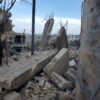
Southern Voices: Grief, Resilience, and Daily Life in Jnoub
"Special, targeted operations in southern Lebanon," a phrase that has echoed repeatedly over the past two years in Israeli Defence Force (IDF) statements. But behind these clinical military terms lies a human cost that statistics cannot capture.
Four Years Later, Still No Clarity: WHO Report Highlights Gaps in Global Cooperation
More than four years since Covid-19 upended the world, the question of how it began remains unanswered. Did SARS-CoV-2 originate from animals to humans naturally, or did it accidentally escape from a laboratory? The World Health Organization’s latest report offers little new clarity and raises serious concerns about international cooperation and scientific transparency.
Landlocked Nations Form New Bloc to Confront Climate Crisis and Inequity
“The term ‘negotiation' must be understood in ethical context… When an arsonist comes and burns down my house and then asks me to negotiate so I can rebuild my house, that becomes the paradox.”« Previous Page — Next Page »


The Week with IPS

NEXT STOP - SDGs
Tracking global progress towards a sustainable world
Tracking global progress towards a sustainable world
