Languages
Saturday, November 21, 2026



News and Views from the Global South
Economy & Trade
Modern Slavery: How Consumers Can Make a Difference
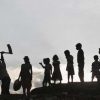
Few people want to buy products that involve the exploitation or enslavement of the workers who make them – but that’s exactly what most of us do on a daily basis.
Stopping Marine Plastic Pollution: A Key IUCN Congress Goal
Documented images of albatross chicks and marine turtles dying slow deaths from eating plastic bags and other waste are being seared into our consciences. And yet our mass pollution of Earth’s seas and oceans, fuelled by single-use plastics and throw-away consumerism, just gets worse.
Climate Change: Your Choices Matter
Life is a series of choices. And choices have consequences. When it comes to climate change, some choices have bigger consequences than others, and there's a startling takeaway: your next "big" decision will play a meaningful role in our collective ability to reach Net-Zero by 2050.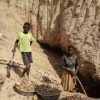
Does a New ‘Gold Standard’ Really Protect Miners?
Many products these days come with the promise that workers and communities all along their supply line are protected from abuse under a particular standard or code of conduct. Since the United Nations adopted the Guiding Principles for Business and Human Rights a decade ago, a plethora of such certification systems have emerged, including for mining and connected industries ranging from cars to jewelry and electronics.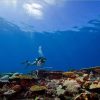
The Last Coral Reef Wilderness: the Chagos Archipelago
On the Global Reef Expedition—the largest coral reef survey and mapping expedition in history—scientists from the Khaled bin Sultan Living Oceans Foundation traveled to the Chagos Archipelago to study some of the most remote coral reefs on Earth.
Myths, Lobbies Block International Tax Cooperation
Too many have swallowed the myth that lowering corporate income tax (CIT) is necessary to attract foreign direct investment (FDI) for growth. Although contradicted by their own research, this lie has long been promoted by influential international economic institutions.
To Build Back Better from the Pandemic, We Must Overhaul the Way We Deal with Development Finance
Over the past 18 months, the impacts of the coronavirus pandemic have transformed our lives and prompted a period of deep reflection as a global community. In some sense, we are only now starting to understand our vulnerabilities, and in particular, how deeply exposed and interconnected we are as people, communities and as countries.
Weaponizing Science in Global Food Policy
In July, the United Nations will convene “Science Days”, a high-profile event in preparation for the UN Food Systems Summit later this year. Over the course of two days, the world will be treated to a parade of Zoom sessions aimed at “highlighting the centrality of science, technology and innovation for food systems transformation.”
Southeast Asia and Food Price Inflation: Double Whammy
In 2020, Southeast Asian countries were already facing varied challenges that affected the region’s food supplies and prices. The onset of the Covid-19 pandemic later in the year exacerbated the region’s food insecurity and poverty. Southeast Asian countries need to take a hard look at food security, even as the double challenges — climate change and the Covid-19 pandemic — continue to fester.New global index seeks to transform how developing nations are supported
The Commonwealth Secretary-General Patricia Scotland has spoken today urging the international community to make crucial changes to how it delivers finance to developing nations, proposing a new system that moves beyond the use of GDP as the sole criteria for receiving certain types of support.
Latin America Vastly Underspends on Green Post-Pandemic Recovery
Latin America is investing too little in a green recovery from the Covid-19 pandemic, with only 2.2% of the region's stimulus funds spent on environmentally sustainable projects last year, according to a new platform developed by Oxford University and the UN.
COVID-19 as Instigator of Bigotry, Chauvinism and Megalomania
By the end of April 2019, a government campaign to vaccinate more than 40 million children under five against polio in Pakistan was suspended after a series of attacks on health workers and police. On 23 April, a police officer protecting polio workers was gunned down in Bannu, the same day a polio worker was in Lahore seriously wounded by a father “protecting his child from vaccination”, these incidents were followed by the murder of another police and a health worker under his protection. Health workers were also seriously wounded in the districts of Sindh, Balochistan and Punjab. Afghanistan and Pakistan are the only countries where polio remains, in all other nations of the world vaccination campaigns have eliminated the disease. In April this year, three female polio vaccine providers were killed in Afghanistan.
Maldives’ UN General Assembly Presidency Renews Hope for Small Island Developing States
Earlier this month, Abdulla Shahid, the Maldives’ foreign minister, was elected President of the 76th Session of the United Nations General Assembly (UNGA), which commences in September.
Digital Media on the Frontline: Supporting the Ones who Support the Rest
For Dr Farzana Khan, a frontline worker and a second-generation immigrant from Pakistan living in California, social media helped her connect and realign herself during the COVID-19 pandemic.
Three Million in Three Years: Jamaica’s Tree-Planting to Tackle Climate Change
By the time he is finished, Dr. Satyanarayana Parvataneni expects he will be responsible for planting over 200,000 tree seedlings in Jamaica. It is an effort driven by a desire to preserve the planet for the next generation, as well as the one of the largest contributions to date to a national effort to plant three million trees in three years.
Boldly Finance Recovery to Build Forward Better
COVID-19 has become a “developing country pandemic”, retreating from the North’s mass vaccination. With developing countries heavily handicapped, the International Monetary Fund (IMF) warns of a “dangerous [new] divergence”.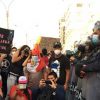
The Dictator’s Daughter or the Farmer’s Son?
Peru’s first round of elections on 11 April saw voters choosing between 18 presidential candidates with no one candidate leading by an impressive margin.
Education Cannot Wait for Refugee Children in Crisis, says Yasmine Sherif
With financing, the number of out-of-school refugees could be reduced to zero, Yasmine Sherif, Director of Education Cannot Wait (ECW) says, as the world commemorates World Refugee Day.
To Fund Grand Inga Using Green Hydrogen, Equity and Ethics Matter
Visions of Grand Inga, a proposed massive hydropower plant in the Democratic Republic of Congo (DRC) powering much of Africa, have excited energy experts, investors, and governments for decades. The announcements this week by the Australian company, Fortescue Metals Group, and its chairman, billionaire Andrew Forrest, of their plans to develop Inga for green hydrogen exports brings this vision a little closer to reality.
The Energy Revolution Is Here: How to Be Part of It
The industrial revolution took 100 years. The digital revolution, two decades. The next global revolution, the energy revolution, has already begun. But how fairly and how fast it happens is the biggest challenge of our time.
Soil for Survival: Countries Commit to Halt Land Degradation
India’s Prime Minister Narendra Modi has told the first United Nations General Assembly meeting on desertification and drought in a decade, that his country’s report card will show it is well on track to meet its land restoration commitments.
« Previous Page — Next Page »


 UN Commission on International Trade Law Holds Colloquium on Harmonizing Law in Age of Digital Trade and Finance. Credit: UN Photo/Manuel Elías
Trade has historically been a geopolitical tool that can both be used to propel development as well as entrench inequalities. In various nations in East Asia and Latin America, increased trade, as often seen in export booms, has allowed them to achieve influential standings within the global economy. On the other hand, many low-income countries in Sub-Saharan Africa, Asia, and Latin America struggle to maintain a robust trade performance, and oftentimes are subjugated to exploitative trade dynamics through intense extraction of their natural resources. In recent decades, international trade has reached a new era as emerging economies across the world are rising in economic preeminence. Stable international trade is crucial to world peace as global interconnectedness facilitates reliable diplomacy. Nevertheless, significant challenges are on the rise. Notably, a major wave of United States tariff escalations in January 2025 lifted US import taxes to their highest level since the 1930s, changing market dynamics and forcing renegotiations with global trading partners.These articles are aimed at informing readers about the complexities of trade and its varying effects on development, with a special focus on the consequences of the global economic crisis, the potential of fair trade and the gender implications of trade policies.
Updated by Yilan Batista and Shuli Wong August 2026

The Week with IPS

NEXT STOP - SDGs
Tracking global progress towards a sustainable world
Tracking global progress towards a sustainable world
