Languages
Sunday, November 22, 2026



News and Views from the Global South
Economy & Trade

The Nairobi Summit Is about the Future of Humanity and Human Prosperity
As we count down the remaining days to the opening of the Nairobi Summit or the International Conference for Population and Development(ICPD), I am confounded by how much humanity has managed to simultaneously empower more women than at any other time in history, while at the same time failing to see that ‘women’s issues’ are actually ‘everyone’s issues’.
Urgent Need to Replace Competition with Cooperation in the Aral Sea Basin
The water resources in Central Asia’s Aral Sea Basin support the lives and livelihoods of about 70 million people — a population greater than Thailand, France, or South Africa.
Trade Liberalization for Development?
The International Monetary Fund (IMF), the World Bank and the World Trade Organization (WTO), all dominated by rich countries, have long promoted trade liberalization as a ‘win-win’ solution for “all people—rich and poor—and all countries—developed and developing countries”, arguing that “the gains are large enough to enable compensation to be provided to the losers”.
Africans Charged More Than 3.5 Times the “Affordable” Rate for Mobile Data
People living in Africa are charged an average of 7.1 per cent of their monthly salary for a gigabyte (GB) of mobile data, more than 3.5 times the threshold considered affordable.
Going with the Wind: Transition to Clean Energy in Latin America & the Caribbean
The UN Climate Action Summit 2019, which took place in the days leading up to the 74th UN General Assembly, delivered new pathways and practical actions for governments and private sector to intensify climate action.
Red Alert for Blue Planet and Small Island States
Barely a week passes without alarming news of the most recent scientific research into the global climate crisis compounding a growing sense of urgency, particularly the impact on small island states from rising sea levels and extreme weather.
As Urbanisation Grows, Cities Unveil Sustainable Development Solutions
Over half of the world’s population now live in cities, with numbers expected to double by 2050, but while urbanization poses serious challenges, cities can also be powerhouses for sustainable development; something the UN is spotlighting on World Cities Day, marked 31 October.
Solar Cookers Produce More Than Food for Mexican Women
 The sun's rays are also used to cook food and thus replace the burning of firewood and gas, improve the health of local residents and fuel the energy transition towards the use of renewable sources - the objectives of an enterprise in the southern Mexican state of Oaxaca.
African Development Bank Group’s Board of Governors to hold fifth extraordinary meeting in Abidjan
The Board of Governors of the African Development Bank will hold its fifth extraordinary meeting on Thursday, 31 October 2019, at the Sofitel Abidjan, Hotel Ivoire. During the meeting, the Bank’s shareholders will make signification decisions, and a major announcement is expected.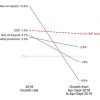
If India Stopped Growing, Would the IMF and World Bank Say So?
Leading economic indicators have slowed or reversed. Criticisms of official statistics are mounting. But the IMF and World Bank continue to forecast 6-percent growth by simple extrapolation.
UN Turns to Global Investors for Billions Needed for its 2030 Development Agenda
A Republican US Senator of a bygone era was once quoted as saying “a billion here, a billion there, and pretty soon you're talking about real money.”
Industrial Policy Still Relevant
Industrial policy refers to the promotion of new investments and technology by governments to encourage the growth and development of specific economic sectors. However, scepticism persists about the feasibility and desirability of using industrial policy, especially of the ability to ‘pick winners’, often accused of leading to ‘propping-up failing industries’.
More Women in Latin America are Working, but Gender Gap Persists, New UN Figures Show
More women are entering the workforce across Latin America, with an increase in 11 per cent in the last 30 years, putting the region ahead of the curve when it comes to growth in female labour force participation, according to new data published by the United Nations on Monday.
Climate Change to Further Escalate Violence in Western Africa
Nearly 50 million people in west Africa rely on agriculture and livestock for their livelihood but the land available for pastoral use has been rapidly shrinking.
Governments Must Short Circuit Tobacco Industry’s Pervasive Tactics
The tobacco industry’s new rhetoric that smoking is harmful and that its so-called less risky products will reduce the global tobacco epidemic, should see the industry stop opposing or fighting government efforts to reduce tobacco use. However, this is not the case.
Development Banks Needed to Finance Sustainable Development
Public or state development banking will be vital to achieving the Sustainable Development Goals, argues UNCTAD’s Trade and Development Report 2019 (TDR 2019). Ongoing World Bank led efforts seek to leverage private finance via shadow banking by using public money to guarantee handsome returns managed by giant investment houses. Such financialization introduce new costs and risks to financing investments for sustainable development, decent work and renewable energy.
African Development Bank and Three Regional Development Banks Launch Joint Report on Livable Cities
Rapid urbanization has provided most cities in the world with opportunities to provide more sustainable, vibrant, and prosperous centers for their citizens. But they must first address challenges such as inadequate infrastructure investments, pollution and congestion, and poor urban planning, according to a new report released today.
Wielding The Magic Wand
I met late professor T.N. Srinivasan (popularly known as TN) a couple of months before he passed away in November 2018. Despite his original contributions to trade theory, ¬development economics, inequality and poverty, he never won the Nobel in economics. His colleague at Yale had once ¬remarked that TN would get not one but two Nobels. I was too much in awe of TN to ask this question but my friend asked him directly if he could think of an Indian economist who might win the Nobel for economics in the near future. He said, “Abhijit but not so soon”. He was right but not entirely.
More than 90 per cent of Africa Migrants Would Make Perilous Europe Journey Again, Despite the Risks
A landmark UN migration study published on Monday shows that 93 per cent of Africans making the journey to European countries along irregular routes, would do it again, despite facing often life-threatening danger.
Agro-tech Offers Answers for African Farmers at Iowa Meet
Experts vaunted new strains of seeds, drone aircraft and other technological breakthroughs as solutions-in-the-making for farmers in Africa, where hunger, drought and food price hikes are continent-wide problems.
Africa’s Investment Drive Gathers Pace
Headwinds are blowing amid IMF warnings of a “synchronised slowdown” in global economic growth, yet Africa’s investment drive is still gathering pace, supported by intense international competition in development finance.« Previous Page — Next Page »


 UN Commission on International Trade Law Holds Colloquium on Harmonizing Law in Age of Digital Trade and Finance. Credit: UN Photo/Manuel Elías
Trade has historically been a geopolitical tool that can both be used to propel development as well as entrench inequalities. In various nations in East Asia and Latin America, increased trade, as often seen in export booms, has allowed them to achieve influential standings within the global economy. On the other hand, many low-income countries in Sub-Saharan Africa, Asia, and Latin America struggle to maintain a robust trade performance, and oftentimes are subjugated to exploitative trade dynamics through intense extraction of their natural resources. In recent decades, international trade has reached a new era as emerging economies across the world are rising in economic preeminence. Stable international trade is crucial to world peace as global interconnectedness facilitates reliable diplomacy. Nevertheless, significant challenges are on the rise. Notably, a major wave of United States tariff escalations in January 2025 lifted US import taxes to their highest level since the 1930s, changing market dynamics and forcing renegotiations with global trading partners.These articles are aimed at informing readers about the complexities of trade and its varying effects on development, with a special focus on the consequences of the global economic crisis, the potential of fair trade and the gender implications of trade policies.
Updated by Yilan Batista and Shuli Wong August 2026

The Week with IPS

NEXT STOP - SDGs
Tracking global progress towards a sustainable world
Tracking global progress towards a sustainable world
