Languages
Tuesday, November 17, 2026



News and Views from the Global South
Economy & Trade

Small-Scale Fishers in Central America Demand Social Security Policies
At the pier, Salvadoran fisherman Nicolás Ayala checked the pocket of his pants to make sure he was carrying the hypertension pills he must take when he is at sea on a 24-hour shift. He smiled because he hadn’t forgotten them.
Frankincense and Myrrh Have New Economic Resonance for Women in Kenya’s Arid North
Clad in traditional regalia and necklaces of richly coloured beads that form magnificent patterns around their necks, an army of women from the pastoral Rendile community that resides at the heart of Marsabit, a county in Kenya’s arid north, is on a mission.
Researchers Strive for Technological Innovations to Achieve Food Security in Africa
A few years ago, after coming up with a project of launching the first-ever unmanned aerial systems (UAS) in Rwanda, entrepreneur Mamy Muziga Ingabire identified the need to provide farmers with information related to their activity – such as the health status of crops.
Assisting At-Risk Youth Becomes Life’s Work for Trafficking Survivor
Arien Pauls-Garcia’s journey to working with at-risk youth in California was long and dangerous and started at 19 when she found herself sold and exploited by traffickers.
Despite Unspeakable Hardships, Migrants Keep One Billion People Alive
Here goes another fact: 230 million migrant workers are now a major life-saving source for up to one billion people starving in the world’s poorest communities, as well as a vital lifeline for the economy of their countries of origin.
The Weaponization of Energy & Europe’s Way Out
The fast-changing environment requires Europe’s energy system not only to adapt but to also find the right mechanisms to ensure its unity in the face of turbulent challenges.
SWIFT Dollar Decline
US-led sanctions are inadvertently undermining the dollar’s post-Second World War dominance. The growing number of countries threatened by US and allied actions is forcing victims and potential targets to respond pro-actively. SWIFT strengthened dollar The instant messaging system of the Society for Worldwide Interbank Financial Telecommunication (SWIFT) informs users, both payers and payees, of payments made. Thus, it enables the smooth and rapid transfer of funds across borders.
Southern Winds in Magallanes Fuel Green Hydrogen in Chile
Patagonia’s strong winds are driving projects that will place Magallanes, in the extreme south of Chile, in a privileged position to produce and export green hydrogen and help the country move towards carbon neutrality.
Why Biden Just Declared Heat Pumps and Solar Panels Essential to National Defense
Solar panels, heat pumps and hydrogen are all building blocks of a clean energy economy. But are they truly “essential to the national defense”?
At Half-time, the European Green Deal is Still Grounded
This month marks the mid-point of the much-heralded European Green Deal. Taking office at the end of 2019, the European Commission went into rhetoric overdrive. This was Europe’s ‘man on the moon’ moment, we were told. The Green Deal would herald an economic paradigm shift, and “reconcile the economy with our planet…to make it work for our people” the new President, Ursula von der Leyen, said.
War & Peace 2.0: Ukraine Showing the World How to Fight Back
 It has been over 100 days since Russia first invaded Ukraine on 24 February 2022, turning the country into a slaughterhouse. The United Nations (UN) in this report says that, as of 1 June, 2022, more than 6.9 million refugees have left Ukraine and 2.1 million have returned, while eight million people are displaced inside Ukraine itself. War in Ukraine has caused the fastest growing refugee crisis since World War II.

Education Cannot Wait Interviews UNICEF Executive Director Catherine M. Russell
Catherine M. Russell became UNICEF’s eighth Executive Director on 1 February 2022. Ms. Russell brings to the role decades of experience in developing innovative policy that empowers underserved communities around the world, including high-impact programmes that protect women and girls, including in humanitarian crises. She has extensive experience building, elevating and managing diverse workforces and mobilizing resources and political support for a broad range of initiatives.

US Leads Sanctions Killing Millions to No End
Food crises, economic stagnation and price increases are worsening unevenly, almost everywhere, following the Ukraine war. Sanctions against Russia have especially hurt those relying on wheat and fertilizer imports. Unilateral sanctions illegal Unilateral sanctions – not approved by the UN Security Council – are illegal under international law. Besides contravening the UN Charter, unilateral sanctions inflict much human loss. Countless civilians – many far from target countries – are at risk, depriving them of much, even life itself.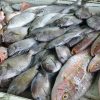
The Great Fish Robbery
Now it comes to another ‘crime’ being stealthy committed as a consequence of the unrelenting business obsession for making more and more money.
Developing countries and the Perfect Storm
Part II: What Developing Countries Need to Do
Developing countries are facing a combination of crises that are unprecedented in recent times. Over the last three years they have had to face the COVID-19 crisis, the food crisis, the energy crisis, the climate change crisis, the debt crisis and, on top of all this, a global recession. The crises have overlapped, and each has added to the problems created by the previous ones.
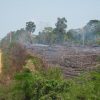
The Richest 1% Pollutes More than the Poorest 50%
As an introduction to this year’s World Environment Day on 5 June, this report deals with how the excesses of the world’s population, mostly in the wealthiest countries, are causing so much harm to Planet Earth.
Climate Change in South East Asia: Where are we and What are we Bound for?
It is increasingly clear that human health and wellbeing are being threatened everywhere because of global warming and environmental damage. Extreme weather events, sea level rise, increasing scarcity of freshwater, drought and high temperatures, combined with loss of biodiversity and other aspects of ecological degradation such as soil erosion and coral bleaching are all features of anthropogenic self-harm and an increasingly inhospitable planet for human society.
Transforming Africa: Just & Equitable Energy Transition
A global transition to lower-carbon energy sources is crucial for our species' survival given the worsening effects of climate change. With many people increasingly advocating for a rapid shift from an energy system dependent on fossil fuels, questions on how to make this transition arise - one that is just and equitable, especially in the developing world.
If Women Don’t Lead, We’ll Lose the Battle Against Climate Crisis
We are in the midst of so many crises across the Middle East and North Africa (MENA) region: the most unequal, water scarce, least democratic region in the world, with the widest gender gap, multiple armed conflicts raging across it, and fragile states on the brink.
Restore Land to Tackle Multiple Crises
Land is our lifeline on this planet. Yet ‘business as usual’ in how we manage land resources puts our own future on planet Earth in jeopardy, with half of humanity already facing the impacts of land degradation.
Developing Countries and the Perfect Storm
Part I: What Should Developed Countries Do?
Developing countries – in Africa, in Asia, in Latin America and in the Middle East - are facing a combination of crises that are unprecedented in recent times. Over the last three years they have had to face the COVID-19 crisis, the food crisis, the energy crisis, the climate change crisis, the debt crisis and, on top of all this, a global recession. The crises have overlapped, and each has added to the problems created by the previous ones.
« Previous Page — Next Page »


 UN Commission on International Trade Law Holds Colloquium on Harmonizing Law in Age of Digital Trade and Finance. Credit: UN Photo/Manuel Elías
Trade has historically been a geopolitical tool that can both be used to propel development as well as entrench inequalities. In various nations in East Asia and Latin America, increased trade, as often seen in export booms, has allowed them to achieve influential standings within the global economy. On the other hand, many low-income countries in Sub-Saharan Africa, Asia, and Latin America struggle to maintain a robust trade performance, and oftentimes are subjugated to exploitative trade dynamics through intense extraction of their natural resources. In recent decades, international trade has reached a new era as emerging economies across the world are rising in economic preeminence. Stable international trade is crucial to world peace as global interconnectedness facilitates reliable diplomacy. Nevertheless, significant challenges are on the rise. Notably, a major wave of United States tariff escalations in January 2025 lifted US import taxes to their highest level since the 1930s, changing market dynamics and forcing renegotiations with global trading partners.These articles are aimed at informing readers about the complexities of trade and its varying effects on development, with a special focus on the consequences of the global economic crisis, the potential of fair trade and the gender implications of trade policies.
Updated by Yilan Batista and Shuli Wong August 2026

The Week with IPS

NEXT STOP - SDGs
Tracking global progress towards a sustainable world
Tracking global progress towards a sustainable world
