Languages
Monday, October 26, 2026



News and Views from the Global South
Editors' Choice

Pan-African Activist Advocates for Climate-Resilient Food, Education Systems at Belém Talks
“I am the founder of the ‘I Lead Climate Action Initiative,’ which is a Pan-African movement that carries out grassroots-based climate action to address the climate crisis in Africa. We advocate for the restoration of Lake Chad, the world’s largest environmental crisis through research and engagement,” says Adenike Titilope Oladosu.
‘No Land Rights, No Climate Justice,’ Say Activists at Peoples’ Summit
Brazilian Indigenous leader and environmentalist Cacique Raoni Metuktire appealed for support for Indigenous peoples and their land. From the podium of the Peoples’ Summit, Cacique Raoni warned negotiators at the UN climate conference in Belém that without recognizing Indigenous peoples’ land rights, there will be no climate justice.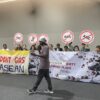
Africa Wants Health to Be at the Center of Adaptation Finance
With the COP30 Presidency prioritizing health at the United Nations climate summit in Belém, African leaders are calling for finance to be channeled towards improving the health systems of developing countries.
Kashmir’s Small Farmers Endless Wait for Climate Justice
In the fertile fields of Jammu's R.S. Pura, rice farmer Mohd Yaseen Khan stares at a cracked irrigation canal, battered by erratic rainfall. “One day heavy rain, next week a dry spell,” he says, dusting his palms. “Our crop suffers. Our costs rise.”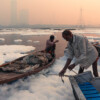
Snatching Victory From Jaws of Defeat Through Belém’s Mutirão Approach
Mutirão first entered the global climate discourse in Ambassador André Corrêa do Lago’s first letter to the world, which was sent in March 2025 as part of his COP30 presidency.
‘This People’s March for Climate is For My Son’s Future’
In the scorching heat and humidity, Canru Pataxo marched with his one-year-old son firmly held in his arms.
Belém’s Hunger, Poverty Declaration Places World’s Most Vulnerable Populations at Centre of Global Climate Policy
A young woman at COP30 speaks about retracing her father’s footsteps. At only 16, her father and her grandfather were among the first families displaced by an unfolding climatic crisis of erratic weather and worsening climate conditions that goes on to date from their ancestral village in Sundarbans. Nearly 60 years later, she is on a mission to reclaim her ancestral lands.
We’re All in the Same Storm, Different Boats, Says Young Activist With Disability
At the UN Climate Conference venue in Belém, young activist João Victor da Costa da Silva is trying to make his case heard by negotiators. The 16-year-old Da Silva has a specific request for the parties: the needs of young people with disabilities should be addressed through the lens of climate justice.
Brazil is Breathing Life into Climate Commitments—Human Rights Lawyer
Binaifer Nowrojee, a human rights lawyer and the president of the Open Society Foundations (OSF), has lauded the Brazilian government “for significant steps taken to breathe life into the climate commitments.”
Poor Countries Welcome Loss and Damage Fund’s Call for Requests, Warn It Falls Short of Needs
Least Developed Countries have hailed the debut call for proposals for the Loss and Damage Fund, which was launched on 11 November at the United Nations climate summit known as COP30 in Belem, Brazil.
Without Truth, There Can Be No Climate Justice—Experts
Concerned scientists at the UN climate conference in Belém are appealing for collective action to combat climate change-related misinformation and disinformation.
Indigenous Knowledge Holders Want to Be Acknowledged
Generational lived experiences are key to confronting and living with a changing climate, say Indigenous knowledge holders and activists at the UN Climate Conference (COP30). As the first COP to be held in the Amazon region, in Belém, representatives of Indigenous communities reiterated the importance of generationally transferred knowledge and skills to adapt to and mitigate the threats posed by climate change.
COP30’s Crossroads: To Accelerate Implementation or Make More Promises?
“Devastating climate damages are happening already, from Hurricane Melissa hitting the Caribbean, Super Typhoons smashing Vietnam and the Philippines to a tornado ripping through Southern Brazil,” said Simon Stiell, Executive Secretary of UN Climate Change, on the eve of COP30 in the Amazonian City of Belém. “This is why COP must achieve three things: It must send a clear signal: nations are fully on board for climate cooperation—that means agreeing to strong outcomes on all the key issues.”
‘We Want a Place at the Negotiation Table’ — Indigenous Leader
Indigenous leaders from across the Amazon region are calling on climate negotiators to base climate initiatives on the recognition of the land rights of affected Indigenous communities. From the COP30 venue in Belém, these leaders are demanding full participation in the design and implementation of proposed projects.
A Lesson for Pakistan in Indian Sweet Syrup Death
When 23 children died in India’s Madhya Pradesh after consuming contaminated cough syrup in early September, the news barely registered across the border. In Pakistan—where self-medication is rampant and syrup bottles are household staples—the tragedy strikes dangerously close to home.
Displaced Farmers in Southern Lebanon Still Denied Access to Land
Food security and livelihoods in southern Lebanon are under severe threat as the repercussions of Israeli bombing continue to be felt across the region, a report released today (NOV 10) has warned.
Turning Indigenous Territories From ‘Sacrifice’ Zones to Thriving Forest Ecosystems
A report by the Global Alliance of Territorial Communities (GATC) and Earth Insight paints a stark picture of how extractive industries, deforestation, and climate change are converging to endanger the world’s last intact tropical forests and the Indigenous Peoples who protect them.
Mayor Mamdani for New York, for Multicultural Dignity
The New York City mayoral elections captured the world’s attention with an excitement normally reserved for the United States presidential elections. It all culminated on Tuesday night with Zohran Mamdani’s decisive victory, signaling that hope was emerging after a period of anxiety and uncertainty for the United States. Zohran Mamdani will represent and govern New York City, one of the world’s wealthiest and most high-profile cities.
What’s Now Needed is Political Courage, Says UN SG Guterres at COP30
Political courage is the biggest obstacle to limiting the rise in global average temperature to no more than 1.5°C, said UN Secretary-General António Guterres.
Nuclear Disarmament Conversations Cannot Lose Traction
In recent days, nuclear state leaders have flouted the regulations and norms around nuclear non-proliferation and are flirting more openly with nuclear might in the name of projecting strength.
Global Emissions Falling Too Slowly, Expert Urges Renewables Push, Fair Finance
A decade has passed since the adoption of the Paris Agreement, and a United Nations synthesis report released ahead of COP30 in Belém shows that "Parties are bending their combined emission curve further downwards, but still not quickly enough."« Previous Page — Next Page »





The Week with IPS

NEXT STOP - SDGs
Tracking global progress towards a sustainable world
Tracking global progress towards a sustainable world
