Languages
Sunday, October 4, 2026



News and Views from the Global South
Energy

Women Affected by ‘Gender-Biased’ Climate Change Deserve Justice
While research into the unequal impacts of climate change on women is growing, more is needed to enable them to realize their rights to climate justice. Researchers argue that women and girls have unequal access to food, water, health, education, and even income, thanks to climate change. This makes them more vulnerable.
Carbon Markets Biased, Distorted, Undermined
Carbon dioxide emission taxes, prices and markets have been touted as key to stopping global heating. However, carbon markets have failed mainly because they favour the rich and powerful.
No Turning a Blind Eye to Protection of Dominican Republic’s Natural Resources, Says Environment Minister
In 2020, general elections were held in the Dominican Republic. This took place while the COVID pandemic was becoming an increasingly serious threat, causing severe social and economic disruption. The elections were two months late as a result of the initial chaos COVID caused. The governing Dominican Liberation Party’s 16-year rule ended after the Modern Revolutionary Party’s candidate, Luis Abinader, received a majority of the votes. Elections are now scheduled for May 19 this year and IPS took the opportunity to ask Miguel Ceara Hatton, the country’s Minister of Environment and Natural Resources, how he perceived the past four years' efforts to mitigate a global crisis that now threatens us all, namely climate change and environmental degradation.
Grassroots Venezuelan Initiative Aims to Combat Electricity Crisis with Solar Energy
Sweating profusely, unable to sleep because of the heat, fed up with years of blackouts several times a day, many residents of Venezuela's torrid northwest want to cover the roofs and balconies of their homes with solar panels, and are asking the government to import them massively and cheaply from China.
Biogas Is Key to Harmony Between Agribusiness and Environment in El Salvador – VIDEO
 Faced with the recurring problem of environmental pollution caused by the poultry industry in rural communities in El Salvador, some companies are responding by producing biogas from organic waste from their chicken farms and processing plants, and using the gas to generate clean electricity.
Brazil’s Biofuel Potential Set to Expand Thanks to Sustainable Aviation Fuel
Brazil is counting on biofuels to assert itself as an energy powerhouse in the near future, as a decisive supplier of low-carbon jet fuel, a requirement of the climate crisis. The electrification of automobiles has tended to curb the strong ethanol and biodiesel agribusiness developed in the country since the 1970s. But demand for sustainable aviation fuel (SAF) now offers the possibility of significant new expansion for many decades to come.
LPG, a Useful “Transitional” Fuel for the UN’s Clean Cooking Effort
One of the key efforts under the United Nations (UN) Sustainable Development Goals is to provide poor households with access to clean cooking technologies to replace, in particular, the burning of solid biomass (e.g., fuelwood and charcoal) in traditional open stoves that kills millions of women and children.
From Gas to Ash: The Struggle of Nigerian Women Amidst Surging Cooking Gas Prices
One sunny mid-morning in Omu-Aran village, a community in Kwara State, North Central Nigeria, Iyabo Sunday sat beside a firewood stand observing her pot of beans with rice (a combination enjoyed by many in Nigeria). The 52-year-old widow used her plastic dirt parker to fan the flames, occasionally blowing air through her mouth for speed and frantically shielding her face from the wisps of smoke that curled from the firewood.
Salvadoran Poultry Farms Produce Biogas, Easing Socio-environmental Conflicts
In a win-win relationship, a segment of El Salvador's agribusiness industry is taking steps to ease the tension of the historic socio-environmental conflict caused by poultry and pig farms, whose waste has caused concern and anger in nearby communities.
Hapless New Year for Global South
As dire economic predictions for 2023 did not materialise, pundits began 2024 far more optimistically. But policy ghosts from the last half-century will likely undermine such wishful thinking.
Phasing out from Fossil Fuels: An Imperative for Climate Justice
Climate change made 2023 the warmest year on record. As urgency mounts to address this worldwide crisis, phasing out the use of fossil fuels is a necessary step that all nations must take. This is because fossil fuels—coal, oil and gas -- are the primary drivers of the climate crisis accounting for over 75% of global greenhouse gas emissions and nearly 90% of all carbon dioxide emissions.
Women Biomass Producers: Energy’s Largest and Largely Invisible Workforce
The International Energy Agency (IEA) held its annual ministers meeting last week in Paris, marking the 50th anniversary of the world’s leading energy organization. Critical topics on the agenda included energy security issues linked to Russia’s invasion of Ukraine and geopolitical tensions in the Middle East, as well as advancing a clean energy transition to meet global climate change goals.
Inequality Also Afflicts Clean Energy in Latin America
The specter of blackouts hovers over the Mexican city of La Paz, the capital of the state of Baja California Sur in Mexico's far northwestern corner, as summer approaches, due to increased electricity demand from air conditioning and insufficient capacity in the local grid.
Embodying the Spirit of the Dragon
The Year of the Dragon is upon us. UN Secretary-General António Guterres said in his message for this Lunar New Year, “The dragon symbolizes energy, wisdom, protection and good luck. We need these qualities to rise to today’s global challenges.”
Neocolonial ISDS, Abused, Biased, Costly, and Grossly Unfair
Investor-State Dispute Settlement (ISDS) provisions in international trade and investment agreements – long abused by opportunists with means – are slowly being rejected by cautious governments.
Road to COP29: Highest Climate Ambitions Needed to Decarbonize World
The road to COP29 has begun in earnest in the backdrop of a global climate report indicating that not only was 2023 the warmest year in a 174-year climate record, it was the warmest by far. Record-breaking temperatures, combined with El Niño, pushed vulnerable and poor nations in the Global South to the frontlines of extreme and severe weather events.
Cubans Are Waiting for a Major Boost to Low Emissions Transport
Jorge Sarmientos said he made a good investment when he bought an electric motorcycle to get around and avoid the anxiety suffered by the users of Cuba's deficient public transportation system or the high prices of private alternatives.
Solar Energy Gives Important Boost to Small-scale Farmers in Chile
The installation of photovoltaic panels to use solar energy to irrigate small farms is expanding quickly in Chile because it lowers costs and optimizes the use of scarce water resources.
The Spectre of Migration: A conversation with Hammoud Gallego
Karl Marx’s Manifesto of the Communist Party begins with the now worn-out phrase: “A spectre is haunting Europe – the spectre of communism. All the powers of old Europe have entered into a holy alliance to exorcise this spectre”. Nowadays the word “communism” could easily be substituted by “migration”. All over Europe, politicians claim that Europe is being destroyed by migrants. In country after country, ghosts of yesterday are awakened. Parliaments include xenophobic politicians who might be considered as inheritors of demagogs who once dragged Europeans into hate and bloodbaths.
Onerous Debt Making Poorest Poorer
Contractionary economic trends since 2008 and ‘geopolitical’ conflicts subverting international cooperation have worsened world conditions, especially in the poorest countries, mainly in Africa, leaving their poor worse off.
The Ghost of Oil Haunts Mexico’s Lacandona Jungle
The Lacandona jungle in the southern Mexican state of Chiapas is home to 769 species of butterflies, 573 species of trees, 464 species of birds, 114 species of mammals, 119 species of amphibians and reptiles, and several abandoned oil wells.« Previous Page — Next Page »


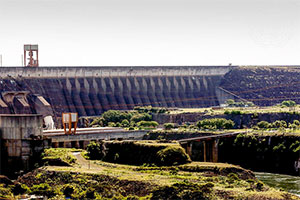 UN Power Plant, Paraguay. Credit: UN Photo/Evan Schneider
Energy has posed a great challenge for economies around the world. As global energy consumption skyrockets throughout the years, so does the need for sustainable solutions. The Sustainable Development Goals are essential in providing people with access to safe, affordable, and sustainable energy sources that minimize harm on the planet. Progress towards these goals opens the door for an advancement in modernization for communities on a global level and allows for a potential mitigation of tensions between nations.
The UN’s Summit of the Future in 2024 offered new initiatives that are being taken to achieve these goals, including a decreased reliance on fossil fuels, a switch to renewable energy sources, and improved climate financing.
IPS is well positioned to provide relevant, insightful, and compelling analysis of recent updates and measures being taken around the world to achieve a cleaner future.

The Week with IPS

NEXT STOP - SDGs
Tracking global progress towards a sustainable world
Tracking global progress towards a sustainable world
