Languages
Tuesday, November 10, 2026



News and Views from the Global South
Energy
Malaysians Fight Radioactive Waste From Oz
Malaysians protesting against an Australian-owned rare earth refinery, that will generate radioactive waste, are determined to agitate until the project is abandoned.
Tense Tug-of-War over Peru-Brazil Energy Agreement
Brazil is keen to move ahead quickly with the construction of hydropower plants in neighbouring countries to supply its demand for electricity. But Peru is still stalling on an agreement between the two countries, due to a number of conflicting interests and demands.Dwindling Resources Trigger Global Land Rush
A global scramble for land and mineral resources fuelled by billions of investment dollars is threatening the last remaining wilderness and critical ecosystems, destroying communities and contaminating huge volumes of fresh water, warned environmental groups in London Wednesday.SOUTH AFRICA: Rural School Running on Methane Bio-Gas
Tucked against the rolling hills of South Africa’s Eastern Cape province, a small rural school has been turning its kitchen scraps, and agricultural and human waste into methane gas for cooking, and nutrient-rich fertiliser, and is even recycling its water.
Dwindling Resources Trigger Global Land Rush
A global scramble for land and mineral resources fuelled by billions of investment dollars is threatening the last remaining wilderness and critical ecosystems, destroying communities and contaminating huge volumes of fresh water, warned environmental groups in London Wednesday.GUINEA: Working to Provide Water and Electricity For All
Guinea faces acute problems in the supply of clean water and electricity to its citizens, slowing the country's economic development. A major project to address this is now under way, but some Guineans are sceptical of its promises.
Eastern Caribbean Seeks Funds for Green Growth
As developing countries urgently seek new sources of financing to cope with problems linked to climate change, delegates from the nine-nation Organisation of Eastern Caribbean States (OECS) met here last week to evaluate potential funds and outline a more concrete vision of what is required for the subregion.
BRAZIL: A Curse on Hydropower Projects in the Amazon?
"Perhaps it's the curse of Rondônia," joked Ari Ott, referring to teething troubles with the first turbine of the Santo Antônio hydroelectric plant which was intended to kick off a new cycle of huge power projects in Brazil's Amazon jungle region.VENEZUELA-US: Joined by Black Gold
Venezuela and the United States claim they want to reduce their co-dependence on oil, as supplier and importer, respectively. But their mutually beneficial relationship continues with hardly a hiccup as the years go by, in spite of heated verbal confrontations.Trust Deficit – Worst Fallout of Fukushima
Kazuya Tarukawa, 36, left a secure job in the Japanese capital to tend to his family’s organic farm located 100 km away from the crippled Fukushima Daiichi nuclear reactor.CUBA: Oil Drilling Opens Up New Possibilities
The search for oil in Cuba’s Gulf of Mexico waters, launched by the Spanish firm Repsol, has triggered speculation about future prospects for Cuba and the possibility of this country one day making the transition from importer to exporter of crude.Oil Brings New Friction to Sudan and South Sudan
As Sudan and South Sudan meet for the latest round of negotiations featuring oil as a key issue this week, four ships loaded by Khartoum with southern crude are carrying their disputed cargoes to unknown buyers.Cuba on the Road to Clean Energy Development
More than a decade ago, solar electricity changed the lives of several mountain communities in Cuba. Now this and other renewable power sources are emerging as the best options available to develop sustainable energy across the island.Spain’s Green Groups Slam Rollback of Conservation Policies
Spain's new conservative government has announced changes in environmental policy that are a significant step backwards for environmental protection in the country, provoking an immediate, harsh reaction from the opposition and civil society.Spate of Spills at Sea for Brazilian Oil Industry
An accident at an ultra-deepwater drilling platform spilled 160 barrels of crude off the coast of Brazil this week, deepening fears about safety in this new frontier of oil and gas production.2011 – A Year of Weather Extremes, with More to Come
The global average temperature in 2011 was 14.52 degrees Celsius (58.14 degrees Fahrenheit). According to NASA scientists, this was the ninth warmest year in 132 years of recordkeeping, despite the cooling influence of the La Niña atmospheric and oceanic circulation pattern and relatively low solar irradiance.China Looks Both Ways on Iranian Oil
China’s response to calls from the West to join an oil embargo penalising Iran for its nuclear programme so far has been to choose the middle course typical of its non-interfering foreign policy of the last 30 years – denouncing sanctions on one hand yet working to protect its national interests on many fronts.OP-ED: After Durban, Latin America Looks Towards Rio+20
After the climate change negotiations in Durban, South Africa in December, there is space to continue advancing in the short and medium term. Now the attention of Latin America and the rest of the world is turned towards the United Nations Conference on Sustainable Development taking place this June in Rio de Janeiro.U.N. Panel Launches Blueprint for Sustainable Development
A long-awaited report by a U.N. high-level panel on global sustainability recommends several far-reaching proposals, including the establishment of new institutions and the creation of global indicators, aimed at protecting the world's environment and strengthening the U.N.'s sustainable development strategy.UZBEKISTAN: Population Endures Shortages Amid Plenty
Just a week ago at a cabinet meeting, Uzbek leader Islam Karimov hailed the achievements of the Uzbek economic model, which is basically a retrofitted command system. But Karimov clearly hasn't gotten out of the capital much lately. For many citizens in Central Asia's most populous state, electricity cuts and gas shortages have become a defining feature of this winter.Shale Gas a Bridge to More Global Warming
Hundreds of thousands of shale gas wells are being "fracked" in the United States and Canada, allowing large amounts of methane, a highly potent greenhouse gas, to escape into the atmosphere, new studies have shown.« Previous Page — Next Page »





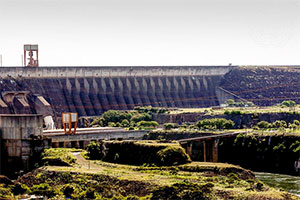 UN Power Plant, Paraguay. Credit: UN Photo/Evan Schneider
Energy has posed a great challenge for economies around the world. As global energy consumption skyrockets throughout the years, so does the need for sustainable solutions. The Sustainable Development Goals are essential in providing people with access to safe, affordable, and sustainable energy sources that minimize harm on the planet. Progress towards these goals opens the door for an advancement in modernization for communities on a global level and allows for a potential mitigation of tensions between nations.
The UN’s Summit of the Future in 2024 offered new initiatives that are being taken to achieve these goals, including a decreased reliance on fossil fuels, a switch to renewable energy sources, and improved climate financing.
IPS is well positioned to provide relevant, insightful, and compelling analysis of recent updates and measures being taken around the world to achieve a cleaner future.

The Week with IPS

NEXT STOP - SDGs
Tracking global progress towards a sustainable world
Tracking global progress towards a sustainable world
