
Friday, October 23, 2026



News and Views from the Global South
Environment
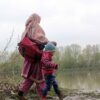
‘When Rains Come, Our Hearts Beat Faster’
When the rain begins in Kashmir's capital Srinagar, Ghulam Nabi Bhat does not watch the clouds with relief anymore. He watches them with calculation. How much can the gutters take? How fast will the river rise? Which corner of the house will leak first? Where should the children sleep if the floor turns damp?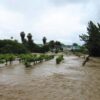
Floods and Food Security: The Hidden Cost to Crops and Soil
South Africa, Mozambique, and Zimbabwe are currently experiencing severe flooding. According to the World Health Organization, 1.3 million people have been affected. In addition, hundreds of people have died , infrastructure has been destroyed, access to health services has been disrupted, and the risks of water- and mosquito-borne diseases are rising.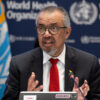
WHO Launches $1 Billion Appeal Amid Funding Shortfalls and Widening Gaps in Healthcare Access
On February 3, the World Health Organization (WHO) launched its 2026 global appeal to help millions of people living in protracted conflicts and humanitarian crises access lifesaving healthcare. Following a trend of sharply declining international funding, the agency warns that it is becoming increasingly difficult to respond to emerging health threats, including pandemics and drug-resistant infections.
When Protection Meets the Sea: Rethinking Marine Protected Areas with Fishing Communities
Melanie Brown has been fishing salmon in Bristol Bay, Alaska, for more than 30 years. An Indigenous fisherwoman and a coordinating committee member of the World Forum of Fisher Peoples, she speaks about the sea with deep care and lived knowledge.
Protecting Africa’s Ocean Future and Why a Precautionary Pause on Deep-sea Mining Matters
The world is entering a decisive period for the future of the ocean. With the High Seas Treaty coming into force and meaningful progress being made on the World Trade Organization Agreement on Fisheries Subsidies, global momentum for stronger marine governance is building. Yet, new pressures linked to the push for deep-sea mining — the extraction of minerals from seabed thousands of meters below the ocean surface — threaten to undermine these gains. To safeguard progress, global decision-making will have to keep pace with such emerging risks. In this context, Africa will host several global discussions in 2026, including those that will shape the ocean's future, with a series of opportunities for leadership starting with the African Union Summit in February to the Our Ocean Conference in Mombasa, Kenya in June.
Support Science in Halting Global Biodiversity Crisis—King Charles
British Monarch King Charles says science is the solution to protecting nature and halting global biodiversity loss, which is threatening humanity’s survival.
Explainer: Why Nature Is Everyone’s Business
Our food, fuel, and fortunes come from nature, but as these resources are turned into profits, the balance between exploiting and replenishing the planet is ever more precarious. Global businesses impact nature through mining, manufacturing, processing and retail operations. At the same time, nature impacts business operations because there is a loss of biodiversity and extreme weather events such as droughts, floods, and high temperatures.
High Seas Treaty Will Transform Our Fragile Ocean for the Better
“The ocean’s health is humanity’s health”, said UN Secretary-General Antonio Guterres, in September 2025. He was commenting after the High Seas Treaty (BBNJ) [1] finally achieved ratification, going on to call for “a swift, full implementation” from all partners. As of January 17, 2026, the treaty has come into force, meaning the time for implementation is now. What is the High Seas Treaty?
To Develop a Continent, Africa Must Nourish Its Children
Hunger shadowed Mercy Lung’aho’s childhood, fueling her campaign to promote nutrition as a foundation for Africa’s development.
U.S. Exit from Paris Agreement Deepens Climate Vulnerability for the Rest of the World
On January 27, the United States officially withdrew from the Paris Agreement, an international treaty adopted in 2015 aiming to reduce global warming and strengthen countries’ resilience to climate impacts. Following a year of regulatory rollbacks and sustained efforts by the Trump administration to dismantle federal climate policy, this move is expected to trigger wide ranging ripple effects—undermining international efforts to curb climate change, accelerating environmental degradation and biodiversity loss, and increasing risks to human health, safety, and long-term development.
Melting Reserves of Power: Mongolia’s Glaciers and the Future of Energy and Food Security
The International Year of Glaciers’ Preservation in 2025 was a timely reminder that the stability of Mongolia’s economy rests on fragile mountain systems that are melting faster than ever recorded. The loss reverberates across the country’s energy and agricultural systems, two development pillars that draw from the same finite resource: water.
Binalakshmi Nepram: Engineering Peace, Creating History
It was Christmas eve: some two decades ago. Binalakshmi Nepram was a witness to the killing of a 27-year-old. In utter disbelief, she saw a group of three men dragging the victim from his workshop. Within minutes, he was shot dead.
Uganda: Democracy in Name Only
When Ugandans went to the polls on 15 January, the outcome was never in doubt. As voting began, mobile internet services ground to a halt, ensuring minimal scrutiny as President Yoweri Museveni secured his seventh consecutive term. Far from offering democratic choice, the vote reinforced one of Africa’s longest-running presidencies, providing a veneer of democratic legitimacy while stifling competition.
Moving Towards Agroecological Food Systems in Southern Africa
In a quiet village known as Nkhondola, in Chongwe District, Eastern Zambia, Royd Michelo and his wife, Adasila Kanyanga, have transformed their five-acre piece of land into a self-sustaining agroecological landscape. With healthy soils built over time, the farm teems with diverse food crops, fruit trees, livestock and birds, nourishing their family and the surrounding community.
Big Nature-Based Finance Turnaround Needed to Restore, Protect Ecosystems
The world is pouring trillions of dollars each year into activities that destroy nature while investing only a fraction of that amount in protecting and restoring the ecosystems on which economies depend, according to a new United Nations report released on January 22.
World’s Oceans Hit Record Heat in 2025, at Great Economic and Social Costs
In 2025, global ocean temperatures rose to some of the highest levels ever recorded, signaling a continued accumulation of heat within the Earth’s climate system and raising deep concern among climate scientists. The economic toll of ocean-related impacts—including collapsing fisheries, widespread coral reef degradation, and mounting damage to coastal infrastructure—is now estimated to be nearly double the global cost of carbon emissions, placing immense strain on economies and endangering millions of lives.
Thousands of Kenya’s Smallholder Coffee Farmers Risk Losing EU Market as Deforestation Law Takes Effect
For the last twenty years, Sarah Nyaga, a smallholder farmer from Embu County in central Kenya, has farmed coffee. Like most across Kenya, she relies on the export market. A greater percentage of Kenya’s coffee ends up within the European Union market, but a new law threatens to disrupt what has been a source of income for thousands of farmers like Nyaga.
World Enters ‘Era of Global Water Bankruptcy’
The world is already in the state of “water bankruptcy”. In many basins and aquifers, long-term overuse and degradation mean that past hydrological and ecological baselines cannot realistically be restored.
World Living Beyond Its Means: Warns UN’s Global Water Bankruptcy Report
The world has entered what United Nations researchers now describe as an era of Global Water Bankruptcy, a condition where humanity has irreversibly overspent the planet’s water resources, leaving ecosystems, economies, and communities unable to recover to previous levels.
Karatoya
 Once a lifeline of northern Bengal, Bangladesh’s Karatoya River now drifts through Bogura as a fragmented, polluted channel, where climate change and human neglect quietly reshape livelihoods, memory, and everyday life.
The UN’s Withering Vine: A US Retreat from Global Governance
The Trump administration’s recent announcement of its withdrawal from 66 international organisations has been met with a mixture of alarm and applause. While the headline number suggests a dramatic retreat from the world stage, a closer look reveals a more nuanced, and perhaps more insidious, strategy. The move is less a wholesale abandonment of the United Nations system and more a targeted pruning of the multilateral vine, aimed at withering specific branches of global cooperation that the administration deems contrary to its interests. While the immediate financial impact may be less than feared, the long-term consequences for the UN and the rules-based international order are profound.
« Previous Page — Next Page »





Through our global network of local writers, we are continuing our award-winning coverage of global and local environmental challenges, with a focus on the people for whom the ecosphere matters in a direct way: rural dwellers who have little means to protect themselves against adverse conditions; communities that need to switch to sustainable development in order to survive; poor women and children, who are the most vulnerable in natural disasters. Sponsored by the United Nations Environment Program (UNEP), the United Nations Development Program (UNDP) and The World Bank (WB), IPS also maintains the award-winning Tierramérica, a specialised information service on environment and development.

The Week with IPS

Tracking global progress towards a sustainable world


