
Monday, November 23, 2026



News and Views from the Global South
Environment
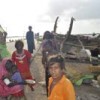
PAKISTAN: Flood Fatigue Closes Eyes to New Disaster
Men and women wading through waist-deep water with infants straddling their sides; a convoy of donkey carts laden with entire families’ possessions moving towards dry land; people being rescued by uniformed men in rubber boats; ailing elderly carried on rope cots; bird’s-eye views of vast tracts of land submerged under water.ICELAND: US Moves Diplomatically Against Whaling
U.S. President Barack Obama has decided to impose diplomatic rather than trade sanctions on Iceland because of the country’s whale-hunting activities.World Will Pay Dearly If It Fails to Combat Land Degradation
Land degradation threatens populations and their livelihoods, driving food insecurity and decreasing productivity. Yet no comprehensive action has been taken to address this issue, and if none is taken now, degradation and all of its serious implications for the future will skyrocket, says a new study.Pressure Builds on Iran at Nuclear Watchdog Agency
As Iran continues a slow march toward potential nuclear weapons capability, diplomatic action to contain the programme is likely to shift to the International Atomic Energy Agency (IAEA), whose director general, Yukiya Amano, has taken a harder line than his predecessor about alleged military research by Iran's nuclear scientists.
Desert’s Wealth is Wasted in Mexico
The deserts of northern Mexico are home to various plant species that have been largely ignored, despite the considerable social, economic and environmental contributions they could make.Anti-Nuclear Struggle Has Large Fallout
The anti-nuclear struggle in India did not gain the same national prominence as the hunger strike waged by Anna Hazare against rampant corruption among India’s top politicians. Yet a landmark it surely was in the history of India’s nuclear programme.BRAZIL: Homegrown GM Bean Won’t Fight Hunger, Critics Say
Critics complain that a genetically modified bean developed in Brazil, resistant to one of the country's most damaging agricultural pests, was approved without enough debate or guarantees that the crop will not affect human health or the environment.
Q&A: “The Future of Brazil is the Natural Knowledge Economy”
Brazil could play a leading role in a new global agenda for sustainable development and become an "environmental power", says Carlos Nobre, one of the world’s foremost climate change experts.
U.S.: Solar Homes Offer New Hope for Renewable Energy
As a light drizzle fell Saturday, U.S. Energy Secretary Steven Chu pointed to solar houses constructed by students on the National Mall park in Washington as evidence that the U.S can compete internationally in the renewable energy market to create jobs and win "the war against climate change".
Renewable energy will drive up SA’s energy costs
 South Africa wants to move from its reliance on coal for the generation of electricity to renewable energy sources like wind power and solar electricity. Zukiswa Zimela compiled this audio report:
Moana Nui Set to “Undress” APEC
This November, when the Asia-Pacific Economic Cooperation (APEC) forum holds its annual rotating summit in Honolulu, it will attract more than the attention of the world's media.
SOUTH SUDAN: Oil Conflict Threatens to Break Out
The communities living on the South Sudan-Sudan border may face genocide if the conflict between the two countries disputing control of oil reserves is not resolved.
SUDAN: China Could Oil the Peace Process
China, a major player in the oil industries of South Sudan and Sudan, could use its influence to stop the escalating violence between the two countries that has seen the displacement of thousands of people and a reduction in oil production, a United States State Department official says.Ecobreves – ARGENTINA: Activists Applaud Limit on Fish Exports
The Argentine government’s decision to limit exports of sábalo (Prochilodus lineatus), the main commercial fish species in the Paraná River, has been applauded by the PROTEGER Foundation, a non-governmental conservation organization.Ecobreves – CENTRAL AMERICA: Transborder Plan for the Gulf of Fonseca
Honduras, El Salvador and Nicaragua are preparing to implement a transborder development plan for the Gulf of Fonseca, an inlet of the Pacific Ocean shared by the three countries, with the goals of reducing natural disaster risks and more effectively managing natural resource use.Ecobreves – BRAZIL: Climate Change Threatens Amphibians of the Cerrado
Agriculture-driven deforestation, climate change and poor conservation policies are threatening the survival of amphibians in the Cerrado, a vast savanna region in central Brazil, according to a study conducted by the non-governmental organization Pequi - Research and Conservation in the Cerrado.
Desert’s Wealth is Wasted in Mexico
Jojoba and guayule are just two examples of plants found in Mexico’s deserts that offer significant untapped economic potential.
"The Future of Brazil is the Natural Knowledge Economy"
Brazil has the potential to explore a new model of tropical development, but it also faces all of the global risks posed by climate change, says climate expert Carlos Nobre.
U.S.: Battle Escalates Against Genetically Modified Crops
Home to a fast-growing network of farmers' markets, cooperatives and organic farms, but also the breeding ground for mammoth for-profit corporations that now hold patents to over 50 percent of the world's seeds, the United States is weathering a battle between Big Agro and a ripening movement for food justice and security.
Q&A: Environmental Awareness Through Imagery
Through photo and film, French photojournalist Yann Arthus-Bertrand aims to demonstrate the environmental impacts of human activity and to raise public awareness about environmental issues.BRAZIL: Undersea Oil Revives Shipbuilding Industry
So far in Brazil, the "curse of oil" is only apparent in the political sphere, where Congress is divided about how to distribute the country's increasingly large oil earnings. But in the meantime the recent discoveries of offshore reserves in the Atlantic ocean are breathing new life into the shipbuilding industry.« Previous Page — Next Page »


Through our global network of local writers, we are continuing our award-winning coverage of global and local environmental challenges, with a focus on the people for whom the ecosphere matters in a direct way: rural dwellers who have little means to protect themselves against adverse conditions; communities that need to switch to sustainable development in order to survive; poor women and children, who are the most vulnerable in natural disasters. Sponsored by the United Nations Environment Program (UNEP), the United Nations Development Program (UNDP) and The World Bank (WB), IPS also maintains the award-winning Tierramérica, a specialised information service on environment and development.

The Week with IPS

Tracking global progress towards a sustainable world


