
Monday, November 23, 2026



News and Views from the Global South
Environment
U.N. Launches Campaign to Break Catch-22 of Statelessness
For the majority of the world’s population, citizenship is a fact of life, something so fundamental that the idea of not being citizen to any state seems unfathomable. Yet for 12 million people worldwide, ordinary life as most people expect it is impossible because they belong to no country and are thus deprived of basic rights.Palestinians Thirsting for Justice in Water-Starved Occupied Territories
In the strife-stricken Middle East, oil has always been in the realm of politics. But in the Israeli-occupied territories of Gaza and the West Bank, oil has been supplanted by water.
Q&A: NGOs Must Play Key Role in Rio+20 Summit on Sustainable Development
As the United Nations readies for a major international conference on sustainable development next June in Brazil, non-governmental organisations (NGOs) are preparing to play a key role in the run-up to the summit meeting and are preparing a plan of action to be adopted by world leaders.CONGO: Poachers Feel the Long Arm of New Law
Authorities in the Republic of Congo are showing an encouraging new readiness to arrest and prosecute people trading in endangered species.Global Warming Behind Somali Drought
The severe drought in the Horn of Africa, which has caused the death of at least 30,000 children and is affecting some 12 million people, especially in Somalia, is a direct consequence of weather phenomena associated with climate change and global warming, environmental scientists say.CENTRAL AMERICA: ‘Green Economy’ Not a Panacea
The "green economy" will not solve the problems of poverty and natural disasters in Central America as long as the development model continues to be based on over-consumption and over-production, regional experts say.Africa Remains Hamstrung in Battle for Water and Sanitation
The statistics coming out of Africa are staggering: 40 percent of Africa’s 1 billion people live in urban areas and 60 percent live in slums, where water supplies and sanitation are "severely inadequate", according to the Nairobi-based U.N. Environment Programme (UNEP).
BOLIVIA: Morales Clashes with Native Protesters over Road through Tropical Park
The lack of regulations for consulting indigenous communities in Bolivia on initiatives that affect their territories is at the heart of a dispute over a road to facilitate traffic from Brazil, which would run through an enormous tropical national park self-governed by indigenous communities.Lenape Take On Ford
"We have been living here for thousands of years. Unfortunately, we are the original people of this land, but we get no respect," says Vivian Milligan, in a tone filled with sarcastic laughter.‘Sustainable Development Must Start with People’
When world leaders meet in Brazil next June for a U.N. Conference on Sustainable Development, the third since the landmark 1992 Earth Summit in Rio de Janeiro, the question lingering in the minds of many is: what really is "sustainable development" in the context of a fast-changing world of growing poverty, hunger, pollution, political repression and social unrest?
Mexican Fisherwomen Organise Against Climate Change
Every night, Adlemi Marrufo goes out to catch bait crabs used to fish for octopus in this small seaside town and others along Mexico's Yucatan Peninsula, as part of a women's cooperative that is working to adapt to and fight climate change.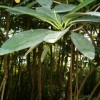
Fragmented Efforts to Save Honduran Mangroves
A mix of local and international initiatives are aimed at saving the mangrove forests and other coastal wetlands of Honduras, home to an abundance of marine life and a natural protective barrier against hurricanes, which have shrunk by over 80 percent on the Caribbean coast and almost a third on the Pacific coast.8.7 Million Species Run Spaceship Earth
The life support system that generates the planet’s air, water, and food is powered by 8.7 million living species according to the newest and best estimate. We know next to nothing about 99 percent of those unique species - except that lots of them are going extinct.
NORTH AMERICA: Keystone XL: A Pipeline to Europe?
The promoters of Keystone XL, a huge new oil pipeline from northern Canada to the U.S. Gulf Coast, claim that it will reduce U.S. reliance on oil imports from unfriendly countries.MEXICO: Maquiladora Factories Manufacture Toxic Pollutants
Since the 1960s, maquiladoras or export assembly plants have been the cornerstone of Mexico's strategy to attract foreign direct investment and boost exports. But the environmental and social costs have been high.Mega Cities Could Trigger Water Shortages and Social Unrest
The rapid growth of urban population - described as one of the world’s major demographic trends - has triggered an explosion of "mega cities" in Asia, Latin America and Africa, causing a breakdown in basic services, including water supplies and sanitation facilities.OP-ED: Expanding Deserts, Falling Water Tables and Toxins Driving People from Homes
People do not normally leave their homes, their families, and their communities unless they have no other option. Yet as environmental stresses mount, we can expect to see a growing number of environmental refugees. Rising seas and increasingly devastating storms grab headlines, but expanding deserts, falling water tables, and toxic waste and radiation are also forcing people from their homes.
SOUTH SUDAN: Inter-Ethnic Clashes Become More Frequent and Deadly
Thousands of women and children are being abducted and over 1,000 people have died this year as communities in oil-rich South Sudan war over a precious commodity – cattle.
Too Much Water As Dangerous As Too Little
The international community is running the risk of losing the battle for water and sanitation in many cities around the world.
Keystone XL: A Pipeline to Europe?
The proposed Keystone XL Canada-U.S. oil pipeline could play a key role in exporting Canadian tar sands crude to Europe.Ecobreves – BRAZIL: Wastewater Treatment Residue Used in Concrete
A technique that uses the residue left over from wastewater treatment in the production of concrete has been developed by the São Carlos School of Engineering at the University of São Paulo, Brazil.« Previous Page — Next Page »


Through our global network of local writers, we are continuing our award-winning coverage of global and local environmental challenges, with a focus on the people for whom the ecosphere matters in a direct way: rural dwellers who have little means to protect themselves against adverse conditions; communities that need to switch to sustainable development in order to survive; poor women and children, who are the most vulnerable in natural disasters. Sponsored by the United Nations Environment Program (UNEP), the United Nations Development Program (UNDP) and The World Bank (WB), IPS also maintains the award-winning Tierramérica, a specialised information service on environment and development.

The Week with IPS

Tracking global progress towards a sustainable world


