
Monday, November 23, 2026



News and Views from the Global South
Environment
Ecobreves – BRAZIL: Wastewater Treatment Residue Used in Concrete
A technique that uses the residue left over from wastewater treatment in the production of concrete has been developed by the São Carlos School of Engineering at the University of São Paulo, Brazil.Ecobreves – ARGENTINA: Film Fest Aims to Raise Environmental Awareness
A short film competition will kick off the second Buenos Aires Green Film Fest, a showcase for international cinema on environmental themes, beginning this Aug. 25.Ecobreves – MEXICO: Public Consultation on Hotel Project Demanded
The Mexican Environmental Law Center (CEMDA) and Los Cabos Coastkeeper have called on the Ministry of the Environment and Natural Resources to hold a public consultation on the construction of a tourism complex in the northwestern state of Baja California Sur.JAPAN: Fukushima Gives Renewable Energy a Chance
After decades of not bothering to switch off the lights in unoccupied rooms in their Tokyo home, Masayoshi Sakurai and his children now meticulously make sure they do.
KENYA: Lime Improves Maize Harvest
As the world’s worst food security crisis continues across the Horn of Africa, including in Kenya, some smallholder farmers in the western part of the country are still feeding their families with last year’s abundant harvest.
BRAZIL: Biofuel Production – Local Development or Social Breakdown?
Biofuels are an alternative energy source that can drive local development by generating jobs, know-how and technology. But they can also cause social damage, as locals fear in the case of industrial-scale exploitation of babassu palm trees, which grow abundantly in the wild in central and northern Brazil.ASIA: Mekong Dolphins Close to Extinction
The World Wildlife Federation (WWF) has called for urgent action to prevent the extinction of freshwater dolphins in the Mekong River, including the creation of special conservation zones.
MALAWI: Hospitals Struggle Amid Water Shortage
Two battered plastic chairs bar entry to the toilets at the Bangwe Township Clinic in Blantyre. The toilets are not working because there is no running water – yet again. And if patients want to use the facilities they will have to run to the next- door primary school, which has pit latrines.
Q&A: Water Will Be Lifeblood of Smart Urban Expansion
The world's water map is being significantly redrawn due primarily to the mass migration of people into urban centres, threatening one of life's vital resources.
New Scientific Network on Climate Change Adaptation
In Central America the temperature is rising and forests are taking longer to grow, while farther south, the Amazon rainforests have yet to feel the effects of global warming. This is just one example of how climate change is manifested differently in different parts of the region.
MOZAMBIQUE: Climate Change Threatens Smallholder Farmers
Long after the wintry sun set over her patch of crops outside the Mozambican capital Angelina Jossefa keeps pulling out weeds. Much of her lettuce, carrots and beetroot died during a cruel winter, which means she has to work harder to feed her three children.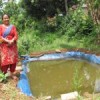
NEPAL: Adapting to Climate Change Can be Simple
Saraswoti Bhetwal’s terraced fields stand out in the sub-Himalayan Lamdihi village as a mosaic of shapes and colours formed by beans, bitter gourd, chilly, tomato, lady’s fingers and other crops.
Q&A: Climate-Driven Migrants Raise Thorny Legal Issues
As the effects of accelerating climate change ripple outward, pushing millions from their land and homes, experts warn that international human rights and refugee law needs to catch up to the reality on the ground if migrants are to be given adequate protection and support.
Q&A: “Climate Change Is Affecting Traditional Knowledge”
The traditional knowledge of nature developed since ancestral times by Colombia’s indigenous peoples is increasingly challenged by the unnatural effects of climate change, a phenomenon that is deeply troubling to the keepers of this knowledge, says biologist Brigitte Baptiste.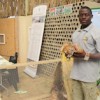
NAMIBIA: No Option but to Adapt to a Changing Climate
Extreme weather conditions predicted because of climate change in Namibia are likely to have a tremendous effect on the 70 percent of the country’s people who live in rural areas and depend heavily on agriculture.
VENEZUELA: Caribbean Town Declares Plastic Bags Non Grata
A Venezuelan municipality where the main industry is oil refining, and that has an import-export "free zone", is set to become a plastic bag-free area.
Climate Change Is Affecting Traditional Knowledge
Colombia has no system for monitoring biodiversity to determine how it could be affected by global warming, Brigitte Baptiste of the Humboldt Institute, a Colombian government institution devoted to biodiversity, reports in this exclusive interview.Ecobreves – BRAZIL: Despite Forest Management, Logging Leads to Financial Losses
Even when sustainable management regulations and logging cycles established by the law are strictly followed, logging causes irreversible losses in the productive value of Amazon forests, according to a study by the Luiz de Queiroz Higher School of Agriculture at the University of São Paulo.Ecobreves – VENEZUELA: Used Batteries Collected on Margarita Island
An environmental group from Margarita Island, located in the Caribbean Sea off the northeast coast of Venezuela, has launched a campaign to collect used batteries from the island’s 400,000 inhabitants and the hundreds of thousands of tourists who visit every year.Ecobreves – HONDURAS: Firefighters Plant Trees in the Capital
A contingent of 25 members of the Tegucigalpa Fire Department has joined the government initiative to plant 200,000 trees in the Honduran capital and three neighboring municipalities over the next six months.Ecobreves – CUBA: Zeolites Increase Agricultural Yields
The use of natural zeolites in agriculture increases crop yields while minimizing environmental impacts, new Cuban research has found.« Previous Page — Next Page »


Through our global network of local writers, we are continuing our award-winning coverage of global and local environmental challenges, with a focus on the people for whom the ecosphere matters in a direct way: rural dwellers who have little means to protect themselves against adverse conditions; communities that need to switch to sustainable development in order to survive; poor women and children, who are the most vulnerable in natural disasters. Sponsored by the United Nations Environment Program (UNEP), the United Nations Development Program (UNDP) and The World Bank (WB), IPS also maintains the award-winning Tierramérica, a specialised information service on environment and development.

The Week with IPS

Tracking global progress towards a sustainable world


