
Monday, November 23, 2026



News and Views from the Global South
Environment
LATIN AMERICA: Enthusiasm for Nuclear Power Cooling Off
The nuclear disaster in Japan has revived the debate in Latin America on the pros and cons of expanding the use of nuclear energy. While both Argentina and Brazil, which had put the greatest emphasis on nuclear power, plan to continue down that road, other countries have put plans and unfinished projects on hold.
PAKISTAN: And Then There Was Light
Hasan Ibrahim’s tea stall is the busiest place in the sleepy, sand-dune covered village of Sholani, proof of the economic and social change the arrival of electricity has ushered in.
CLIMATE CHANGE: “Act of Conscience” Could Earn 10-Year Prison Term
A college student who derailed a federal auction of oil and gas leases to protest drilling near national parks in the western U.S. state of Utah, as well as the larger issue of reliance on fossil fuels, has reignited debate over the legitimacy of civil disobedience in addressing profound global problems like climate change.
Plastic Circulating Endlessly in World’s Oceans
That plastic bottle or plastic take-away coffee lid that has 20 minutes of use can spend decades killing countless seabirds, marine animals and fish, experts reported here this week.U.S.: Poll Finds Support for Freeze on Nuke Plants
The United States government has been accused of failing to read growing public concern about the future of the country's atomic energy programme, as the crisis at Japan's stricken Fukushima nuclear plant continues to unfold.Q&A: Studying Kenyan Farmers’ Efforts to Adapt
Climate change has become an important part of the development agenda. In Africa, farmers and consumers alike are feeling its effects on productivity and food security.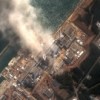
Who Controls the Nuclear Control Agencies?
As Japan struggles to confront a nuclear disaster that could be the worst in history, it seems clear that any discussion about the safety of nuclear energy should address the independence of regulatory agencies.
BOLIVIA: Cochabamba Still Thirsty
There is still no apparent solution to the unsatisfied demand for drinking water in Cochabamba, 11 years after this central Bolivian city made international headlines with a popular uprising that halted the privatisation of water service.Peak Water Has Already Come and Gone
Canadian Kevin Freedman is celebrating World Water Day Tuesday by living on 25 litres of water a day, instead of the North American average of 330 litres per day. And he has enlisted 31 others in his "Water Conservation Challenge" to go water- lean, using just 25 litres per day for cooking, drinking, cleaning, and sanitation for the entire month of March.SOUTHEAST ASIA: Despite Japan’s Crisis, Vietnam Aims to Win Region’s Nuclear Race
Vietnam’s race to build nuclear power plants has barely skipped a beat despite the troubling scenes unfolding in Japan, where a nuclear nightmare has gripped the country for over a week. It places the Southeast Asian nation at odds with its regional neighbours who have similar plans but are urging caution.JAPAN: Vulnerability and Uncertainty Prevail In Wake of Nuclear Disaster
Accidents at four nuclear power reactors hit by the earthquake and tsunami in Fukushima have left thousands of residents in the vicinity facing an uncertain future as they prepare for evacuation orders to protect them from dangerous radiation contamination.
MALAWI: Enterprising Approach Underlies New Sanitation Campaign
The market can do better: a sanitation and hygiene campaign to be launched in Malawi plans to apply this tenet to improve cleanliness and public health in the country's cities.
LATIN AMERICA: Wave of Water Privatisation Over; Coverage Challenge Remains
Now that the wave of water privatisation of the 1980s and 1990s has let up, the main challenge facing water utilities in Latin America is expanding coverage of high-quality water services.
U.N. Water Conference Focuses on Cities
As a U.N. conference on water opens in South Africa today, the country's Council for Scientific and Industrial Research has repeated warnings that the country faces a water supply crisis. Experts attending the three-day conference will consider the challenges posed by growing demands, migration and water resources potentially limited by careless use and climate change.Manufacturing in Africa Can be Profitable – And Developmental
Investing in adding value to raw materials is crucial for the development of the African continent.
Water Management Transcends “Public or Private” Debate
A fund financed with public and private resources seeks to create a participatory and transparent water management model in Quito.
Cochabamba Still Thirsting for Water
In the Bolivian city of Cochabamba, scene of the 2000 “Water War”, both privatisation and public administration have failed to adequately provide citizens with this vital resource.Ecobreves – ARGENTINA: Shutdown of Embalse Nuclear Plant Urged
The Foundation for the Defence of the Environment in Argentina has challenged the decision of the government of the central province of Córdoba to continue operating the Embalse nuclear power plant without conducting an environmental impact assessment or public hearing.Ecobreves – BRAZIL: Banana Peels Can Filter Heavy Metals
Water contaminated with potentially toxic metals can be purified using banana peels as a filter, according to a study from the São Paulo State University (UNESP) in Botucatú, 230 kilometres from the city of São Paulo.Ecobreves – HONDURAS: Flood Risk Targeted in 10 Vulnerable Municipalities
The Honduran government has begun infrastructure work to reduce the risk of overflowing rivers and flooding in 10 highly vulnerable municipalities.Ecobreves – MEXICO: Birdwatching Tourism Potential Untapped
Mexico is failing to take advantage of the significant potential of ecotourism geared to birdwatching, says a report released by two environmental organisations on Mar. 15.« Previous Page — Next Page »


Through our global network of local writers, we are continuing our award-winning coverage of global and local environmental challenges, with a focus on the people for whom the ecosphere matters in a direct way: rural dwellers who have little means to protect themselves against adverse conditions; communities that need to switch to sustainable development in order to survive; poor women and children, who are the most vulnerable in natural disasters. Sponsored by the United Nations Environment Program (UNEP), the United Nations Development Program (UNDP) and The World Bank (WB), IPS also maintains the award-winning Tierramérica, a specialised information service on environment and development.

The Week with IPS

Tracking global progress towards a sustainable world


