
Tuesday, November 24, 2026



News and Views from the Global South
Environment
Caribbean Tourism Officials Seek Concessions from Europe
Caribbean officials gathered in Brussels for the region's annual tourism summit, the first to be held in Europe, are urging their biggest development partner to draft policies supporting the lifeblood sector and ease restrictions such as Britain's Air Passenger Duty (APD), which they say are holding back its growth.Second Blast at Japan Nuclear Plant
A second explosion has rocked Japan's stricken Fukushima Daiichi nuclear power complex, sending a plume of smoke into the air and touching off fresh concerns of a radioactive leak in the quake and tsunami-hit country.JAPAN: Anti-Nuclear Groups Sound New Warning
Heightened tension on Saturday after a blast at a nuclear facility in Fukushima, 150 kilometres north of Tokyo, eased off after the government reported that the danger had been overstated.JAPAN: Explosion at Nuclear Plant Raises New Fears After Destructive Tsunami
Fears of a nuclear meltdown at one of Japan's nuclear installations have gripped the country following a blast at a nuclear installation. Emergency teams were struggling to limit damage following the explosion.
Satellite Technology to Help the Displaced in Libya
Satellite images are being utilized to determine the scope of the displaced persons crisis in Libya.
The Brick-Making Industry Confronts Its Climate Impacts
Artisanal brick-makers from seven Latin American countries are beginning to test ways to reduce the industry's health and climate impacts.Ecobreves – HONDURAS: A Boost for Community Gardens
The Honduran capital's city government is setting up organic community gardens to improve food security in low-income neighborhoods, given the forecasts for local food shortages resulting from climate change and deforestation.Ecobreves – BRAZIL: Rain Shortages in the North to Worsen in 21st Century
By 2100, droughts will be as much as 40 percent more severe in the Brazilian Amazon and Northeast regions, and rainfall 30 percent more intense in the southeast of South America, including the Paraná-La Plata Basin, predicts a report from the National Institute for Climate Change Science and Technology (INCT).Ecobreves – CUBA: Drought Threatens the West
The drought hitting the westernmost region of Cuba will last through the month of March, predicts the Cuban Meteorology Institute's climate center.WATER: Working Together on River Management
Postwar Angola is keen to expand irrigation for much-needed development, Namibia is prioritising clean drinking water and sanitation, while Botswana wants to preserve the integrity of the world-renowned Okavango Delta for tourism.
NAMIBIA: Water in the Kambashu
For Namibia's capital city, the goal of sustainable water and sanitation is a major challenge for the 21st century.INDIA: Court Challenges Dubious Environmental Impact Reports
India’s Supreme Court has questioned clearances to industries on the basis of environment impact assessments (EIAs) carried out by private consultants in the pay of project proponents.
Tanzania Biofuel Project’s Barren Promise
An ambitious project to produce clean energy for the Netherlands and Belgium has degenerated into a controversial abuse of natural resources in Africa.
MALAWI: In Praise of Dry Sanitation
At its best it is waterless, odorless, eminently affordable and has a rich fertiliser as byproduct, yet for residents of Malawi's informal settlements, dry sanitation retains a whiff of the unwanted.Save Climate and Double Food Production With Eco-Farming
Eco-farming could double food production in entire regions within 10 years while mitigating climate change, according to a new U.N. report released Tuesday in Geneva.Spain Backpedals on Renewable Energy
Spain put the brakes on the use of clean energies to generate electricity, as the government approved an energy savings programme to cope with its large oil bill which affects its commitment to reduce non-renewable sources by 2020.
Will the Libya Syndrome Spread in OPEC?
The combination of a leader in power for 42 years, underground political forces bursting on the scene with violence, fractured armed forces and a fast-developing civil war would appear to be a specifically Libyan phenomenon that is unlikely to expand to the rest of OPEC.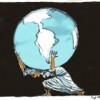
OP-ED: Women in Agriculture – Gender Gaps Are Holding Back Development
On the occasion of the 100th celebration of International Women’s Day, the Food and Agriculture Organisation (FAO) presented a surprising and alarming assessment of the situation of rural women, based on a comprehensive analysis of men and women farmers around the world.
Q&A: “The Trial Against Chevron Is Totally Corrupt”
Chevron, the second largest U.S. oil company, believes that to overturn the verdict ordering it to pay 9.5 billion dollars in reparations for environmental and public health damages in Ecuador's Amazon jungle, the best defence is a good offence.Soaring Commodity Prices a Mixed Bag for Mexico
While Mexico is earning more revenue from oil exports, the cost of food imports has risen to the point where food security is threatened.Chavez Gambles on Gaddafi Diplomacy
Hugo Chavez's offer to mediate in the Libyan crisis marks the Venezuelan president's latest attention-grabbing foray onto the world stage, yet analysts warn that he risks "ending up on the wrong side of history" if he stands by Muammar Gaddafi's internationally discredited regime.« Previous Page — Next Page »


Through our global network of local writers, we are continuing our award-winning coverage of global and local environmental challenges, with a focus on the people for whom the ecosphere matters in a direct way: rural dwellers who have little means to protect themselves against adverse conditions; communities that need to switch to sustainable development in order to survive; poor women and children, who are the most vulnerable in natural disasters. Sponsored by the United Nations Environment Program (UNEP), the United Nations Development Program (UNDP) and The World Bank (WB), IPS also maintains the award-winning Tierramérica, a specialised information service on environment and development.

The Week with IPS

Tracking global progress towards a sustainable world


