
Tuesday, November 24, 2026



News and Views from the Global South
Environment

Local Communities Protect Their Amazon
Residents and authorities of a Peruvian Amazon region take rainforest conservation into their own hands.Ecobreves – BRAZIL: Stock Exchange Joins Fight Against Climate Change
The São Paulo Securities, Commodities and Futures Exchange and the Brazilian Development Bank (BNDES) have launched the Carbon Efficient Index (ICO2) to encourage companies to measure and disclose their greenhouse gas emissions.Ecobreves – CHILE: New Actions Planned Against Mine Tailings Deposit
Residents of the northern Chilean community of Caimanes are planning new actions to fight for the closure of the mine tailings deposit operated by the Chilean-Japanese mining company Los Pelambres.Ecobreves – ARGENTINA: Glacier Protection Law Suspended
Environmental organizations in Argentina are protesting the delays in the application of the law to protect glaciers passed in late September 2010.
Climate Change Could Be Worsening Effects of El Niño and La Niña
Scientists believe that global warming could be affecting the El Niño-Southern Oscillation (ENSO) climate cycle, whose cold phase, La Niña, is already taking a toll on food production.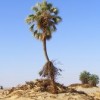
BIODIVERSITY: Pharaonic Palm at Risk of Extinction, Again
Environmentalists have called for more efforts to protect the argun palm, a rare desert tree prized by the ancient Egyptians that is on the verge of extinction.
SUDAN-U.S.: Referendum May Be Only the Beginning
Amid growing certainty that the much-anticipated weeklong referendum on independence for south Sudan will indeed begin Sunday as scheduled, U.S. officials and independent experts are warning that the situation in both the north and the south is likely to remain very fragile for some time to come.EGYPT: Shark Attacks Bite Tourism
The beaches of Egypt's Red Sea resort city of Sharm al-Sheikh are tentatively back to normal after having recently been the site of five separate shark attacks, one of which proved fatal. While the phenomenon's precise cause remains undetermined, local experts fear that the spate of attacks could have dire consequences for Egypt's vital tourism industry - especially in the event of another incident.Bahrain’s Farms Disappearing Under Concrete Towers
Environmentalists are engaged in a nation-wide campaign to protect what is left of the agricultural belt in Bahrain. Seventy percent of farms have been eliminated due to urbanisation, according to environmentalists who are warning of a serious environmental crisis.Oil Leak, Haiti, Afghanistan Dominated 2010 U.S. TV News
The disastrous BP oil leak in the Gulf of Mexico, the catastrophic earthquake in Haiti, and the continuing war in Afghanistan comprised the major news stories in 2010, according to the latest annual review of network news coverage by the authoritative Tyndall Report.
Mexico, the Leader in Community Forest Management
Thanks to its experience with community forestry projects, Mexico can provide tips on how to manage forests while fomenting the development of local economies in 2011, the International Year of Forests.EL SALVADOR: Small-Scale Fishers Want a Slice of the Sea
For the third time in 10 years, small-scale fishers in El Salvador are trying to get Congress to modify the country's fishing law, to create a five-mile exclusion zone along the coast where the industrial fleet would be banned from fishing.
ECONOMY: Namibia Embarks on Nuclear Policy
Namibia is set to develop its rich uranium resources and intends to pursue uranium enrichment locally. It also plans to build its own nuclear electricity plant.
BRAZIL: Resilient Plants Could Hold Key to Adapting Agriculture
A vision of "the Apocalypse, everything burnt, turned black from ashes and smoke," was what photographer Mila Petrillo saw when she returned in October to what had been her Eden in the Brazilian municipality of Alto Paraiso, 230 km from Brasilia.
NICARAGUA: Lobster Divers in Deep Trouble
Edgard Walters, who belongs to the Association of Disabled and Active Divers of the Atlantic Coast of Nicaragua, has been in a wheelchair since 2003, when he made his last dive for lobster in the waters of the Caribbean.CHILE: Clouds on the Horizon in Fishing Industry
Unemployment in Chile's fishing industry will rise this year, experts and the association of small-scale fishers warn, due to the reduction in catch quotas adopted in response to overfishing and plunging stocks of key species, particularly jack mackerel.
ECUADOR: Delayed Return of Fishing’s ‘Golden’ Years
"This year there haven't been many 'dorados', but they're beginning to appear now," Ramón Díaz says hopefully as he disembarks with his fellow fishermen after spending the entire night out on the water.
BRAZIL: Climate Change Means New Crop Health Concerns
Farming around the globe, already reeling from drought, heat waves and major storms, will have to prepare for the new challenges that global warming will bring, especially in the form of pests and disease.
BRAZIL: Oil Palm Plantations Expand on Degraded Land in Amazon
Brazil hopes to eventually become a major producer of palm oil, thanks to the expansion of this new exotic monoculture crop in the eastern Amazon jungle, where eucalyptus plantations are also mushrooming on broad swaths of already deforested land.Assumptions on Overfishing Challenged
For decades, fisheries around the world have relied on practices that take for granted certain assumptions about the industry, such as protecting younger fish while exploiting older fish and using trophic levels to monitor the health of fisheries. Recently, however, some scientists have begun to question these unanimously accepted practices. Experts are beginning to think that the science behind the global fishing industry may be completely wrong.CHINA: Scientists Push Desalination To Meet Water Shortages
While China faces grave water shortages, researchers at institutions across the country are working on new water- saving and desalination technologies that they hope can alleviate the crisis in the crucial years to come.« Previous Page — Next Page »


Through our global network of local writers, we are continuing our award-winning coverage of global and local environmental challenges, with a focus on the people for whom the ecosphere matters in a direct way: rural dwellers who have little means to protect themselves against adverse conditions; communities that need to switch to sustainable development in order to survive; poor women and children, who are the most vulnerable in natural disasters. Sponsored by the United Nations Environment Program (UNEP), the United Nations Development Program (UNDP) and The World Bank (WB), IPS also maintains the award-winning Tierramérica, a specialised information service on environment and development.

The Week with IPS

Tracking global progress towards a sustainable world


