
Tuesday, November 24, 2026



News and Views from the Global South
Environment
Ecobreves – BRASIL: Ethanol Also Comes from Eucalyptus Bark
The great volume of industrial waste from the paper pulp industry -- eucalyptus bark -- can be made into raw material for ethanol, according to a study by the Luiz de Queiroz Agricultural School at Brazil's University of São Paulo.Ecobreves – CUBA: Migratory Birds Studied in Guanahacabibes
Cuban scientists will delve deeper this year into the characteristics and provenance of the birds they find on the Guanahacabibes Peninsula, one of the major corridors for migratory species in Cuba.Ecobreves – HONDURAS: Plans for Law on Garbage Incineration
The Honduran authorities are seeking legislation on different approaches to solid waste management. Of the country's 298 municipalities, 260 do not have any waste treatment system, and the other 38 utilize incineration -- and most are poorly managed.
PERU: Local Communities Protect Their Amazon
San Martín is one of the three most deforested Amazon regions in Peru. But now local residents and non-governmental organisations have joined with local and regional authorities to defend the flora, fauna and water resources and halt the destruction of the rainforests.
ENVIRONMENT: Delhi Chokes on Winter Smog
Winter in the Indian capital is a season of mists, minus the mellow fruitfulness. The air becomes charged with toxic emissions and particles that cannot disperse due to a meteorological phenomenon called "atmospheric inversion".
MAURITIUS: Renewable Energy Gets a Boost
A new initiative to support production of renewable energy in Mauritius may provide a model for other countries to follow suit.MINING-PERU: Doe Run’s Latest Move
The U.S. mining and metallurgical company Doe Run has once again challenged the Peruvian government. The Renco Group, of which it is a subsidiary, notified the government of its plans to start an international arbitration process, invoking the free trade agreement between this South American country and the United States.
PHILIPPINES: Designing Defence Against Climate Change
As the impact of climate change worsens around the globe, a disaster-resilient village is poised to be a solution for urban poor battling the constant floods and typhoons that hit the Philippines.U.N. to Host Slew of Talkfests Through 2011
Living up to its reputation - or notoriety - as one of the world's quintessential talking shops, the United Nations has scheduled a slew of high-level meetings and international conferences through December this year.
U.S.: Sick Gulf Residents Beg Officials for Help
In an emotionally charged meeting this week sponsored by the National Commission on the BP Deepwater Horizon Oil Spill, fishermen, Gulf residents and community leaders vented their increasingly grave concerns about the widespread health issues brought on by the three-month-long disaster.
In Corrupt Global Food System, Farmland Is the New Gold
Famine-hollowed farmers watch trucks loaded with grain grown on their ancestral lands heading for the nearest port, destined to fill richer bellies in foreign lands. This scene has become all too common since the 2008 food crisis.Sanctions Forced Iran to Slash Bloated Energy Subsidies
Touring Iran's Arab rivals this week, U.S. Secretary of State Hillary Rodham Clinton sounded almost triumphant as she asserted that economic sanctions have helped slow Tehran's nuclear progress.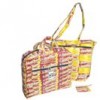
LEBANON: Trashy Bag Gets Trendy
Wafa Saab, a high-powered executive at the leading Lebanese-manufactured paint company Tinol, is an environmentally friendly fashionista. On her arm hangs a pink and blue gym bag. It’s made of garbage.
ZIMBABWE: Protecting the Zambezi’s Kapenta Fish
"The fish are disappearing." The words and the world-weary gaze could belong to a fisherman from almost anywhere, as stocks come under pressure due to over-exploitation all over the world.CLIMATE CHANGE: ‘Water Towers of Asia’ Show Cracks
A concerted effort to formally document the magnitude and directions of climate trends in the Eastern Himalayas and thereby decide regional adaptation strategies is critical to ensure the region’s water security, according to water experts.
US: EcoATMs Swap E-waste for Cash
It's hardly news that the U.S. love affair with electronic gadgets has a dark side. The global toll on natural resources and the potential health and environmental hazards are staggering.
South Sudan Voters Die in Ambush
At least 11 more people have been killed in violence over southern Sudan's historic referendum, officials have said.
Climate Change Could Be Worsening Effects of El Niño, La Niña
The strongest La Niña weather system in 50 years has brought historic flooding to Australia and drought to Argentina, Brazil and Uruguay, driving up food prices.
DR CONGO: Promise of Potable Water for Kikwit
When the ground is broken for the Kakobola dam, engineers just might be able to hear the jubilation in the city of Kikwit, 200 kilometres away. The city's million residents are desperate to improve their water supply.Latest Food Crisis Brewing for Months
The United Nations, which is trying to reach out to nearly a billion undernourished people, some living in perpetual hunger, is anticipating another food crisis later this year.CAMBODIA: Chinese Dams Challenge Western Development Monopoly
A steady rise of new dams in Cambodia is becoming a platform for the country’s prime minister to showcase where the Southeast Asian kingdom’s ties with China - a late arrival among Cambodia’s foreign aid and development partners - is headed.« Previous Page — Next Page »


Through our global network of local writers, we are continuing our award-winning coverage of global and local environmental challenges, with a focus on the people for whom the ecosphere matters in a direct way: rural dwellers who have little means to protect themselves against adverse conditions; communities that need to switch to sustainable development in order to survive; poor women and children, who are the most vulnerable in natural disasters. Sponsored by the United Nations Environment Program (UNEP), the United Nations Development Program (UNDP) and The World Bank (WB), IPS also maintains the award-winning Tierramérica, a specialised information service on environment and development.

The Week with IPS

Tracking global progress towards a sustainable world


