
Wednesday, November 25, 2026



News and Views from the Global South
Environment
Water Strategy Key to Cities of the Future
A diverse group of more than 4,500 professionals from the water industry gathered here to send a resounding message: a sharp break from past practices of water distribution and wastewater management is needed to cope with the burgeoning population growth in cities and impending water scarcity.CHINA: Great Green Wall Rises, But Questions Remain
Dubbed "The Great Green Wall," a human-made ecological barrier designed to stop rapidly encroaching deserts and combat climate change is coming up across China. By 2050, the artificial forest is to stretch 400 million hectares – covering more than 42 percent of China’s landmass.Rising Energy Demand Hits Water Scarcity ‘Choke Point’
Meeting the growing demand for energy in the U.S., even through sustainable means, could entail greater threats to the environment, new research shows.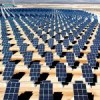
SPAIN: Renewable Energy a Remedy for Economic Crisis
One of the causes of Spain's deep economic crisis is the country's limited ability to export goods with high added value. But the pioneering renewable energy sector has the potential to fill that gap.CLIMATE CHANGE: Averting the Grimmest Scenarios
The catastrophic floods in Pakistan have added urgency to a high-level United Nations summit this week, with delegates from mostly South Asian nations convening Tuesday to call for increased technology transfer from richer countries and to compare strategies to avert the worst effects of climate change.Biodiversity Talks Bog Down over Genetic Resources
While officials meeting in Montreal, Canada failed to finalise a key protocol to the Convention on Biological Diversity (CBD) Tuesday, biodiversity is scheduled to be at the top of Wednesday's agenda of the U.N. General Assembly in New York.
Climate Justice Treks from Cochabamba to Cancun
The "people's" climate agenda that the Bolivian government and civil society produced at an April conference in Cochabamba has made its way to the official United Nations negotiating table. But its inclusion in a binding climate treaty is unlikely, say activists.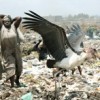
SOUTH AFRICA: Coal – A New Solution to Fuel Problems?
A new solution to power and fuel problems worldwide may be developed by using a resource long characterised as dirty and non-renewable: coal.IRAQ: After False Promises, the Heat Is On
Iraqis promised development with the ouster of Saddam Hussein and the arrival of the U.S. are now suffering lack of development as never before. And where it hurts every moment is through the collapse of power supply.
MOZAMBIQUE: BHP Billiton Plans Six Month Bypass of Smelter Smokestack Scrubbers
Civil society groups are challenging a six-month authorisation granted aluminium giant BHP Billiton to emit potentially dangerous fumes from its Mozal smelter into the air without treating them first.
Arctic Ice in Death Spiral
The carbon dioxide emissions from burning fossil fuels have melted the Arctic sea ice to its lowest volume since before the rise of human civilisation, dangerously upsetting the energy balance of the entire planet, climate scientists are reporting.
AFRICA: Liberalised Services Still Require Proper Regulations
With African countries' trade remaining inordinately dependent on natural resources exports, their economies could benefit from liberalisation of trade in services but only as long as proper domestic regulatory frameworks are put in place, some trade experts argue.
Renewable Energy a Remedy for Economic Crisis
Spain is one of the world's leading producers of photovoltaic energy, with installed potential of 3,200 megawatts.Ecobreves – BRAZIL: New Weapon Against Mercury Contamination
Removing mercury from water, petroleum and natural gas, without leaving additional toxic waste, is now possible with a technique developed at the Alberto Luiz Coimbra Institute for Engineering Research, at the Federal University of Rio de Janeiro.Ecobreves – MEXICO: Environmental Budget Cuts Face Criticism
The 2011 budget for Mexico's Secretariat (ministry) of Environment and Natural Resources is insufficient to tend to existing and urgent needs, according to the watchdog group Greenpeace Mexico.Ecobreves – HONDURAS: China to Finance Ambitious Hydroelectric Project
The government of Honduras announced the construction of the Patuca I, II and III hydroelectric dam, over the course of three years beginning January 2011 at a cost of one billion dollars financed by a Chinese firm.Ecobreves – ARGENTINA: Infrastructure Plan Ignores Town
Residents of a town of 400 people in the northeastern Argentine province of Chaco faced repression and legal charges for their opposition to an electrical transmission line through their community.
INDIA: Jatropha Boom Yields Tough Lessons
With a gas-guzzler of an economy, India had been spending tens of billions of dollars annually to import petroleum. And so its 2009 policy on biofuels mandated that by 2017, India would have enough biofuel production to cover at least 20 percent of the country’s oil consumption.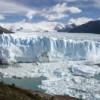
ARGENTINA: Fighting to Save Glaciers as They Retreat
Argentina's glaciers, along with Chile's the most extensive of South America, manifest the damage caused by climate change, while they also face threats from mining and major transportation infrastructure projects. A law to protect them has been postponed yet again.ARGENTINA: "A Casino Is Not Progress"
A small fishing community in the northern Argentine province of Chaco is pressing for a sustainable development programme to preserve their simple way of life and the natural habitat, and fighting a mega-investment project that would draw upscale tourism instead of the people who now come to seek peace and quiet on the weekends.Expectations Scaled Back for Cancun Climate Summit
When, following months of hype, ministers and negotiating teams arrived in Copenhagen last December for a summit on climate change, the expectations for what could be accomplished were unrealistic and made the successes that did occur seem less important than they were, says the climate chief of Mexico, which will host this year’s successor to the Copenhagen summit.« Previous Page — Next Page »


Through our global network of local writers, we are continuing our award-winning coverage of global and local environmental challenges, with a focus on the people for whom the ecosphere matters in a direct way: rural dwellers who have little means to protect themselves against adverse conditions; communities that need to switch to sustainable development in order to survive; poor women and children, who are the most vulnerable in natural disasters. Sponsored by the United Nations Environment Program (UNEP), the United Nations Development Program (UNDP) and The World Bank (WB), IPS also maintains the award-winning Tierramérica, a specialised information service on environment and development.

The Week with IPS

Tracking global progress towards a sustainable world


