
Thursday, November 26, 2026



News and Views from the Global South
Environment
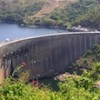
ENERGY-SOUTHERN AFRICA: Small Is Beautiful, Say Independent Power Producers
Independent power producers argue that small hydroelectric plants have a key role to play in avoiding an energy shortfall in the Southern African region.
SOUTHERN AFRICA: Preparing for Flood Season
Southern Africa is entering flood season. Governments and policy makers have been challenged to adopt a more preventive approach to disaster management by the Red Cross - what measures are in place?DEVELOPMENT: World’s Longest Toilet Queue in the Making
The "world's longest toilet queue," scheduled for next month, may not be a celebrity-filled event worthy of a Hollywood spectacle - but it could still find a place in the Guinness Book of World Records.
POLITICS: U.N. Climate Chief Quits Post
Countries have largely failed to endorse the Copenhagen Climate accord by the Jan. 31 deadline. On Thursday, the key official in the United Nations climate treaty process announced his resignation.ARGENTINA-UK: Oil Plans Spark Tension Over Malvinas/Falklands
The imminent arrival of a British oil exploration rig in the South Atlantic ocean has recharged tensions between Argentina and Britain over the Malvinas/Falkland Islands.ENVIRONMENT-LATIN AMERICA: Glass Half Empty
The countries of Latin America have made progress in terms of access to clean water and sanitation, but have failed to curb greenhouse gas emissions and deforestation, says a new United Nations report.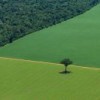
ENERGY-ARGENTINA: Agrofuels Rev Their Engines
In a measure that was delayed by supply problems, this year Argentina is beginning to require that gasoline be mixed with ethanol and diesel fuel with biodiesel, at a proportion of five percent, to possibly reach 20 percent by 2015.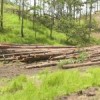
ENVIRONMENT-HONDURAS: Forest Corruption a Major Challenge
The effects of climate change in Honduras have a local accomplice. Not only are forests suffering from global warming; they are also the victim of illegal logging.U.S.: Nuke Plants Back in Vogue, as Climate Bill Stalls
After decades of debate, the United States is poised to build its first new nuclear reactors since the early 1970s.GUATEMALA: Anti-Mine Activists Encouraged by Canadian Ruling
Ecologists in Guatemala see a recent ruling by Canada's Supreme Court, which ordered Canadian mining companies to carry out rigorous environmental assessments, as a positive precedent that could help improve environmental controls over the mining industry in this Central American country.
Q&A: “Sustainability Issues Are Economic Issues”
Fresh from a whirlwind tour of non-stop meetings at the World Economic Forum in Davos and a U.N .investor summit on climate risk attended by George Soros, Al Gore, and 500 of the world's most powerful institutional and private investors, Mindy Lubber has a full plate.CLIMATE CHANGE: U.N. to Mobilise Funds for Developing Nations
After countries failed to reach a binding agreement on greenhouse gas emissions at the crucial Climate Change Conference in Copenhagen last December, the United Nations moving forward to enforce a pledge to help developing countries cope with the worst impacts.
CANADA: Resistance Casts Pall over 2010 Olympic Festivities
The 2010 Winter Olympics opened with the largest protest convergence in the history of the Games.ENERGY: Planting New Seeds for the Take-Off
A salty, crunchy salad herb known to gourmands as samphire could revolutionise agriculture in the Middle East by providing food, fodder and fuel without using a single drop of freshwater.
Argentina's Agrofuels Start Their Engines
With biodiesel from soybeans playing the leading role, Argentina is beginning to require plant-based fuel blends for all vehicles.
When the City Makes You Sick
A scientific study in Brazil shows that breathing urban air filled with particulates sharply increases the risk of cardiovascular disease.
Forest Corruption Budding Again in Honduras
The Honduran forests, the country's most valuable natural resource, are being irredeemably lost as a result of the corrupt timber business.Ecobreves – BRAZIL: Wind Energy Lags Behind Potential
Brazil's wind energy generating capacity jumped 77.7 percent last year, reaching 606 megawatts, over 341 megawatts in 2008, according to the Global Wind Energy CouncilEcobreves – CUBA: Archeology Revives Taíno Past
As of this month, Cuba has an official archeological site at Los Buchillones, in the central province of Ciego de Ávila, that systematizes studies in one of the places with greatest mysteries about the indigenous past of the Antilles.Ecobreves – VENEZUELA: Double Blow – Fires and Water Rationing
Several regions in Venezuela are enduring forest and brush fires linked to the drought that began last year, and which forced rationing of water supplies in Caracas and other cities, and of electricity across the province.Ecobreves – HONDURAS: Coffee Pact Criticized
The Honduran Environmental Prosecutor denounced an agreement between the government's Forest Conservation Institute and a coffee-growers' association, saying it endangers the flora and fauna in Comayagua and El Paraíso departments.« Previous Page — Next Page »


Through our global network of local writers, we are continuing our award-winning coverage of global and local environmental challenges, with a focus on the people for whom the ecosphere matters in a direct way: rural dwellers who have little means to protect themselves against adverse conditions; communities that need to switch to sustainable development in order to survive; poor women and children, who are the most vulnerable in natural disasters. Sponsored by the United Nations Environment Program (UNEP), the United Nations Development Program (UNDP) and The World Bank (WB), IPS also maintains the award-winning Tierramérica, a specialised information service on environment and development.

The Week with IPS

Tracking global progress towards a sustainable world


