
Thursday, November 26, 2026



News and Views from the Global South
Environment
Ecobreves – HONDURAS: Coral in Danger
Increasing acidity in the waters off the Caribbean coast - an effect of global warming - is hurting the coral reefs of the Islas de la Bahía, report officials from the Honduran Secretariat of Environment.
Rage and the Economics of the Environment
"The continued pursuit of growth endangers the ecosystems on which we depend for long-term survival," says the British economist, ferocious critic of the Copenhagen Accord on climate change.
Zeolite, Mineral of a Thousand Uses
The versatility, abundance and low cost of zeolite make it a valuable tool for agriculture and other economic sectors in Cuba.Ecobreves – BRAZIL: Biodiesel Beats Goal by Three Years
Diesel fuel used in Brazil is a five-percent mix of biofuel as of January 1 this year, reaching the goal set by the National Biofuel Program, begun in 2005, three years ahead of time. Until now, the mix was three percent.Ecobreves – MEXICO: A Biodegradable Future
As they become more widely produced, biodegradable plastics will replace synthetic polymers, Angel Romo, researcher at the Autonomous National University of Mexico (UNAM), told Tierramérica.CLIMATE CHANGE: After Copenhagen, Back to Basics for BASIC Bloc
As environment ministers from Brazil, South Africa, India and China (BASIC) prepared to meet in the Indian capital on Sunday to draw up a post-Copenhagen strategy, there were great expectations on the role they could play in pushing a consensus on how the world should go about dealing with climate change.
MAURITIUS: These Women Chose the Sea
She cannot swim, but Marie-Claite Hector is not afraid of the ocean. The 53-year-old pushes her small boat with all her strength towards the blue lagoon, starts the engine, and sets out to sea.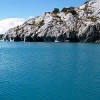
CHILE: Water a Matter of National Security
In its proposed constitutional reform, the Chilean government recognises that the availability of freshwater is a matter of national security. Environmentalists applaud the initiative, but some business groups are worried it will hurt their bottom line.ASIA: World Bank Aims to Earn Stripes Through Tiger Summit
An international campaign to save the tiger, one of Asia’s iconic wild animals, is proving to be fertile ground for the World Bank to earn its stripes as an institution keen on joining the ranks of conservationists.
ZIMBABWE: Water Scarcity No Obstacle To Bulawayo Farmers
A project in Zimbabwe's second city, Bulawayo, is creatively using "marginal water" to ease water scarcity while helping residents provide food and earn a living.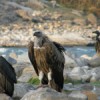
ENVIRONMENT-NEPAL: Slowly, Vulture Numbers Picking Up
Dhan Bahadur Chaudhary, an ornithologist, grew up with vultures in his native Nawalparasi in western Nepal. He and his neighbours were used to seeing vultures flying overhead, feeding on the carcasses, and sunbathing near the rivers.
KENYA: Plastic Bags: Convenience Costing the Earth
When Nairobi was founded in 1899, it took its name from what the Maasai called the place: Ewassi Nyirobi, "cool waters." A century later, the river has something stuck in its throat: millions of plastic bags threaten to choke it.
PERU: Rural Wisdom Against Climate Change
"The toads have disappeared from the countryside because of climate change, and now there is nothing to control the insects. Now we have to use chemicals to fight pests, and that is killing the soil," says worried Peruvian farmer Julián Pilco.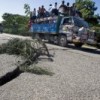
HAITI: Desperate Residents Flee Capital, But with Hopes of Return
Marjorie Louis and her two small children are sleeping in the street. Their home is in complete ruins. And Louis has no way to let her mother in Les Cayes know that she survived the deadliest natural disaster to hit this country.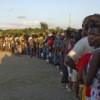
HAITI: With Aid Slow to Arrive, Food Prices Skyrocket
Last week, the price of a small can of rice was two dollars. On Tuesday, it cost Haitians 3.50 dollars. A gallon of cooking oil that cost 10 dollars only days ago now fetches 20 dollars.INDIA: Stalled Korean Mining Operations Face Fresh Protests
The Indian government’s grant of the final environmental clearance to a Korean giant firm, allowing it to acquire 3,000 acres of ‘forest lands’ in the eastern state of Orissa, has prompted a fresh spate of protests from more than 4,000 families that will be affected by a proposed mining project.CLIMATE CHANGE: Polluters Dragging EU Back
Barely a month after world leaders gathering in Copenhagen reached a weak accord on climate change, the European Union's top polluters are fighting a fresh battle to dissuade policy-makers from taking more robust action.CLIMATE CHANGE: Small Islands Await Haitian-Type Disaster
The devastation caused by the earthquake in Haiti last week has brought into sharp focus the threat of another natural disaster waiting to happen: a sea-level rise that could obliterate the world's small island states, triggering fears of mass migration.
HAITI: U.S. Opens Airport to More Humanitarian Flights
Amid criticism that the U.S. Defence Department was prioritising military and rescue air traffic to earthquake-stricken Haiti, U.S. officials controlling the country's main airport have agreed to guarantee landing slots for planes carrying humanitarian aid, U.N. officials say.
CANADA: Hunt for Oil Patch Bomber Takes New Twist
Looking increasingly desperate after a 15-month-long hunt for a saboteur who has blown up six natural gas installations in northern Canada, police arrested an outspoken oil industry critic and then set him free a day later without pressing charges.
SOUTH SUDAN: Tension Builds as Peace Agreement Marks Anniversary
Sudan is at a crossroads. Its future looks grim. "Only a miracle can save it from disintegrating. The signs are already on the wall," says Khamis Lako, a petty trader in Juba, the capital of South Sudan.« Previous Page — Next Page »


Through our global network of local writers, we are continuing our award-winning coverage of global and local environmental challenges, with a focus on the people for whom the ecosphere matters in a direct way: rural dwellers who have little means to protect themselves against adverse conditions; communities that need to switch to sustainable development in order to survive; poor women and children, who are the most vulnerable in natural disasters. Sponsored by the United Nations Environment Program (UNEP), the United Nations Development Program (UNDP) and The World Bank (WB), IPS also maintains the award-winning Tierramérica, a specialised information service on environment and development.

The Week with IPS

Tracking global progress towards a sustainable world


