
Thursday, November 26, 2026



News and Views from the Global South
Environment
Doors Opening for Carbon Tax
The disappointing results of the Copenhagen climate summit could give a push to taxes on emissions of carbon dioxide, something many economists have been calling for and some governments have already adopted.Ecobreves – BRAZIL: Punishment Lifted for Illegal Loggers
The Brazilian government has put a three-year suspension on punishments for illegal logging issued up to Dec. 10, leading environmental activists to charge that the government is reversing the stance it took at the United Nations climate change conference held earlier this month in Copenhagen.Ecobreves – CUBA: New Planetarium in Old Havana
A planetarium that will contribute to research and promotion of astronomy in Cuba was inaugurated this month in Old Havana.Ecobreves – VENEZUELA: Drought Means Christmas in the Dark
The drought in the area of the southeastern Caroní River, the result of the phenomenon known as El Niño, is casting a shadow in all populated areas of Venezuela, as the government ordered restrictions on public lighting.Ecobreves – CHILE: Replacing Polluting Trucks
About 150 new trucks will be given to cargo transport microbusinesses in several Chilean cities as part of a government program to remove polluting vehicles from circulation.AGRICULTURE: Cattle ‘Black Death’ Banished to History
An animal 'black death' that has devastated livestock around the world for thousands of years, causing famine and untold human misery, is about to be permanently consigned to the history books.SANITATION-ZAMBIA: Turning Urine Into Gold
When he ordered his colleagues at the Water and Sanitation Association of Zambia to save all their urine in a plastic bottle in the office toilet, they thought he was mad. But German sanitation specialist Christopher Kellner wanted to demonstrate why he calls urine "liquid gold".DEVELOPMENT: Tsunami Brings Sea Change in Coastal Lives
Tragic as it was, the Asian tsunami wrought a sea change in the lives of survivors in the sleepy coastal hamlets of southern Tamil Nadu state, where some 8,000 people are known to have died.AFRICA: Drying, Drying, Disappearing…
Lake Chad was bigger than Israel less than 50 years ago. Today its surface area is less than a tenth of its earlier size, amid forecasts the lake could disappear altogether within 20 years.PARAGUAY: Bottled Water Scare Exposes Threat to Groundwater
It all started with a warning on the quality of bottled water in Paraguay. But concern has now spread about the extent of pollution of the country's underground water reserves.CLIMATE CHANGE: Ice Melting Faster Everywhere
From the Arctic sea ice to the Antarctic interior and the mountainous peaks of Peru, Alaska, and Tibet, ice is melting at an alarming rate. The accelerating loss of ice sheets, sea ice, and glaciers is one of the most powerful and striking indicators of a warming climate.
MADAGASCAR: Worrying Lapse in Forest Management
The illegal logging of precious wood rose sharply during the political crisis that gripped Madagascar during 2009. Forest communities, who could be part of the preservation of these resources, have been swept up in the rush for rosewood.SRI LANKA: Five Years after Tsunami, Many Still without Shelter
"We have been here for almost five years. So many promises have been made, but very few have been kept," complains Mohideen Nafia, 22, one of the survivors of the 2004 Asian tsunami still living in a temporary facility in the coastal town of Kalmunai, located 300 kilometres east of the capital, Colombo.
ENERGY-ICELAND: Osmotic, Tidal Power Show Promise
Iceland already gets over 72 percent of its energy from renewable, hydroelectric and geothermal sources, but Icelanders are ambitious when it comes to energy and scientists are now looking at osmotic and tidal power to meet future energy needs.CLIMATE CHANGE: Copenhagen Fizzled, California Forges Ahead
As countries failed to reach a substantive climate change pact at Copenhagen last week, action at the subnational level has emerged as one of the likeliest paths toward significant climate action.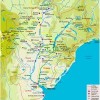
ENVIRONMENT: Rio de la Plata Fish and Fisherfolk Under Threat
A study by more than 30 experts from Argentina, Bolivia, Brazil and Paraguay warns of the threat menacing the survival of fish species and 50 riverside settlements in the Río de la Plata basin, which is the second largest river system in South America after the Amazon basin and contains a wealth of biodiversity.
No Real Deal, and No Exit
Coral reefs are dying, glaciers are melting and rising sea levels threaten the homes of millions. The effects of climate change will continue and there is little room for optimism as the Copenhagen summit has come came to an end with disappointing results.
Climate Change: Scientific Fact, Not a Political Issue
It might take a story of huge cataclysm, like the one told by Komatu Sakyo in his 1973 novel "Japan Sinks", to convince the world to reach an accord that will steer it away from the suicidal path of global warming.

Latin America’s Green Path Forward
Aside from the impact on biodiversity Andes glacier disappearance will have a tremendous economic impact on some of the Latin America's poorest residents.INDIA: Despite Failed Climate Talks, More Green Awareness
The world supped on an alphabet soup of acronyms over the nearly two weeks of climate change talks that just ended – UNFCCC, COP-15, IPCC, CDM, LDCF, MEF, CCS. But did any of these filter down to reach the average citizen?« Previous Page — Next Page »


Through our global network of local writers, we are continuing our award-winning coverage of global and local environmental challenges, with a focus on the people for whom the ecosphere matters in a direct way: rural dwellers who have little means to protect themselves against adverse conditions; communities that need to switch to sustainable development in order to survive; poor women and children, who are the most vulnerable in natural disasters. Sponsored by the United Nations Environment Program (UNEP), the United Nations Development Program (UNDP) and The World Bank (WB), IPS also maintains the award-winning Tierramérica, a specialised information service on environment and development.

The Week with IPS

Tracking global progress towards a sustainable world


