
Thursday, November 26, 2026



News and Views from the Global South
Environment

CLIMATE CHANGE: No Closed Doors at Parallel Summit
Two blocks from the Metro station on the busy M-1 Line, the first indication that pedestrians are slipping into the space-time continuum known as the "Free City" is the ubiquitous graffiti and occasional "boom!" of small explosive devices like M-80s echoing through the cobbled streets.
CLIMATE CHANGE: Latin America Between Hope and Realism
Latin America has come to Copenhagen with the goal that the wealthy nations of the North pay their climate debt by reducing greenhouse gas emissions and providing resources to developing nations. But facing the risk that this strategy could fail, the Latin American representatives are also willing to accept some compromises.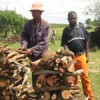
CLIMATE CHANGE: Poor Vendors in Swaziland Worried by ‘Flora Protection Law’
For close to three decades, Jeremiah Mkhonta has earned a living by selling firewood by the roadside. It's not exactly lucrative: the father of 15 often goes for a fortnight without even selling a single four dollar bundle of firewood.
CLIMATE CHANGE: Deal On Forests Likely, But…
As debate ratchets up ahead of working out a climate change deal, a Dutch study says emissions from deforestation and land degradation are far lower than has been assumed. Will this have an impact on a deal to protect forests in Africa?
OIL: A Market Psychology of Fear?
With or without a binding deal at the climate talks in Copenhagen this month, it seems the world may have to cut its oil consumption, as emerging geological and economic trends limit the availability and affordability of petroleum.
Q&A: “We Are Moving Towards Modest Cooperation”
Vested interests in fossil fuels have blocked major steps against global warming so far, according to José Goldemberg, who has played a leading role at key times in the climate crisis facing humanity.CAMBODIA: Pepper Farmers Get Ready for their Champagne Moment
Under a shady trellis of rice sacks in the province of Kampot in southern Cambodia, 42-year-old Nuon Yan tends his crop of pepper vines.
CLIMATE CHANGE: Beware of Carbon Trading Trap Warn Activists
As the climate change summit in the Danish capital moves into a second day, environmental groups warn that by pushing carbon offsetting and trade, governments of developed countries are bypassing their responsibility to significantly reduce domestic emissions and provide aid to developing countries.CLIMATE CHANGE: Greenhouse Gases Endanger Public Health – EPA
Twelve years after the climate change meetings in Kyoto, a much changed U.S. will show up at the Copenhagen conference this week, and, following recent developments in Washington, their ability to offer and agree to international climate actions has likely never been higher.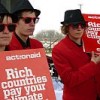
CLIMATE CHANGE: Rich Nations Resist Binding Commitments
Betrayal and backsliding by rich countries marks the beginning of the final negotiations for a global climate treaty, according to many developing world participants at the U.N.-sponsored talks here.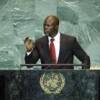
Q&A: “Copenhagen Should Target the Developed World”
Although a professional actor by trade, Djimon Hounsou takes his role as a campaigner against climate change at the U.N. seriously, and hopes to see a strong mandate reached in Copenhagen that puts the spotlight on developed countries to reduce their greenhouse gas emissions.
CLIMATE CHANGE: Hunger Strikers in “Moral Call to Action”
Hoping to emotionally engage world leaders and ordinary citizens, hundreds of people from around the globe have entered their fifth week of fasting at the start of the Copenhagen Climate Conference.
Q&A: ‘Economic Growth Is Making us Poorer’
Dinner one evening when he was a kid put William Rees on track to becoming a sustainability pioneer. It was after a day at work on the family farm when he was nine or 10. He saw he had had a hand in growing everything on his plate. That brought a fascination with a connection to earth that would never leave him.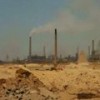
CLIMATE CHANGE: Carbon Projects Waiting to Exhale
Initiatives to reduce Egypt's greenhouse gas emissions could get a big push if world leaders and environment officials meeting in Copenhagen for climate talks that start Monday agree to maintain or enhance the carbon trading framework.CHINA: One Green Leap Forward, Two Steps Backward
With low carbon seen as the new buzzword for government promotion and backed by Beijing as the new economic growth engine, China is poised for a green leap forward.
Q&A: ‘Asia Can Set Its Own Carbon Emissions Target’
As the Climate Change Conference opens today in Copenhagen, excitement— even anxiety—is steadily building over the potential outcome of one of the most awaited events of the year.
Latin America Between Hope and Realism
Representatives of Latin America's governments are arriving in Copenhagen calling for an aggressive pact with teeth to fight climate change, though there are still minor differences among them when it comes to priorities.
Solar Villages Light Up in the Andes
The light and heat of the sun are valuable natural resources that are abundant in Argentina's arid northern Puna, or high plains.Ecobreves – ECOBRIEFS: BRAZIL
The sisal plant (Agave sisalana), whose fiber serves as a raw material for making sacks, crafts and furniture, also produces an effective natural insecticide according to scientists at the State University of Feira de Santana, in the northeastern Brazilian state of Bahía.Ecobreves – HONDURAS: Women Learn Forest Management
Over the past five years, some 11,000 women from western Honduras have learned forest management techniques to undertake community forestry and to diversify small farming operations, utilizing environmentally friendly methods.Ecobreves – MEXICO: Youth Need Climate Education
Environmental groups should better coordinate their campaigns against climate change and focus more on young people, says Claudia Gómez-Portugal, strategic director of Sakbé, a Mexican organization focused on environmental communication.« Previous Page — Next Page »


Through our global network of local writers, we are continuing our award-winning coverage of global and local environmental challenges, with a focus on the people for whom the ecosphere matters in a direct way: rural dwellers who have little means to protect themselves against adverse conditions; communities that need to switch to sustainable development in order to survive; poor women and children, who are the most vulnerable in natural disasters. Sponsored by the United Nations Environment Program (UNEP), the United Nations Development Program (UNDP) and The World Bank (WB), IPS also maintains the award-winning Tierramérica, a specialised information service on environment and development.

The Week with IPS

Tracking global progress towards a sustainable world


